- 9 years ago
-

Nowhere to Hide
The 28th edition of the Human Rights Watch Film Festival takes place this year from Friday, June 9, through Sunday, June 18. With 21 feature documentaries and panel discussions that showcase the courage and resilience of activism in these challenging times, the event seems more relevant than ever. The festival is co-presented by the Film Society of Lincoln Center and IFC Center, and all screenings are followed by discussions with filmmakers, their subjects, Human Rights Watch researchers and special guests.
Several films address the worsening refugee crisis and migration, including opening night presentation Nowhere to Hide, directed by Zaradasht Ahmed. Using a camera given to him by the filmmaker, Iraqi nurse Nori Sharif documents the catastrophic events surrounding his family as war and ISIS devastate their region.
The need for change in U.S. law enforcement and the justice system is another festival theme, represented by films including Erik Ljung’s The Blood Is at the Doorstep, about a fatal shooting by Milwaukee police, and Peter Nicks’s The Force, about the long troubled Oakland Police Department. One of the films addressing the changing face of journalism and how we get our information, closing night’s Nobody Speak: Trials of the Free Press, directed by Brian Knappenberger, explores the recent Hulk Hogan vs. Gawker case and others.
The Resistance Saga, a daylong special event, includes a trilogy of films by Pamela Yates on the plight of the Mayan people of Guatemala. When the Mountains Tremble (1984), Granito: How to Nail a Dictator (2001), and 500 Years: Life in Resistance (2017) all document the events surrounding first trial in the history of the Americas to prosecute the genocide of an indigenous people.
Other highlights of the HRWFF:

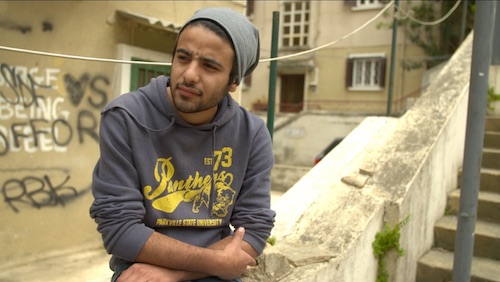
Sophia and Georgia Scott’s sad, moving Lost in Lebanon closely follows four Syrians out of the 1.5 million who have fled their country’s war for neighboring Lebanon. Sheikh Abdo, a solid community leader and family man; Nemr, a thoughtful student who never finished high school because of the war; Reem, a wry, English-speaking architect; and Mwafak, a cheerful, long-haired artist, each tell their stories as we watch them grapple with insurmountable challenges in attempting to re-start their lives. Unable to work, attend school, or even obtain exit visas in an overwhelmed country that has grown increasingly hostile to their presence, they volunteer teaching children at refugee camps, worried that future generations of war-displaced Syrians will be illiterate. Initially persevering and optimistic, the subjects’ intense frustrations are palpable by the end of the film.

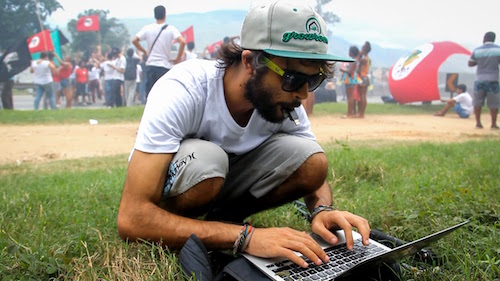
Nicholas de Pencier’s Black Code follows the activities of the Toronto University-based research unit Citizen Lab. Led by Professor Ronald Deibert, these “internet sleuths” travel the world, uncovering digital espionage by corporations and governments, while partnering with local activists. Citizen Lab made its name by exposing Chinese malware used to spy on the Dalai Lama and other prominent Tibetans. These “acts of war against citizens,” says Deibert, allow government agents to apprehend and sometimes kill opponents. Other locales visited in the film include Pakistan, where we meet the leader of internet rights group Bytes for All Pakistan and see how social media-fueled hatred results in the murder of one female activist. In Rio de Janeiro, we’re introduced to Midia Ninja, the group that covered heavily policed protests of the 2014 World Cup via TwitCasting. Ethiopian and Syrian activists also talk about their experiences with government spyware. The film raises disturbing questions about the possible consequences of what we unthinkingly post on Facebook and other channels.

Tiffany Hsiung’s The Apology explores a shameful episode in Japanese history through three women who were sexual slaves of the Japanese Imperial Army during World War II. Grandma Gil in South Korea, Grandma Cao in China and Grandma Adela in the Philippines (all in their 80s and 90s) are among the few still-living “comfort women”–thousands who were forced to service occupying Japanese soldiers. They each tell their stories as the film follows current efforts to extract an official apology and recognition from the Japanese government. We watch the indefatigable Gil prepare for the 1000th weekly demonstration she helped organize in 1992 outside Seoul’s Japanese Embassy; she speaks to groups in various countries, including a roomful of Japanese girls who are stunned to hear her story. We also visit Cao in her rural village, as she tells her horrifying account after decades of secrecy, even from her daughter; and watch Adela, who has never told her family about her experience out of shame, as she finally unburdens herself. The film is a tribute to these women and the many who died before their stories could be heard.
Click here for complete program and schedule information.
–Marina Zogbi
Latest News


- 9 years ago
-
Who would’ve pegged the Dutchess of Cambridge to be a sneakerhead — well not exactly — but she does love a particular pair of Superga trainers, and the internet is loving it!
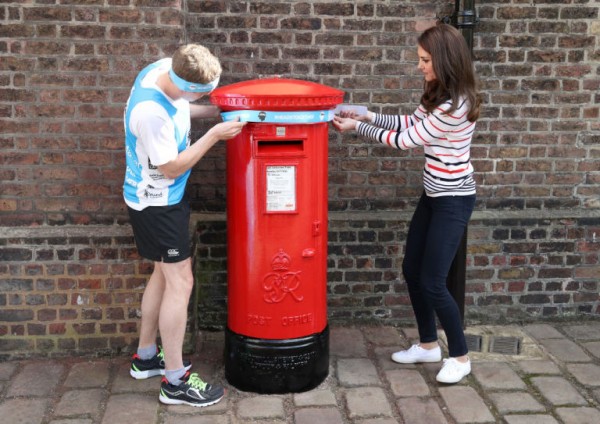
Whether it’s on the cover of British GQ, shopping, or attending London Marathon, Kate seems to be wearing cute white sneakers everywhere she goes.
William, Kate, George and Charlotte – plus Lupo the family dog. (📸 #normanjeanroy) https://t.co/cyiUjZXTGP pic.twitter.com/XEe9cn0vsc
— British GQ (@BritishGQ) May 29, 2017
And as we’ve reported before the “Kate Effect” is real, and if she likes your brand it will sell like hotcakes.
Case in point: a Nordstrom reviewer writes: ” Kate Middleton-approved…I’ve been searching for the perfect walking shoe for an upcoming trip to Europe…I can say they are equally comfortable and stylish.”
 Photo Credit: AFP/Getty Images
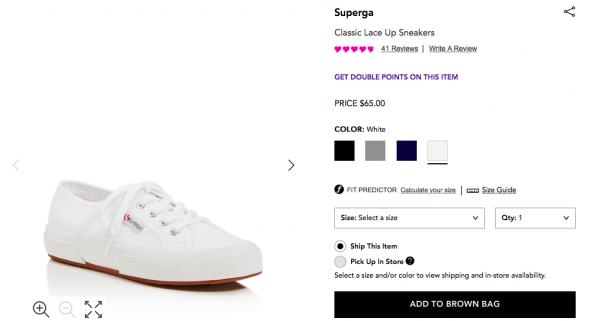
According to Daily Mail, the Superga 2750 Cotu Classic trainers were first spotted on Kate in October 2016. The same exact shoes have also been spotted on celebs like Alexa Chung, Karlie Kloss and Emma Watson — however it’s Kate who has made the biggest impact on the Italian footwear.
‘Superga has seen the sales figures for this style double since Kate has been stepping out wearing them repeatedly,’ says a rep. The their sales have DOUBLED, increasing 100% thanks to the princess.
And don’t worry. Despite the sharp jump in sales, the sneakers are available.
‘As they are Superga’s most popular style it’s practically impossible to sell out completely as they have plenty of stock of this particular white trainer.’
Happy shopping!

Photo Credit: Bloomingdales
- 9 years ago
-
Like athleisure, bodysuits have become an important fashion staple for the past few years. So much so they’ve even seeped its way into haute couture shows and even this year’s Met Gala with Bella Hadid rocking a sheer and glittery Alexander Wang number.
https://www.instagram.com/p/BTpgA6khVlb/?taken-by=bellahadid&hl=en
And just recently, Refinery 29 featured the The Negative Underwear ‘Essaouira’ bodysuit in black, which has sold out a record FIVE TIMES since its release.
Here’s a version of the same bodysuit in white (still fabulous)
https://www.instagram.com/p/BPxKppDA_L6/?taken-by=negativeunderwear&hl=en
The ‘Essaouira’ is made with a stretch eyelet fabric that the label calls its “anti-lace,” Refinery reports. And the model has been worn by a multitude of famous names including Miley Cyrus, Hannah Bronfman, and Emily Ratajkowski.
https://www.instagram.com/p/BNR_h2pDjQu/?taken-by=negativeunderwear&hl=en
Although bodysuits are de rigueur because they are super sexy and effortlessly hug close the body, the ones made without snappers certainly come with many drawbacks, and toilet challenges, and the pantless ones can ride up, leaving you with an unflattering wedgie.
As demonstrated perfectly by Mariah Carey:
https://www.instagram.com/p/BS1Cz1KFtv0/
However, despite the drawbacks, bodysuits are still fun to wear, and there are so many options to choose from, including from brands like Wolford, ASOS and Need Supply Co.
But if you need more inspiration: Take Rihanna’s Space-Age-Style-Goals look at Coachella. Now that’s how to rock a bodysuit!
https://www.instagram.com/p/BS8FPXfD2he/
- 9 years ago
-
Bucket List confession: It’s been a dream of mine for quite sometime to attend the Costume Institute’s Met Gala. Colloquially and affectionately referred to as “fashion’s biggest night out,” the Costume Institute’s Met Gala is PEAK celebration of iconic style.
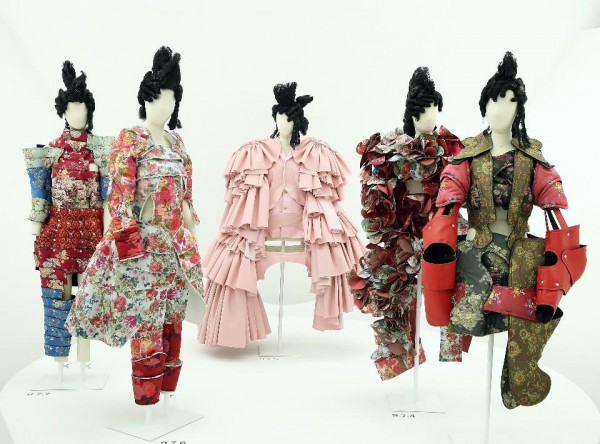
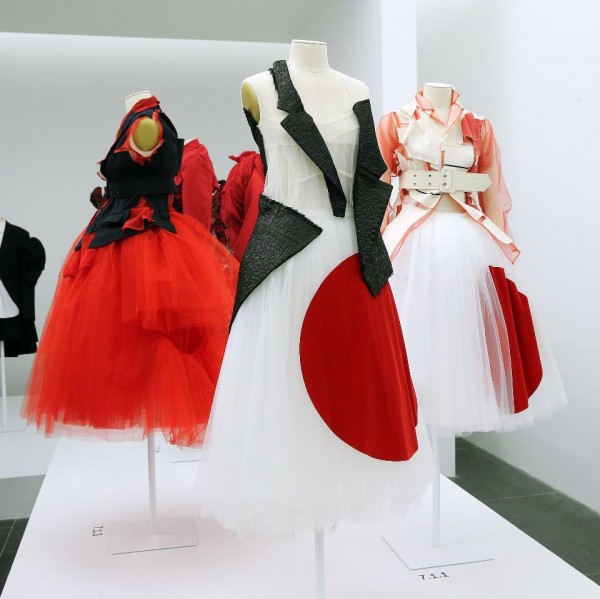
And as we all know by now, this year’s Met Gala was a spectacular showcase of quasi-wearable, avant-garde fashion, honoring the Costume Institute’s latest exhibition on Rei Kawakubo and her label Comme des Garçons.
And unlike past Met Gala events this hullabaloo was loaded with an incredible mix of celebrities smoking in a bathroom and meme-inducing sculptural looks that are still keeping the internet in a frenzy.
https://twitter.com/MarcSnetiker/status/859172626362585088?ref_src=twsrc%5Etfw&ref_url=http%3A%2F%2Fwww.allure.com%2Fstory%2Fbest-met-gala-memes-2017
But if you still haven’t visited the 2017 Costume Institute exhibition on Rei Kawakubo and her label Comme des Garçons you are missing out on a treat.
Here are three things you need to know about this incredible showcase.

Rei Kawakubo/Comme des Garçons: Art Of The In-Between at The Metropolitan Museum of Art.
Photo by Jemal
#1 This showcase makes history
Aptly named Rei Kawakubo/Comme des Garçons: Art of the In-Between, the exhibition highlights the reclusive designer’s wide array of left-of-center, hyper-modern, sculptural constructions — retracing almost 40 years of clothing. And this is first exhibition since 1983 Yves Saint Laurent show that celebrates a living artist.
#2 The show is weird and wonderful
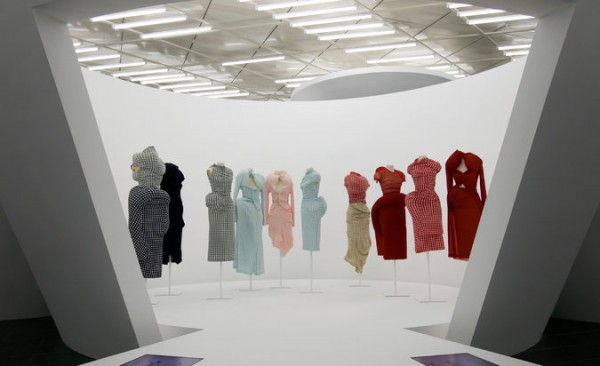
Fashion Unfiltered founder and CDG collector Katherine Zarrella tells Forbes: “I thought the setup was brilliant—very CDG in the way it made no suggestions. Instead, it invites the viewer to come inside and experience the garments for herself.”
 Agaton Strom for The New York Times
Rei Kawakubo/Comme des Garçons: Art Of The In-Between at The Metropolitan Museum of Art.
Photo by Jemal

Rei Kawakubo/Comme des Garçons: Art Of The In-Between at The Metropolitan Museum of Art.
Photo by Jemal
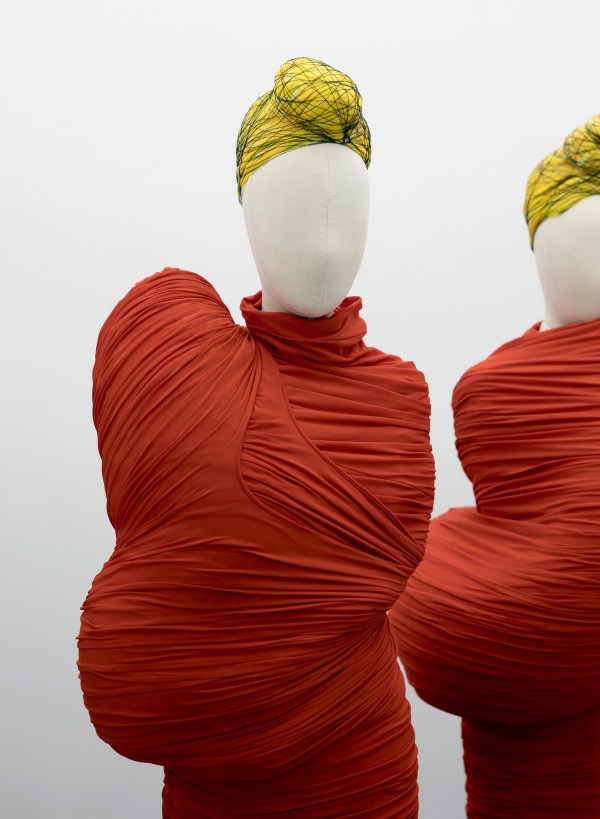
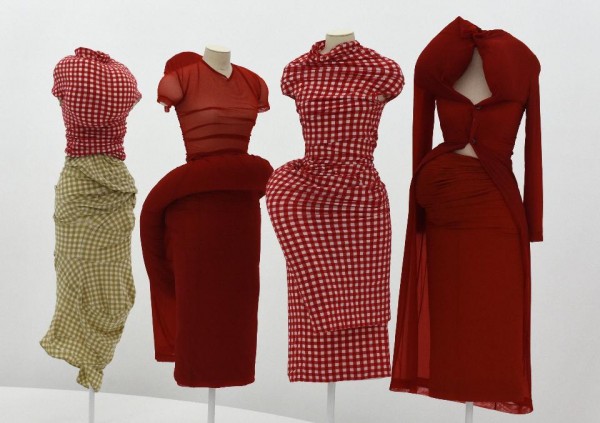
Selections from CDG’s Body Meets Dress 1997 collection pays homage to the ‘lumps and bumps’ of a human body — even the ones that might sprout from the wrong places. Featuring dresses, skirts and jackets, made with vibrant, stretch gingham checks, stuffed with large goose-down-filled protuberances. It’s oddly beautiful.

Agaton Strom for The New York Times


- 9 years ago
-

Milton Kam, Courtesy of Thier Productions Inc.
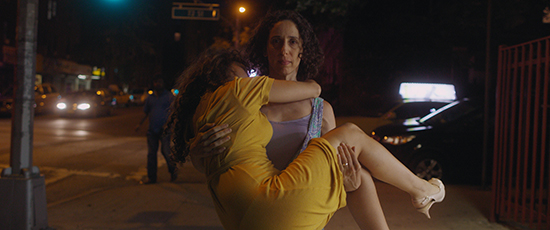
Tomorrow Ever After is Israeli-American filmmaker Ela Thier’s second full-length feature (the first, 2012’s Foreign Letters, was inspired by her own immigration story). This smart, entertaining indie, about a historian from the year 2592 who is accidentally transported back to present-day New York City, mixes comedy and science fiction to tell a story that resonates deeply in these unsettled times. Unlike many time-travel movies, in which the future is a post-apocalyptic dystopia, Tomorrow Ever After features a protagonist, Shaina (played wryly by Thier herself), who comes from a much better era than the period known as The Great Despair (that’s us, folks!). She’s initially shocked by everything here, from litter to our isolation from each other. Through her eyes, we see ourselves and it’s not a pretty picture.
We first see Shaina wandering the streets, wearing a long dress and pants ensemble that’s vaguely high-tech, but not enough to stand out in modern-day New York. She gapes at everything from heavy bike chains to cigarette butts and discarded fast-food cups. Spotting fellow humans at an outdoor café, she runs over and hugs one guy, happily introducing herself and asking what year it is. Of course he’s freaked out and she is repeatedly rebuffed when she hugs other strangers, asking for their help. Shaina tries to contact home on her “Implement,” a cool device that morphs from a small card into a tablet, and reports her shocking findings (“I’m looking at plastic and I’m not in a museum,” “Hugs are perceived as acts of aggression”). Accosted by a nervous mugger (Nabil Vinas), she agrees to accompany him to an ATM (whatever that is) and lets him use her card, which somehow works. “It’s for money!” she realizes with delight, having studied this outmoded concept of currency.

Milton Kam, Courtesy of Thier Productions Inc.
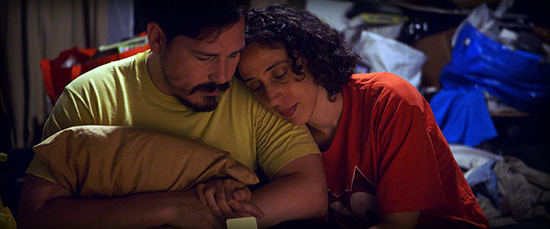
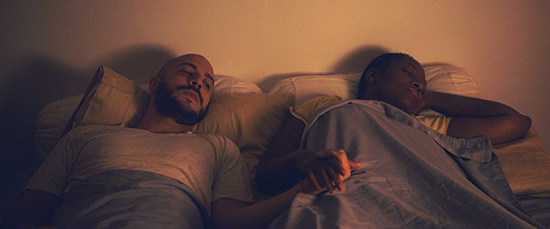
Milton the mugger, thinking that Shaina is a veritable jackpot (as well as a crackpot), reluctantly allows her to tag along home, but things get complicated with his suspicious girlfriend Imani (Ebbe Bassey), so he unloads her on a schizophrenic friend. The latter is the only one who both enjoys her hugs and believes her tale of a physics lab accident and resulting 600-year time trip. The rest of the film details Shaina’s misadventures as she tries to find a team of 21st-century physicists who might be able to repair her broken Implement, allowing her to return home. We also see the effect she has on Milton’s life and on others she comes in contact with.
Though the theme of stranded time-traveler struggling to get home amid a hostile and disbelieving populace is familiar, Tomorrow Ever After offers a charmingly unique take. Its sharp yet whimsical tone is clearly the work of a singular mindset, namely Thier, who both wrote and directed the film, in addition to embodying its heroine. There are a few mildly disturbing scenes (Shaina manhandled in a bar and at Bellevue Hospital), but the film is generally good-natured and open-hearted.
Milton Kam, Courtesy of Thier Productions Inc.
It’s fun watching Shaina discover and observe things she’s only ever read about: a laptop computer, drunkenness, advertising. It’s also illuminating to see her recoil from old-fangled things like packaged food, noting that it makes people sick (the average life span in 2592 is 160). Her observations, while humorous, serve to remind us yet again of how much we suffer both physically and psychically in this data- and market-driven age. The film ends on an upbeat note, as dismay over the plight of 21st-century humanity gives way to the realization that things do get better. Tomorrow Ever After seems like a wish for the future of humankind, one that we can all share no matter how unlikely it may be.
Tomorrow Ever After opens on Friday, May 5, at Cinema Village, 22 East 12th St., Manhattan.
—Marina Zogbi