- 7 years ago
-
Tina La Porta opens her first solo exhibition, Side Effects in South Florida on September 29th in the FAR Gallery at FATVillage Projects. The presentation is a candid oeuvre on La Porta’s encounter with mental illness and her skilled approach to creating a pharmaceutical, candy-like frenzy to the viewer’s eye and psyche.
Far Gallery is a long corridor of two walls facing North and South to the main entrance, making the task for any curator or artist challenging to organize works within the space without it becoming predictable. Nonetheless, La Porta and curators Vee Carallo and Leah Brown strategized the area by assembling the wall sculptures in a non-linear format, concentrating on colors, geometric designs within the works and by the story of each prescription pill.
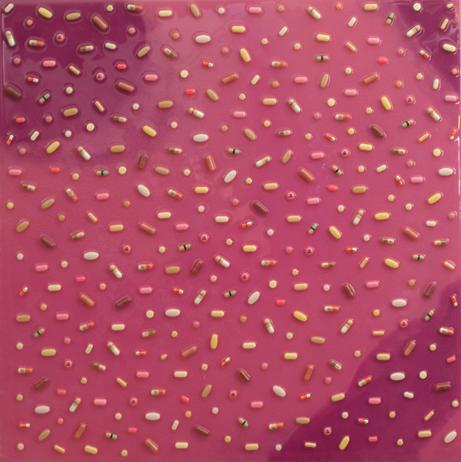
Although La Porta is open about her way of life and how her functionality depends on the suppression her pills provide, she also comments in Indian Summer (2003) on the comfortable accessibility people have to order any prescription online. With its deceiving romantic shades of pink and old rose, Indian Summer 2003 exudes an ill feeling to a morning-after pill, direct from India without any proper instructions or what damaging side effects one is to expect from it.
From La Porta’s grueling process to crush each pill, comes the construction of a larger disk or shape resembling a small tablet filled with an array of smaller capsules sprinkled in vibrant colors and delicious enough to want to bite. The sculptures look like cookies out of Willy- Wonka’s factory. It’s that “oh, sooo good to pop it in your mouth” feeling, successfully captured in Hand to Mouth, 2018 (plaster series). The series illustrates the severity of pharmaceutical dependency for folks who abuse the medical system, for individuals needing prescription drugs to function or the patient who is sternly instructed to “pick one” as La Porta shared after informing her doctor none were working; “plus, no one ever told me about all the crazy side effects I would have to deal with.”
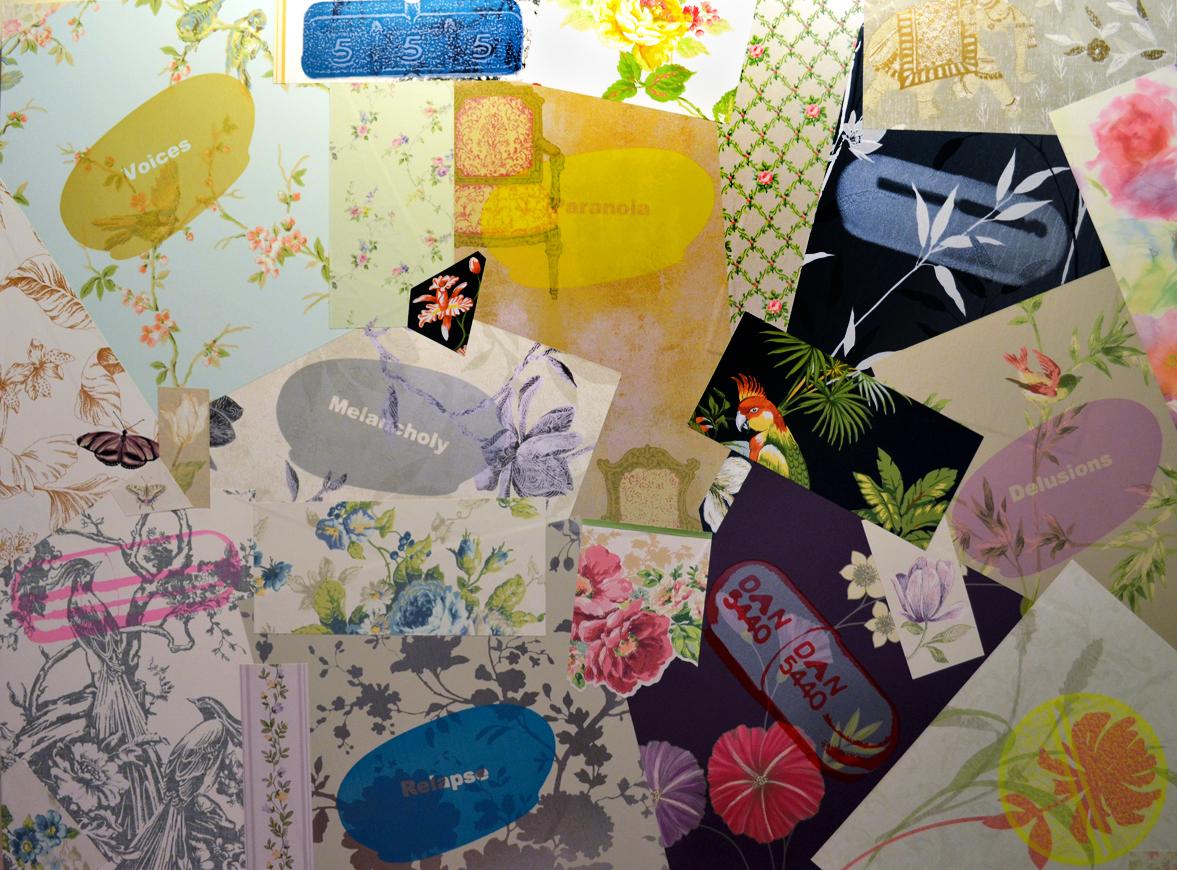
Worse yet, as La Porta explains “no one ever took the time to address my illness; instead they kept wanting to masquerade it with pills and not help heal me.” That is when La Porta turned to the wallpaper series Listening to a Voice, 2018 and Speaking to a Voice Unknown, 2018. The series flamboyantly plays with tropical designs, elaborate florals and feminine wallpapers under resin sculptures to illuminate the idea of wallpapering a wall destroyed by the time-space, covering up unwanted ugliness to anyone who dares tread so close to it, similarly to a band-aid pill.
-

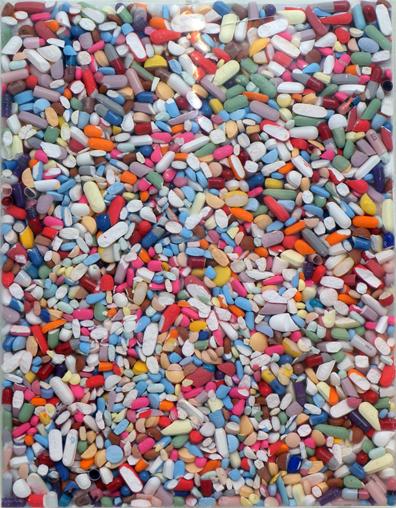
- “Freudian Slip,” 2017 Pills, Mixed Media, Resin on Board
-
- “Relapse,” 2017 crushed pills, plex-glass, spray paint, board
-
- “Listening to a Voice Unknown,” 2018, Hand pulled screen prints on wallpaper
Side Effects is a quietly riveting exhibition because of its reflective nature but brightly bold in aesthetics and social comment on the pharmaceutical world.
Opening Reception September 29th, 2018 from 6 – 10 p.m. at FATVillage Projects and on view through October 27th, 2018.
Written by Beláxis Buil
Edited by Abel Folgar
-
Latest News
- 7 years ago
-
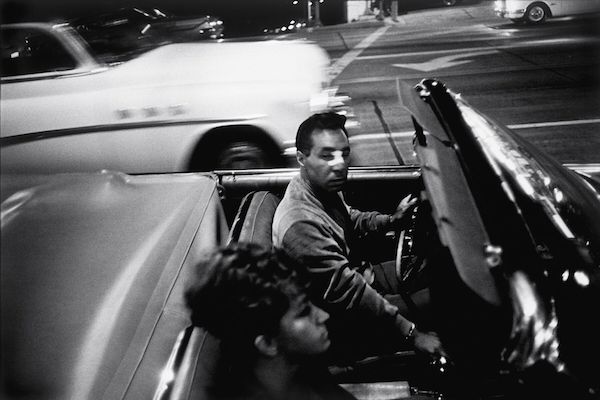
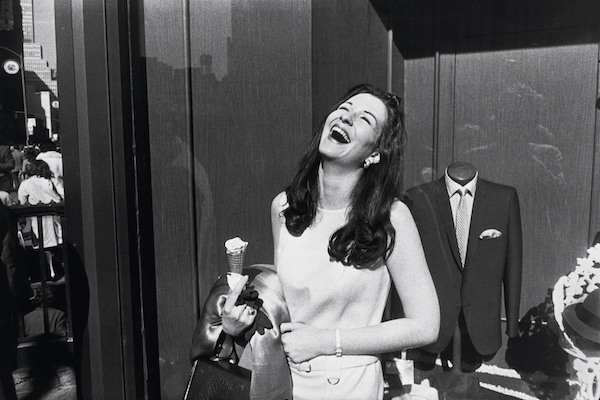
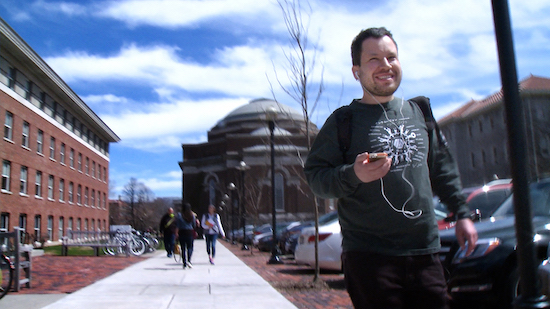
Two very worthwhile documentaries open this week in New York City: Sasha Waters Freyer’s Garry Winogrand: All Things Are Photographable is a portrait of the groundbreaking photographer responsible for some of the most memorable images of the 1950s through ’70s; Dan Habib’s Intelligent Lives follows three young adults who are challenging old ideas of what is achievable for those with intellectual disabilities.

Courtesy of Greenwich Entertainment
Most of us have been intrigued by least one Garry Winogrand photo; perhaps “New York World’s Fair, 1964,” featuring several white women and one African-American man on a park bench; or the untitled image of a man upside down in midair on a city street. Winogrand’s photos, which capture nuance a well as overt movement, and the man “who turned street photography on its head” himself are both examined in All Things Are Photographable, an enjoyable doc full of images famous and lesser known. Along with testimonials from fellow photographers, museum curators and Mad Men creator Matthew Weiner, Freyer includes interview snippets with the late Winogrand himself, a gruff, outspoken Bronx native who often resisted analyzing his photographs, insisting that “all a photograph does is describe light on surface.” But Winogrand also admitted that a powerful image “makes you question what you think you know,” an apt description of his work.
Courtesy of Greenwich Entertainment
New York Times photo editor Jeffrey Henson Scales likens Winogrand’s images to choreography because “everyone is dancing” in them; another expert says that the photographer’s work “makes chaos visible,” as there often seems to be some kind of commotion just out of frame. Like many of his generation, Winogrand, who was born in 1928, started as a photojournalist, taking on assignments for Life, Look and other periodicals. He later defied magazine conventions and took pictures for their own sake. Winogrand’s career wasn’t without bumps and the film covers the cool reception to one especially controversial shot as well as his ill-timed Women Are Beautiful collection, published at the height of the Women’s Movement (1975). Though Winogrand’s style fell out of favor, his Public Relations book (1977) is now considered a forerunner of post-modern imagery.
When Winogrand died at the age of 56 in 1984, he left behind thousands of rolls of undeveloped images, some of which were later presented in posthumous shows. His well-meaning admirers weren’t always as discerning as the photographer himself when it came to choosing which images to print. Nonetheless, his work remains unparalleled, described by former MoMA head of photography John Szarkowski as “made up of energy, ambition, desperate moments and unfamiliar beauty.”

Courtesy of LikeRight Now Films
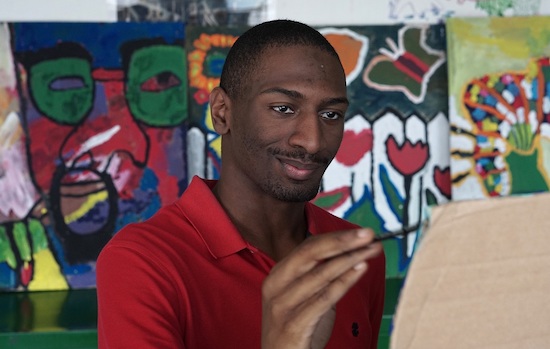
Dan Habib’s moving Intelligent Lives makes a strong case for rethinking education for children with intellectual disabilities, as well as challenging the meaning of intelligence itself. The film opens with actor Chris Cooper narrating the story of his son Jesse, who was born with cerebral palsy. Based on the boy’s low scoring Stanford-Binet (standard IQ) test, Cooper and his wife were advised to institutionalize him. Instead they sent Jesse to “regular” schools, where he excelled. As Cooper says about traditional treatment of the intellectually challenged, “There are better ways, different ways.”
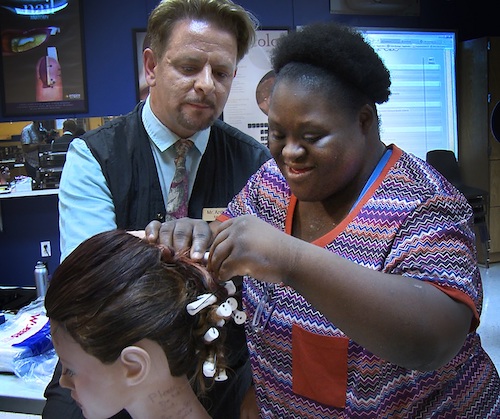
We see these ways through the experiences of three young adults striving to build a “normal” life despite their disabilities. Naieer is a student at the progressive Henderson Inclusive School in Boston, where he excels in art despite difficulty with verbal communication. Micah attends Syracuse University, where he is studying for a certificate in disability studies and pursuing romance with a fellow student. Finally, there’s Naomie, who works at a snack concession at the Rhode Island State House, with the help of a job coach.

Courtesy of LikeRightNow Films
Had the three been born 20 years earlier, they would probably have been institutionalized. The film looks at the history and distortion of the IQ test, whose creator, Alfred Binet, himself stressed its limitations. As shocking as it sounds today, the test was used on Ellis Island immigrants in the early 1900s, with approximately 80% of them subsequently deemed “feeble-minded.” Eugenics and forced sterilization would follow, with more recent atrocities like Willowbrook finally exposed and shut down. The film also shows the birth of the self-advocacy movement, which resulted in the Americans with Disabilities Act of 1990.
Thanks to the Henderson School, programs like Syracuse University’s “Inclusive U” and Rhode Island’s Fogarty Center; Naieer, Micah and Naomie all have support systems and channels to higher education and training. They also each have families who continue to fight for their rights. Naieer’s parents worry that their tall, African-American son who sometimes acts erratically might run into trouble; Micah’s sister, a special education teacher, talks about his decision to be his own legal guardian. And though Naomie’s parents are non-English-speaking Haitian immigrants, her protective older brother is heavily involved in her life, enabling her to find fulfilling work in a beauty school.

Courtesy of LikeRightNow Films
Intelligent Lives is an engaging and thought-provoking reminder that despite our progress in many areas of discrimination, those with intellectual disabilities are still waging a tough battle to live meaningful lives. Though the film’s three subjects are succeeding on their chosen paths, there’s a lot more to be done.
Garry Winogrand: Everything is Photographable opens on September 19 at Film Forum.
Intelligent Lives opens on September 21 at the Village East Cinema.
— Marina Zogbi
- 8 years ago
-

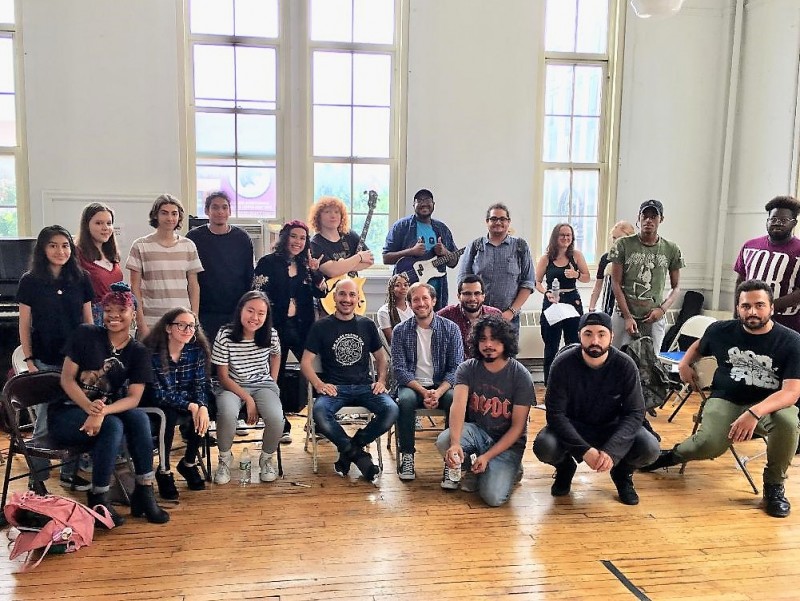
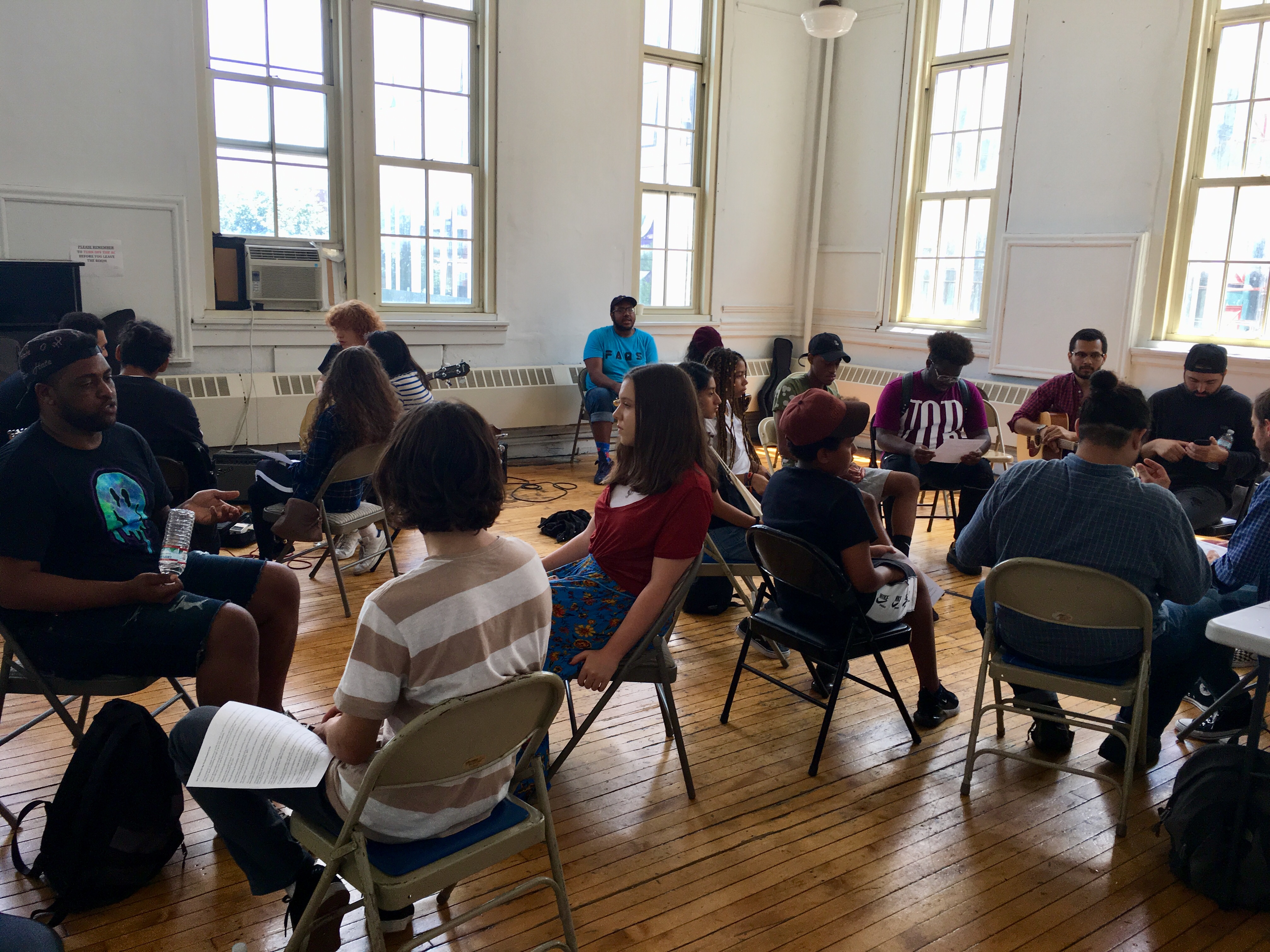
This summer, thanks to a grant from the Matisse Foundation, I had the great pleasure of teaching the music portion of the Art for Progress Summer Arts & Music Program for high school students and young adults interested in pursuing creative careers. Consisting of series of four workshops held on Sunday mornings during July and August at the Clemente Soto Velez Cultural and Educational Center, the program was designed to explore the many real-world considerations inherent to careers in the arts and music. The focus was to look at some of the dynamics at play in the music and art worlds, and to provide support in the development of specific skills in the various media. Each week, a professional working in the arts was invited as a guest speaker and to host a short discussion. The speakers were happy to answer questions and were very informative and animated as they enlightened the group about the day-to-day life of a working artist. Everyone seemed to have a great time and to get a better sense of how to approach their work professionally going forward. On a personal note…I had the fantastic opportunity to study visual art in Paris while in college, and later jazz theory and improvisation, so it was auspicious to me to be able to work with the foundation representing French painter Henri Matisse, a personal favorite and early influence. Matisse was known to love American jazz music, and that added to my special sense of personal investment in this project. We at AFP are beyond grateful to them for their confidence and support.

Having taught in high schools and middle schools for the past ten years as an AFP Teaching Artist in Residence, I have always tried to give my students a peek into my adventures as a musician. As a multi-instrumentalist and singer, as well as producer and recording/sound engineer, I’ve seen many different sides of the music industry and of the lives of musicians themselves. It was an honor to have a chance to impart some of what I’ve learned to a group of young people earnestly embarking on their own artistic journeys. The goal, overall, of my contribution to the program was to address the types of things that young people are rarely taught when they are learning to sing and play. The commercial music industry enticingly offers certain motivations, while those rarely align with the way kids learn music, or the experiences of real artists and musicians. I think this program helped people take an important step toward understanding and balancing those dynamics, and to direct their focus toward being well-versed, lifelong artists.
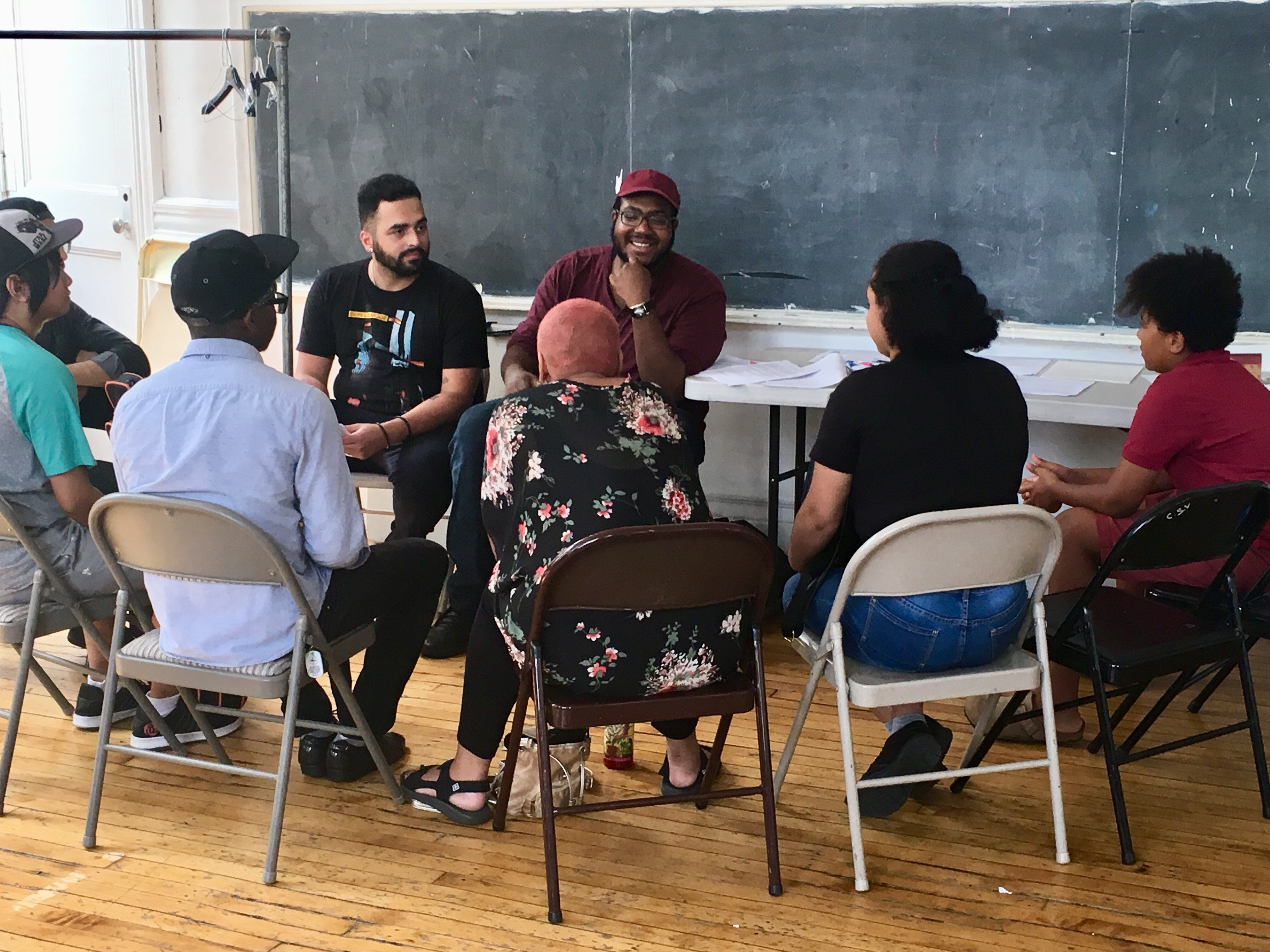
As the head instructor of the music portion of the program, I wanted to share some foundational information and fundamental wisdom in a condensed period of time. Upon arrival, everyone was asked to fill out a survey to select their preferred topics or suggest new ones. I was fortunate to have co-instructors Jason McFarlane, Frank Santiago and for the third week, Elijah McCoy, to help me cover the myriad topics requested. Breaking the sessions into three time segments, each instructor chose from among the most popular topics to cover in breakout groups. Each of the instructors brought a different set of areas of expertise and an enthusiastic personal approach to sharing their experience.
The subject matter was kept broad and the questions were varied. Some of the areas covered included: singing solfeggio (DO-RE-MI…), how scales and chords are built, how to keep stringed instruments in tune, rhythm section interplay; and dealing with interpersonal dynamics in a creative situation. Every week brought a different combination of returning participants as well as new faces, so we had the opportunity to cover some topics more than once, such as basic music theory and how it applies differently to guitar and piano. Other topics were the subject of spirited debate, like how to determine if a creative idea is good and whether it’s worth developing. For the most part, though, the sessions were about bringing to light some of the things that musical artists think about, including: self discipline, skill building and how to practice; making sure you have everything in order for a gig; how to work through self-doubt; and checking your ego.
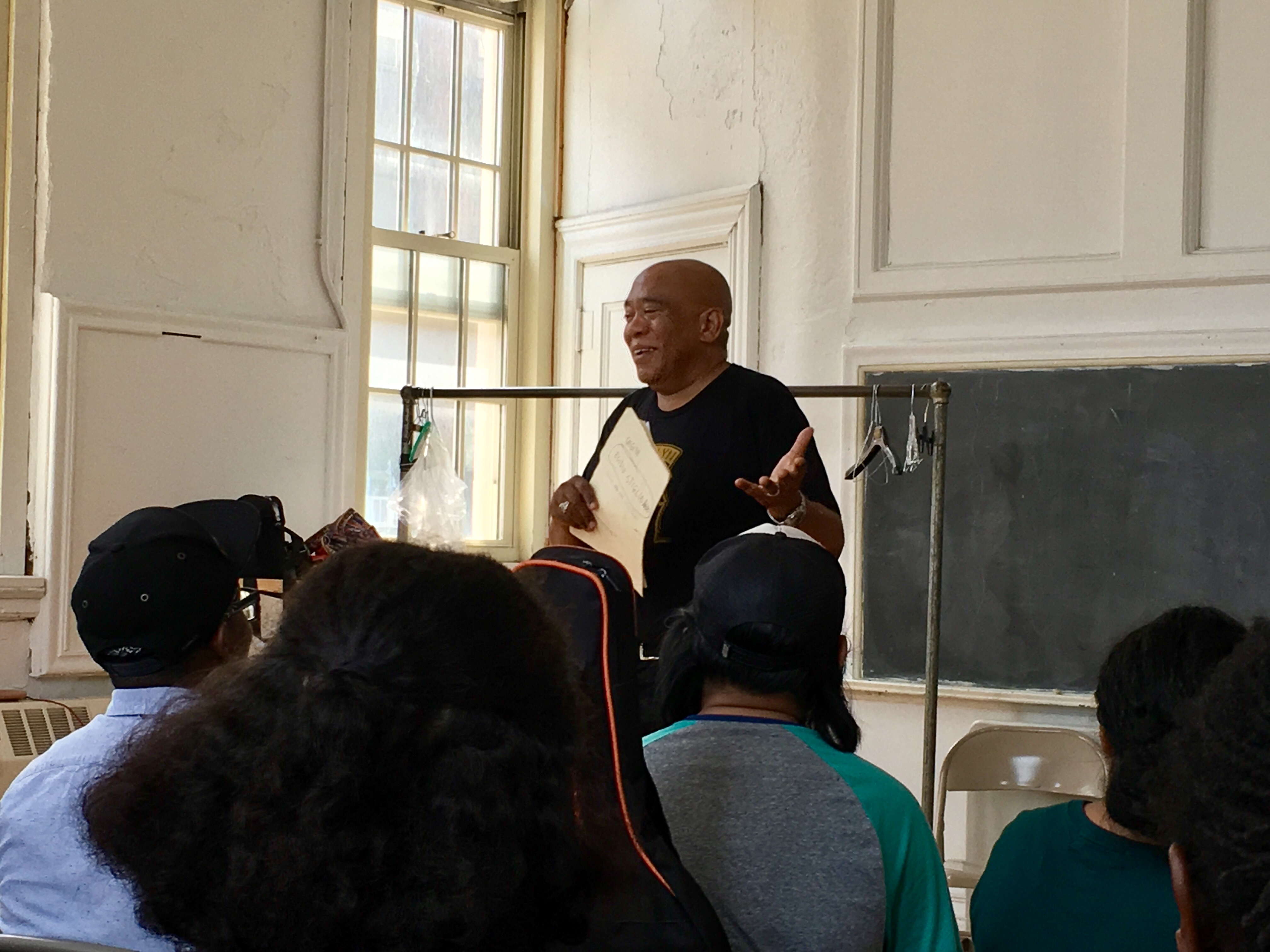
I feel like we helped all involved to get a better sense of perspective, and to gain some new insight into how to navigate their own path.The guest speakers: visual artist Artem Mirolevich, trumpeter and producer Albert Leusink, clothing designer Catherine Chang and blues guitarist and singer Michael Hill, each showed the group a window into their view of the life of an artist. Every one of them had a fascinating set of experiences and perspectives to illuminate us about, and they were all completely different. We’re so appreciative to them for openly and honestly sharing their stories and for thoughtfully answering the questions posed.
What was especially remarkable about this program was that, while there were some new people whom we’d never had in an Art for Progress program before; many of the attendees were people with whom I’ve been working for years through school programs, and have watched grow from high school students into young musicians. I have booked and played with their bands, and now consider many of them peers. They welcomed and engaged with the first timers to create a seamless social dynamic. There was also a very fluid interplay between the music room and the visual art portion of the program, creating an environment where creative chances were encouraged to be taken. This really brought home the fact that Art for Progress is an integral part of a growing community of mutually supportive artists. Each person brought their own unique set of interests and abilities, and it was inspiring to see how freely everyone shared and exchanged ideas and techniques. I look forward to the opportunity to host more programs like this in the future, where young musicians can get some useful insight and a new perspective on their craft among a group of similar minded peers, and where this community can have a place to grow organically.
-Barry Komitor
- 8 years ago
-
Registrations have been disabled
By Evan Jake Goldstein
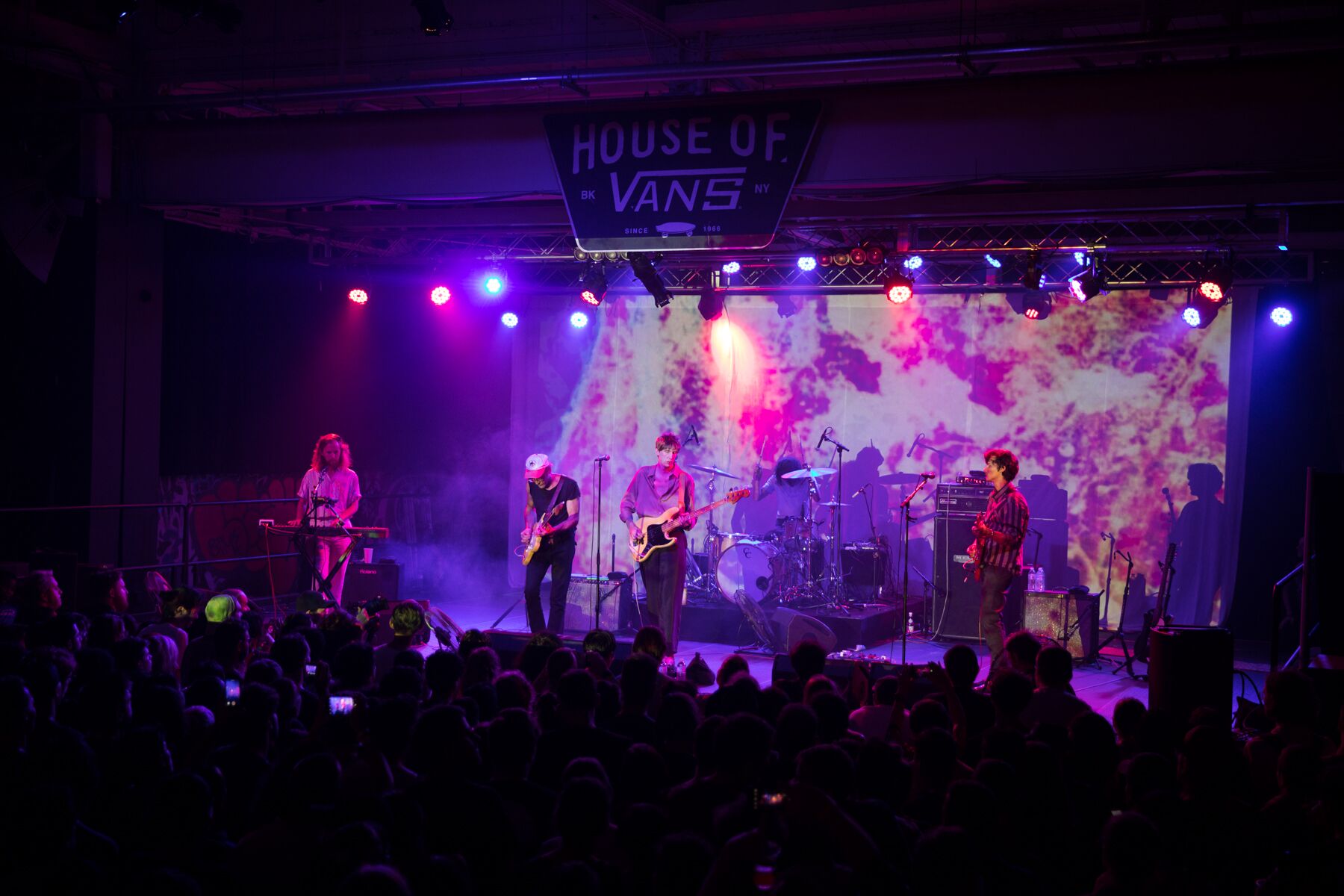
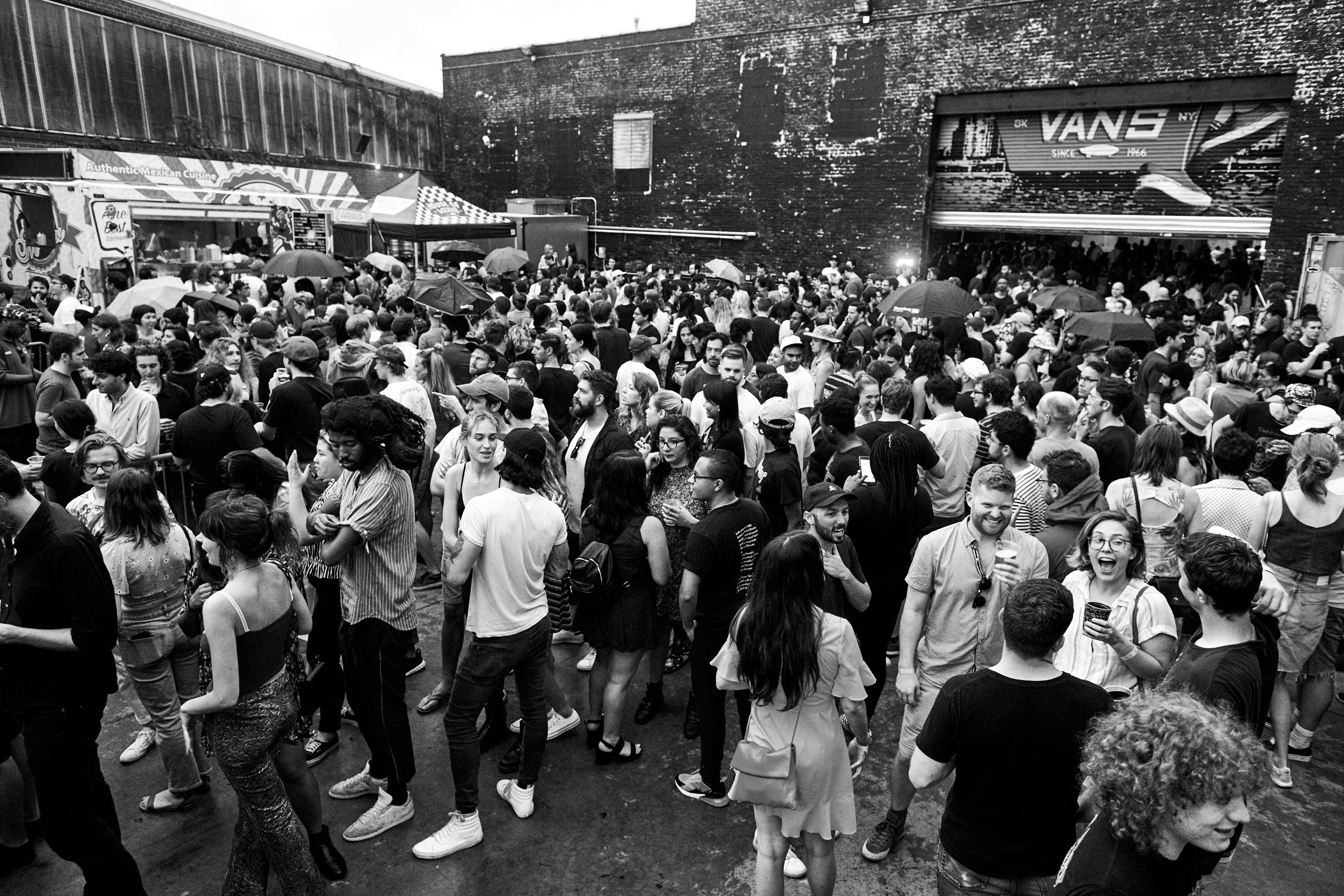
August 30, 2018It’s hard to believe that nearly eight years have gone by since House of Vans Brooklyn first opened their doors, promising free concerts, art installations, and curated events for all to attend. Originally intended as a pop-up spot for Vans to showcase their signature skate style shoes, the repurposed Brooklyn warehouse became a major hot spot for skaters, hipsters, punks, and music connoisseurs alike. The first come, first serve, RSVP ticketing system for their free summer concerts offers equal opportunity for anyone to attend their events. You can’t buy your way inside if you miss the sign-up period or are late to line up at the door. There are no $8 water bottles or VIP bathrooms, no balcony seating or members-only presales.
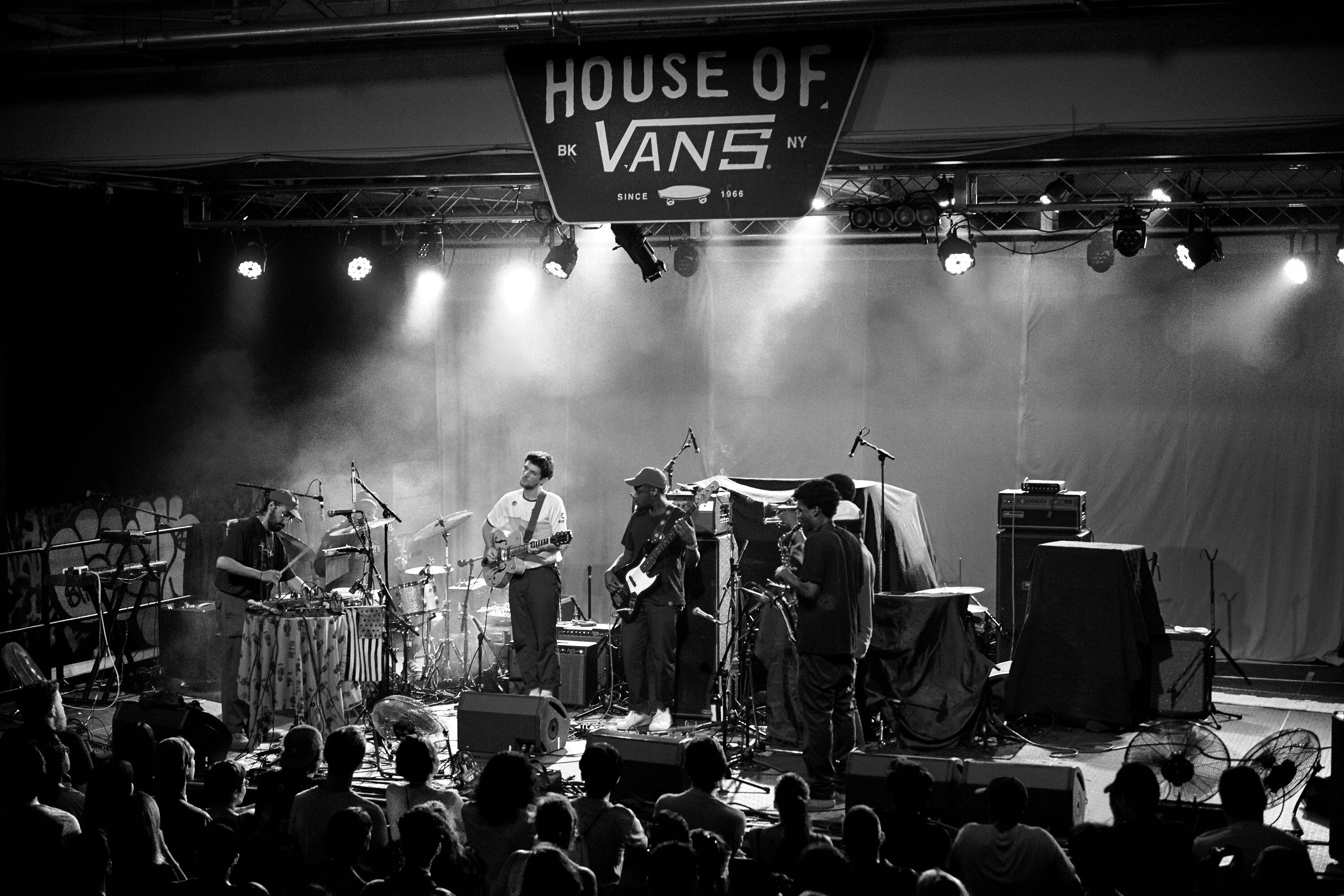
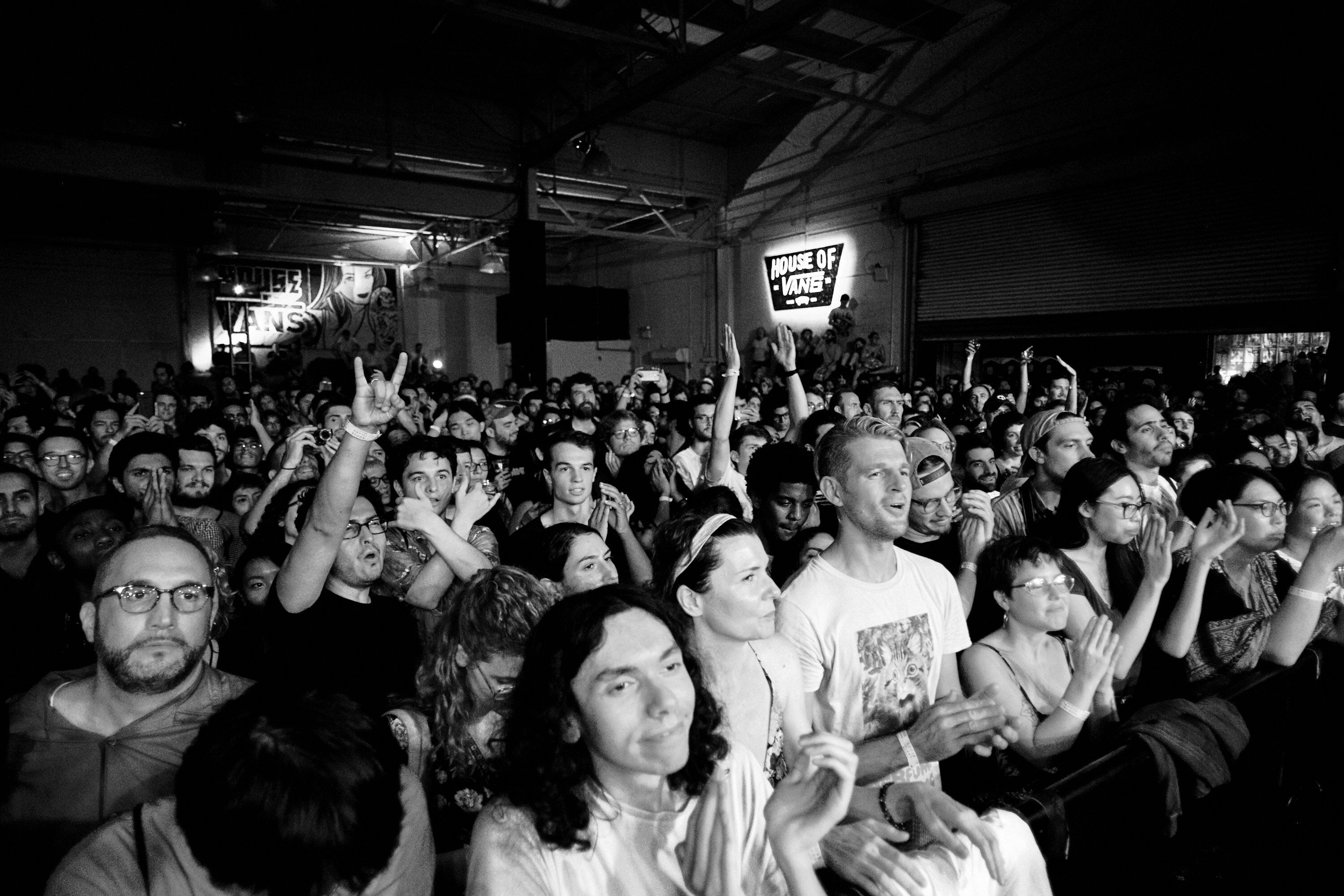
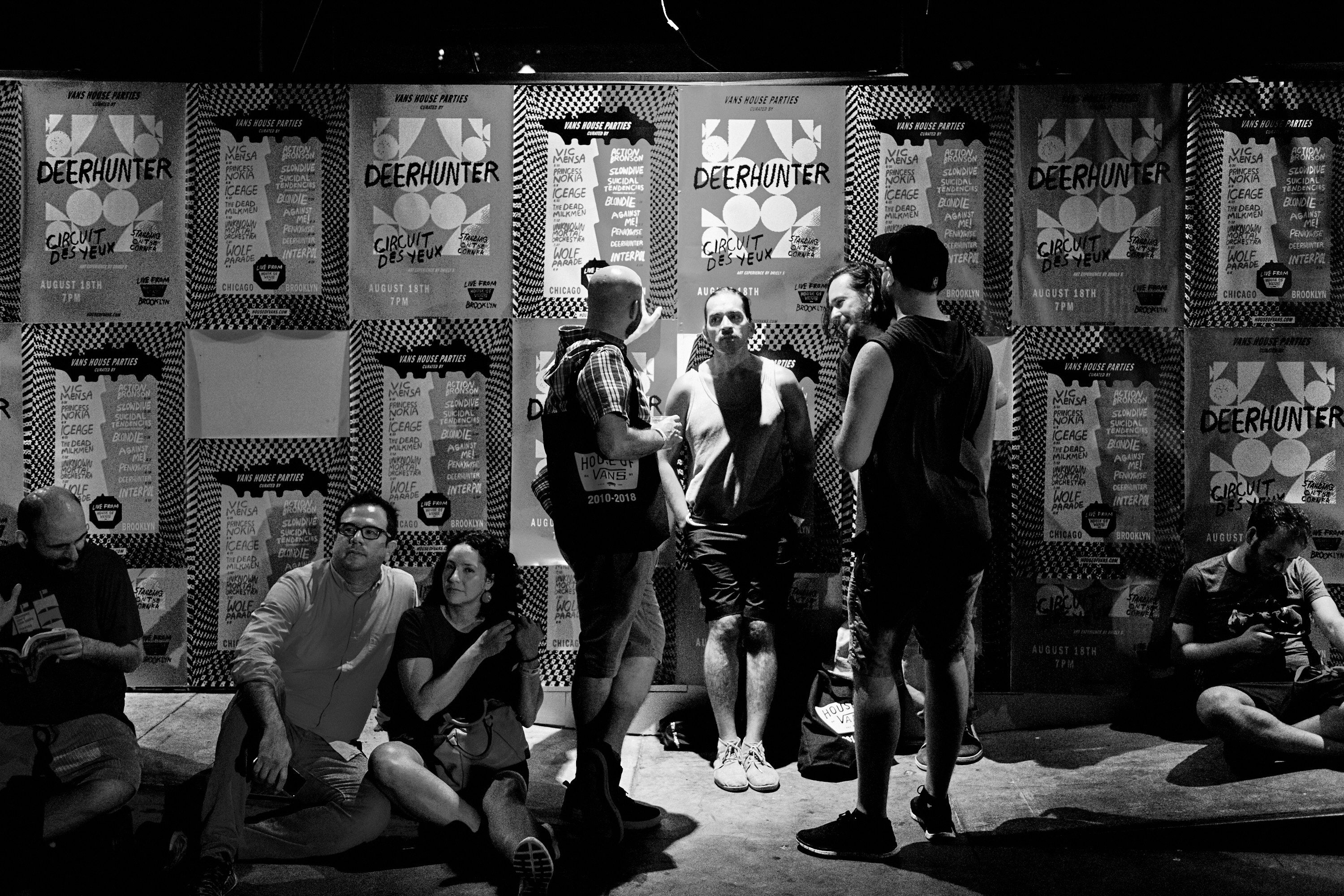
House of Vans feels like a magical place where beers are free for anyone of age willing to wait on line, and t-shirts, tote bags and posters are given away to attendees upon arrival and departure as souvenirs. Hispanic teenagers from the Bronx mosh with the middle-aged white businessmen of Manhattan, their mutual love for the music binding them. They book artists spanning all genres, decades,and levels of fame. The well-curated shows typically feature a headliner, a supporting act of the lead’s choice, and an unsigned opener. The penultimate show at House of Vans Brooklyn featured Deerhunter, Circuit des Yeux, and Standing on the Corner.
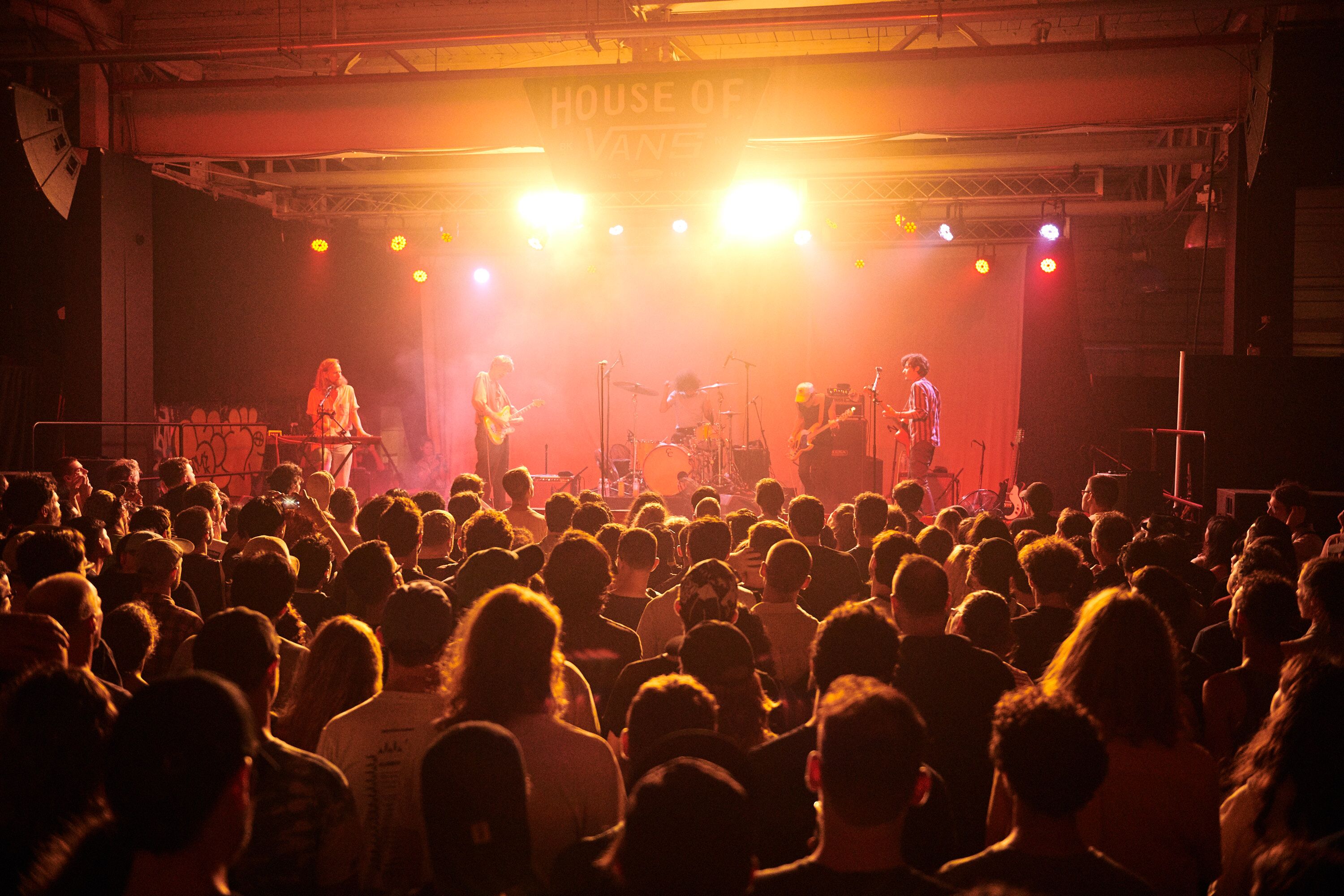
Post-post-genre openers Standing on the Corner were the first to hit the stage. Lead by 22-year-old Brooklyn native Gio Escobar, their unique blend of free jazz, instrumental sample-based hip-hop, spoken word poetry, and funkified indie rock set the tone for the rapidly growing audience to expect the unexpected.
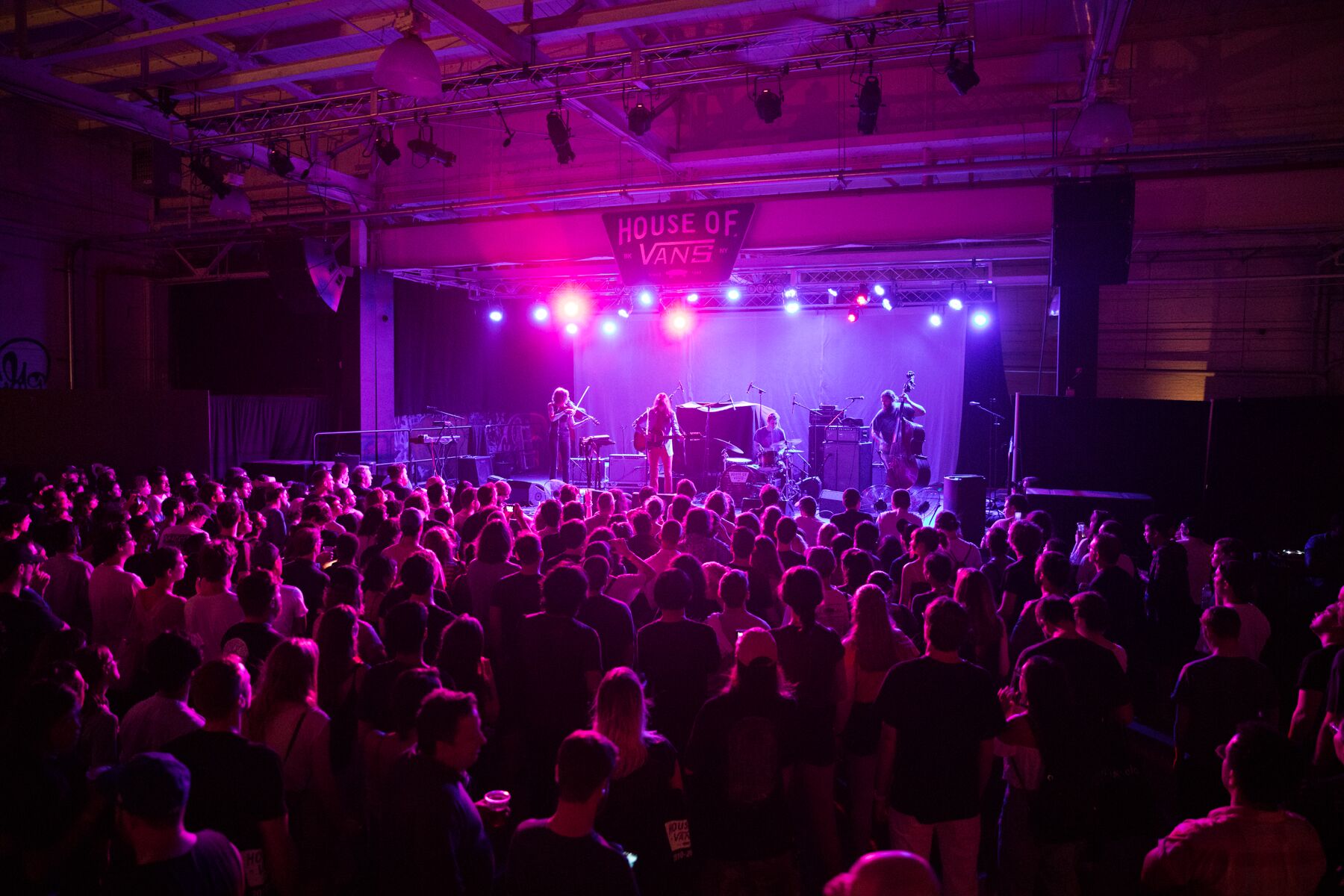
The evening continued with Circuit des Yeux, the psych-folk project of singer Haley Fohr. Her current lineup for live shows features a drummer, viola player, an upright bass and Haley occasionally on 12-string acoustic guitar enhancing her vocals. Throughout the set, the music swells to massive melodic peaks and poignant plateaus, carved out by Ms. Fohr’s commanding yet calming voice and equally hypnotizing stage presence.
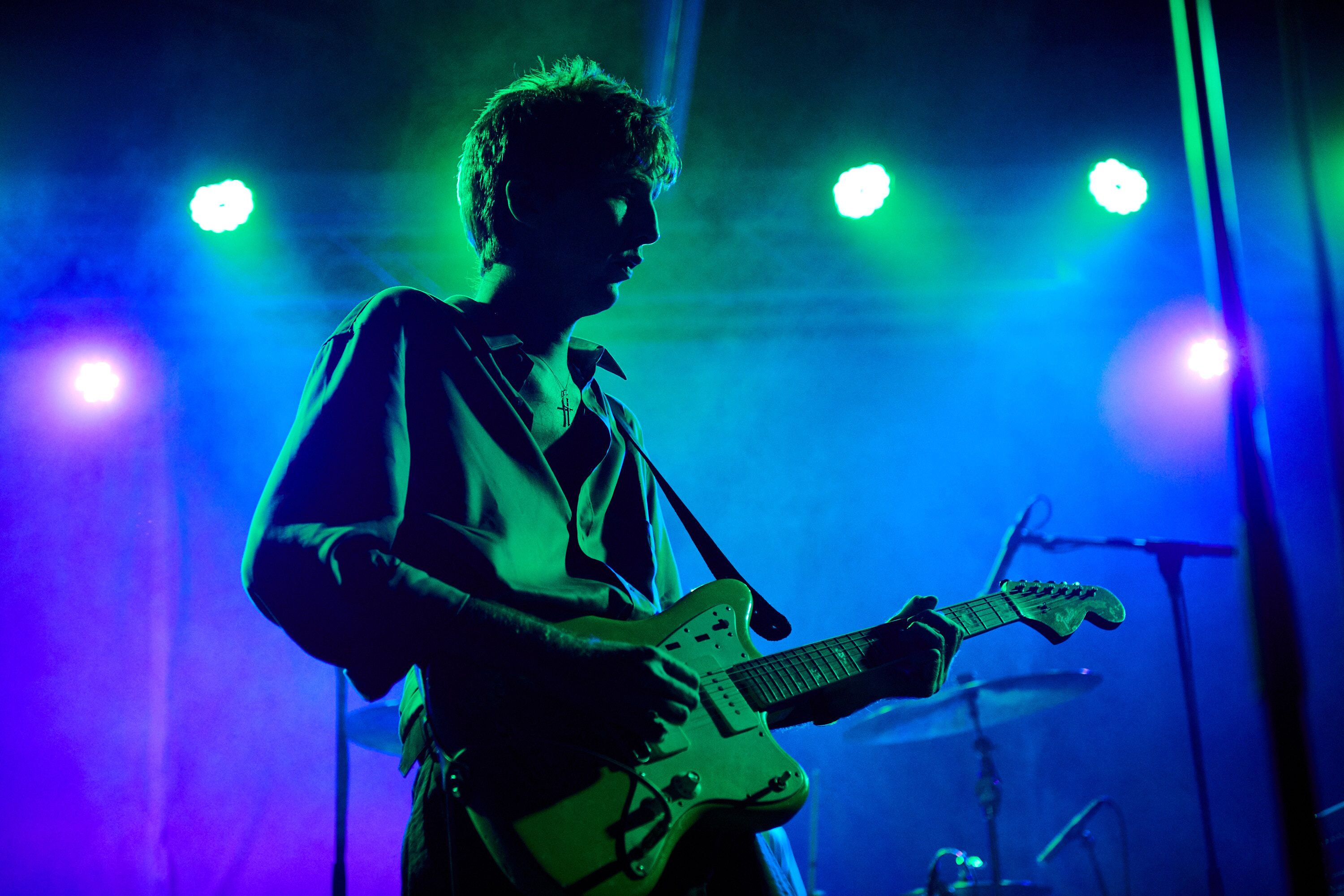
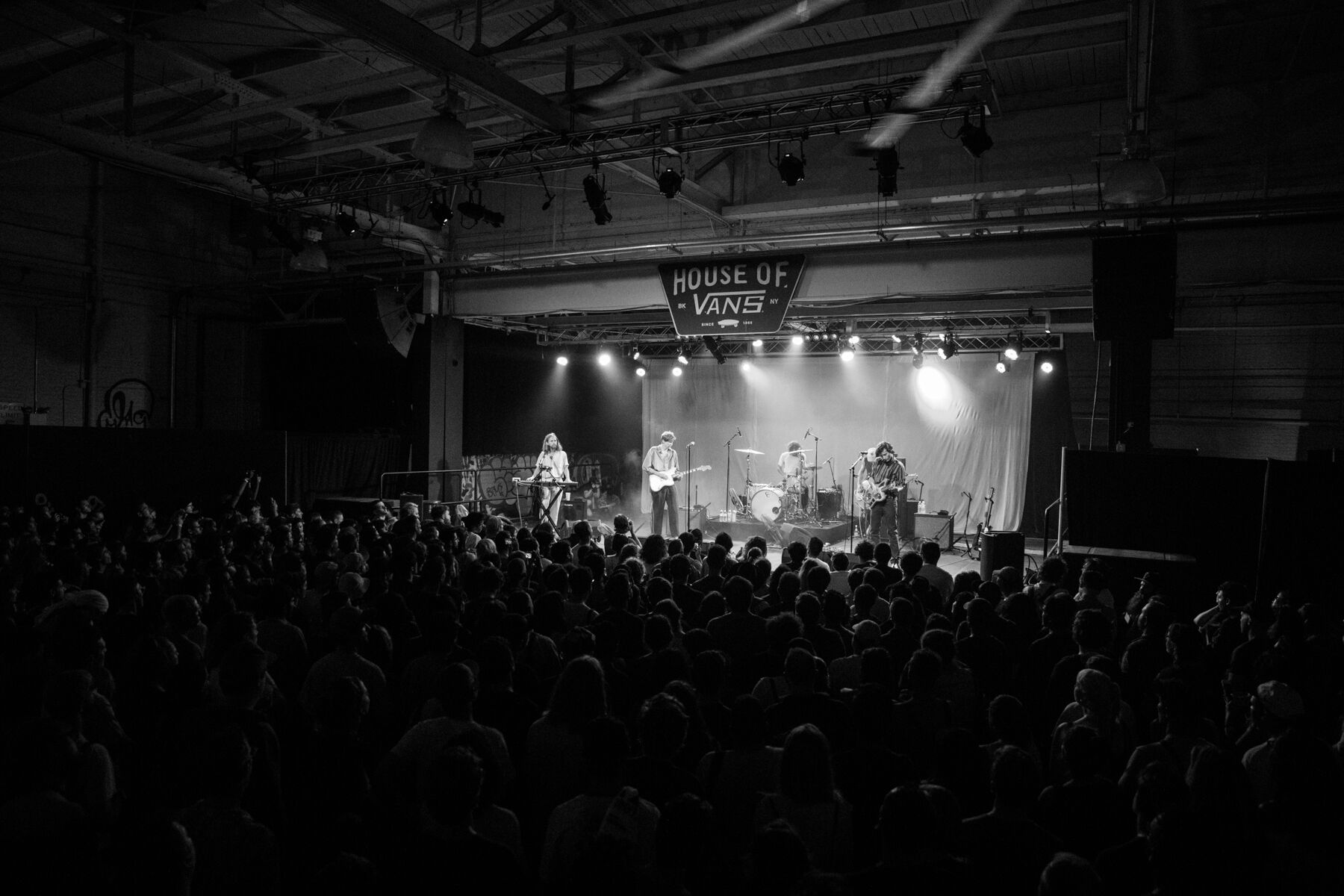
At last, Deerhunter takes the stage. They begin with ‘Cover Me (Slowly)’ and ‘Agoraphobia’, two favorites from the now classic Microcastle/ Weird Era Cont album which came out a decade ago this week. Band leader Bradford Cox wields his microphone with confidence and swagger, towering over bandmates and the crowd alike. His shirt half unbuttoned and slacks pulled up high, he seems relaxed, comfortable even. Without his signature brimmed hat to cover his face, his smile is visible even behind the microphone. The band is clearly digging the vibes in House of Vans… “I feel like we’re playing a prom!” Bradford exclaims.
Bradford then switches off between bass and guitar on new tracks ‘Futurism’, ‘What Happens To People’, ‘Death In Midsummer’, ‘Elemental’, and ‘No One’s Sleeping’. The fresh material is elegantly interwoven with ‘Revival’, ‘Desire Lines’ and ‘Helicopter’ from their 2010 critically praised album, Halcyon Digest. It’s nearly impossible to describe the sound of a Deerhunter show, heavily distorted guitar swells and recedes over the crowd as Bradford layers in soft spoken vocals as drums build to form heavy waves of sound.
We just finished our new album yesterday morning at 6:30, so the next time you see us, we’ll have a whole different set- all new stuff!
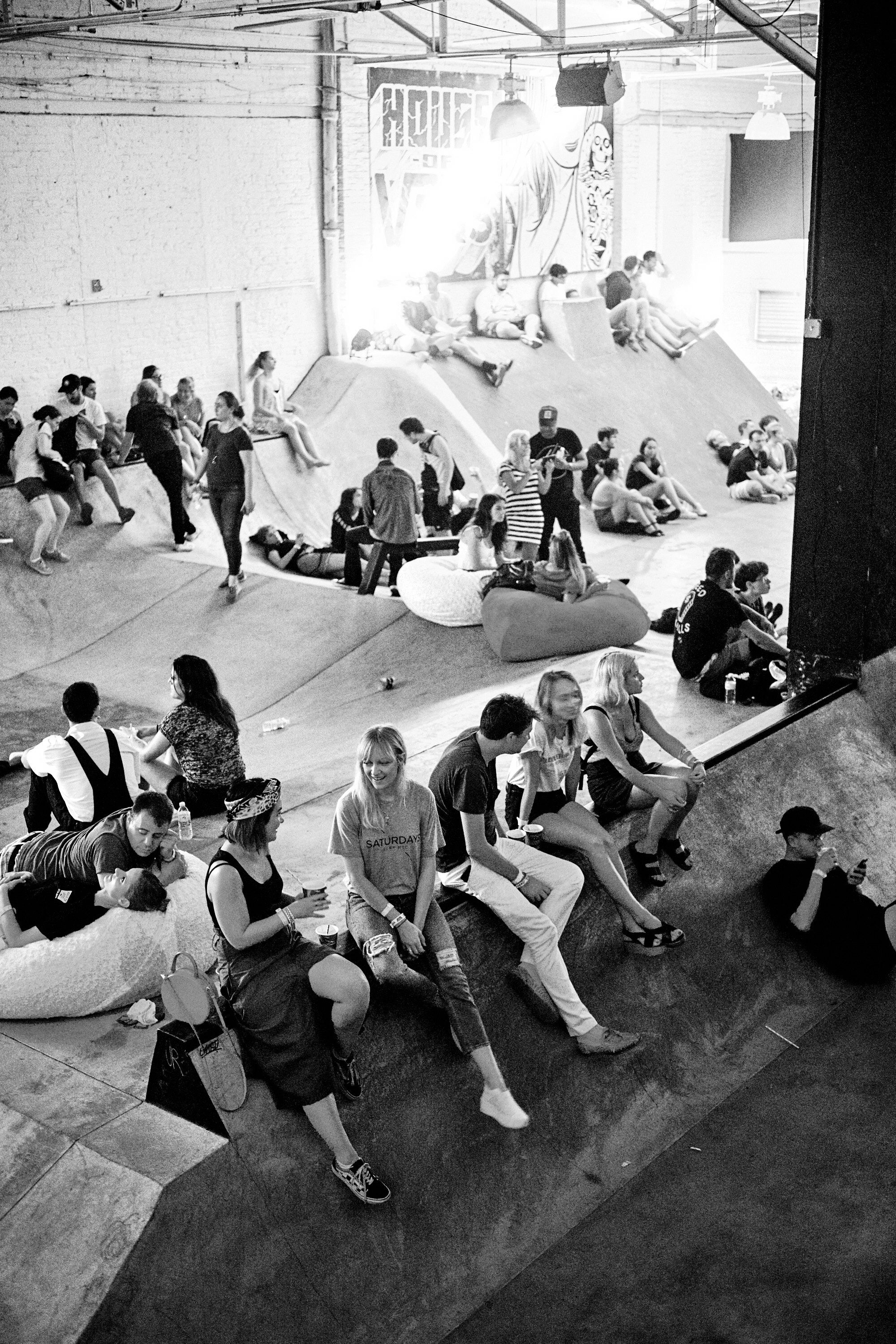
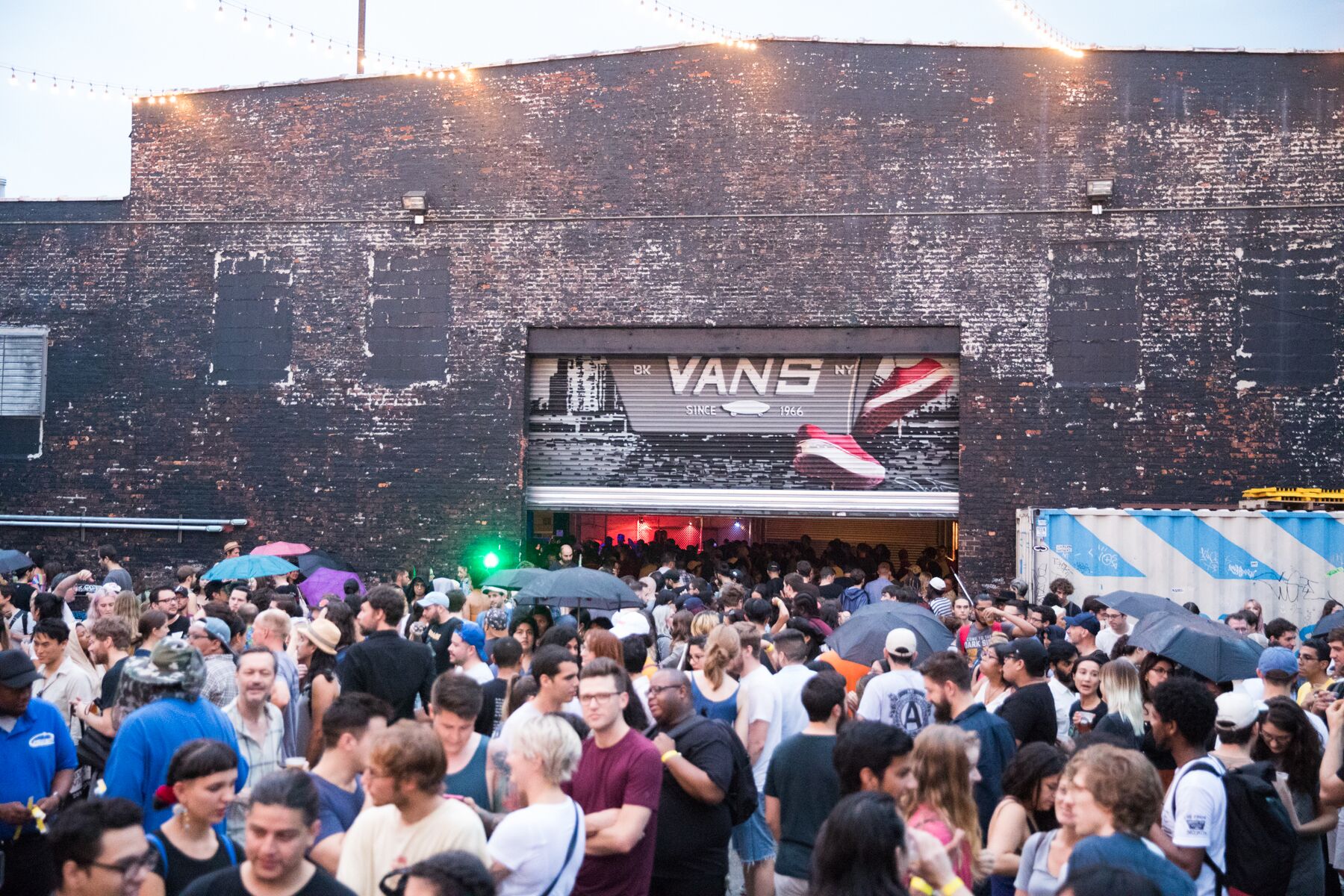
- Bradford CoxAs Deerhunter’s set continues, I find myself wandering around the venue, trying to take it all in. The converted Greenpoint warehouse has been transformed into a skate-haven turned concert hall for one of the last times. For seating, there are oversized bean bag chairs laid upon the slants of several large skate ramps. I grab a free water bottle from a large plastic container beneath the 30 foot industrial ceiling fan, and sit myself against a storage container outside the enormous loading door leading to the yard. I can’t help but marvel at the diversity of the crowd. To my left, some teenagers are trying out Fortnite dance moves to the shoegazey, improvisational sounds coming from the stage. To my right, twenty-something mustachioed yuppies sip from their vape pens, their heads bobbing ever so slightly out of time.
The 11PM curfew approaches, Bradford remarks, “This is the last time we’re playing this set…We just finished our new album yesterday morning at 6:30, so the next time you see us, we’ll have a whole different set- all new stuff…And there will be candy and rainbows!” On my way out, I’m given a poster for the event, as well as a House Of Vans t-shirt with 2010-2018 on it, commemorating the venue’s first and last shows.
House of Vans Brooklyn is closing its doors, but Vans plans on continuing to give back to the community. This year, they are launching their ‘Vans Gives A Band Music Fund’ where ten Brooklyn public schools will each receive $10,000 of music equipment and a $10,000 grant to fund music programming in schools, helping put instruments in the hands of young people all over Brooklyn.
Photography by: Jonathan Mehring @mehringsbearings & Laura June Kirsch @laurajunekirsch
-
- Standing On The Corner
-
- Circuit Des Yeux
-
- Bradford Cox
-
- Deerhunter
-
- Crowd
-
- Balcony Seating
-
- Full House
-
- Out Back
-
- Brad Off The Wall
-
- Visuals
-
- Lined Up
-
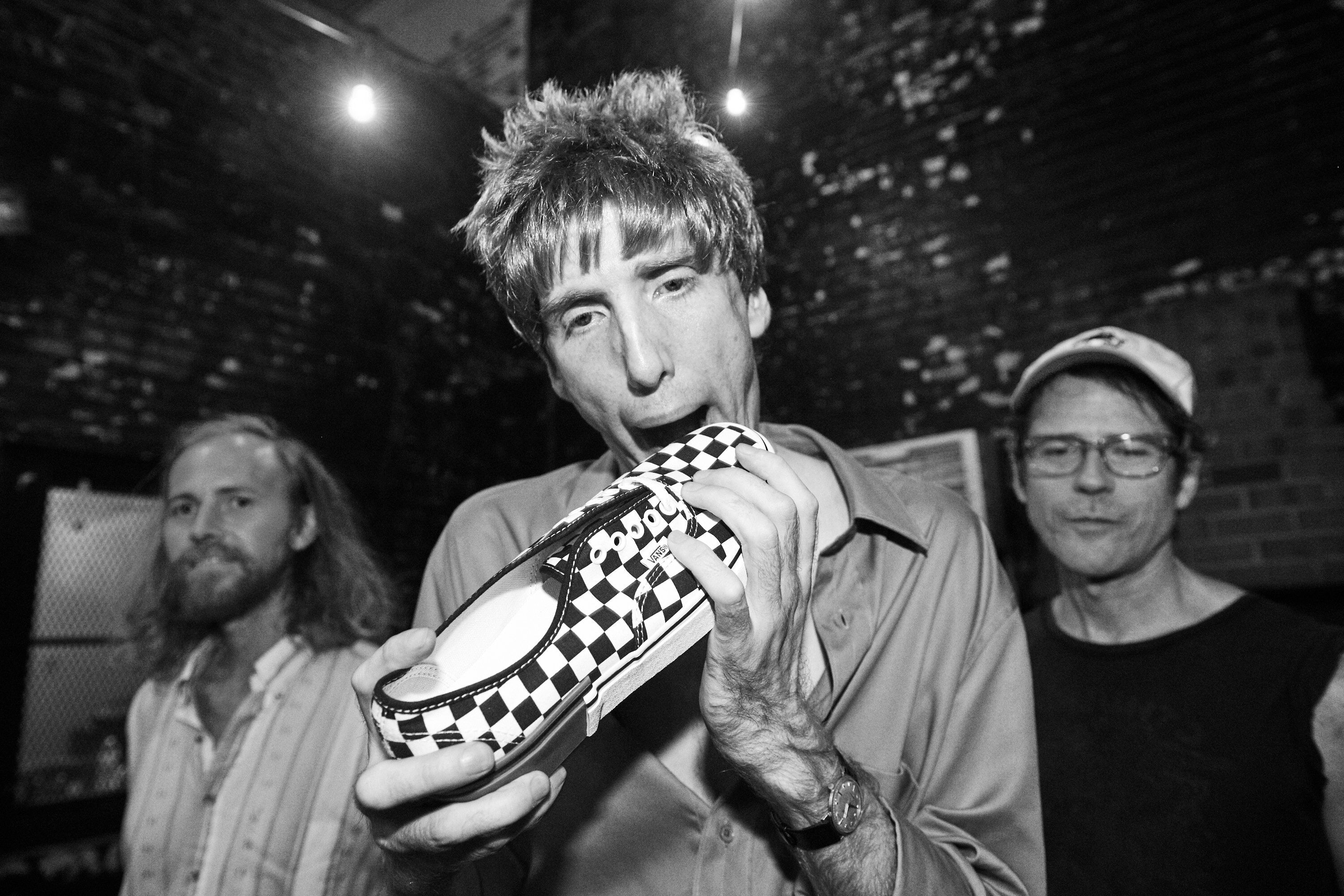
- Post Show
-

- 8 years ago
-
The art-making process is many different things to each individual. With this in mind, the goal of The Summer Music and Art Program was to facilitate an environment where art can happen as naturally as possible. We wanted participants to bring all their creative expressions to the environment so that they could use them as tools in their arsenal when creating art.
Each week in the visual arts component, the main activity was based on reflection on the work of a visiting master artist. We had visits from musicians, illustrators, graphic artists, and fashion designers, all of whom presented and discussed their work with the students.
In order to create an environment of an open community of artists where everyone learns from one another, we made the studios open to all. Visual artists would visit the music studio and musicians would go to the visual arts studio where sometimes they were the model for the day.
Participants were introduced to new materials that became the catalysts for new problem solving experiences. Students artists were provided the instruction needed to refine their artistic and technical skills.

Week One
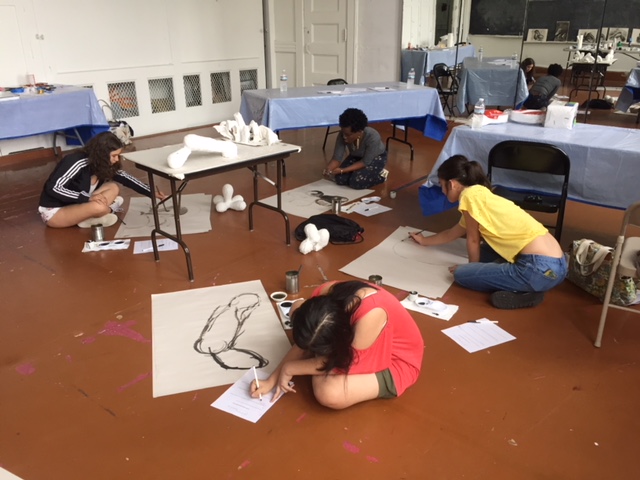
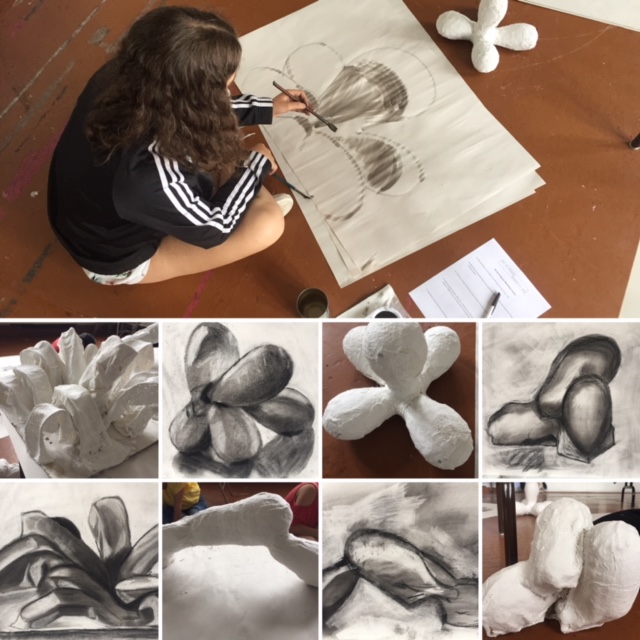
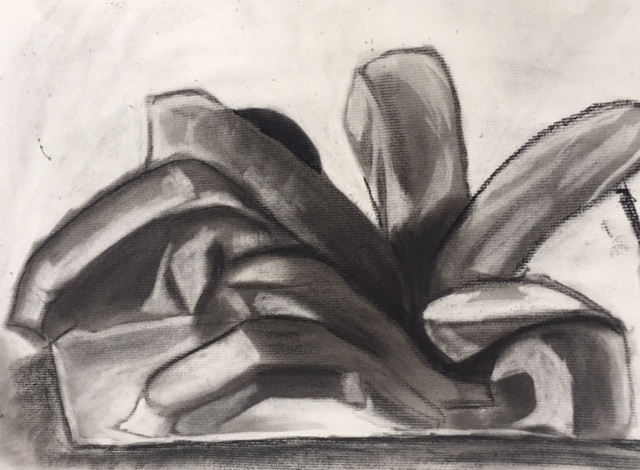
We worked from 3-D to 2-D and vice versa while developing a strong visual language that articulates perceived space. We built sculptures and made charcoal drawings of them with tonal values. We also used layering techniques in drawings by creating shapes with different values.
Students artists were impressed with what they were able to accomplish in such a short time.


Week Two
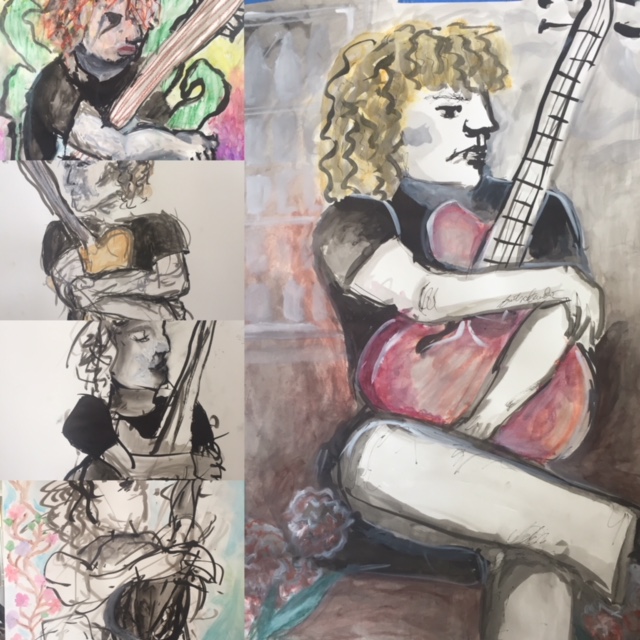
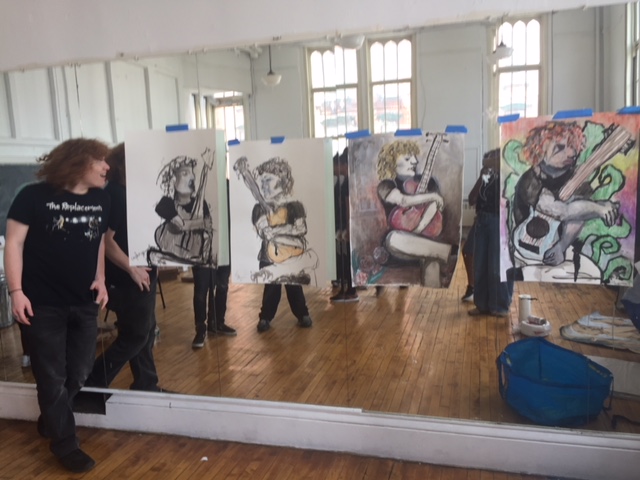
We worked collaboratively with the musicians. We worked together in one large room as we all practiced our craft. We discussed the rhythm and movements of jazz music as it relates to rhythm and movement in visual arts. Students artists created mixed media drawings /paintings of “The musicians at play.” They relinquished control and suspended their judgement as they were forced to do drawing exercises that increased the likelihood of ‘the accident’ happening in their work.
The students artists were brave; they welcomed the experience. They were satisfied with the outcome despite their initial struggles with process.
Week Three
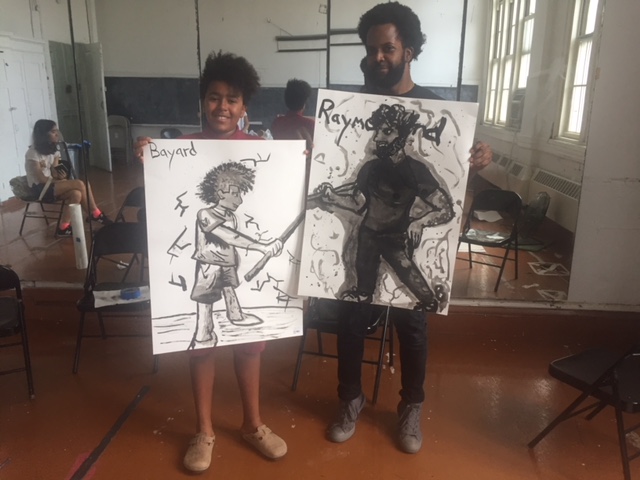
We continued to use the figure as inspiration while working with the musicians as our models to create drawings based on the theory of metamorphosis.
The students artists were all impressed, not just with the energy and movement they were able to create in their work, but also how they created feeling and interest with the layering process we used.
Week Four
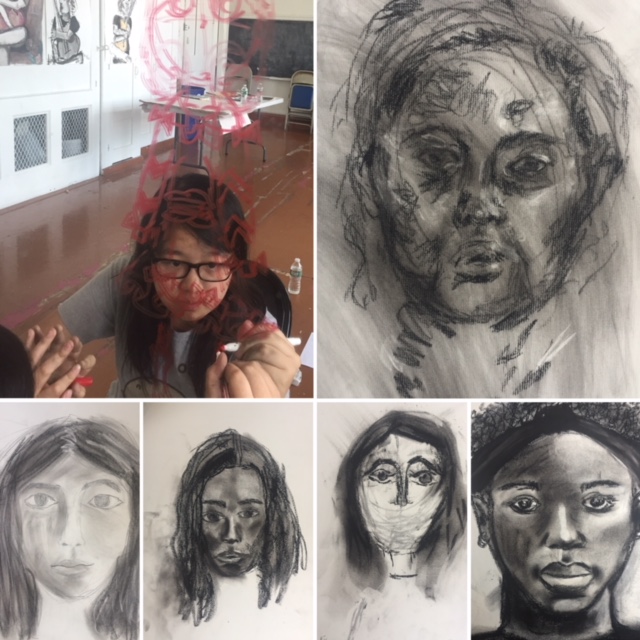
The students artists made portraits by using each other as models and they made lasting connections through their shared experiences. We returned to the practice of willingly relinquishing control and suspending judgement in order to create lines with character and drawings with personality.
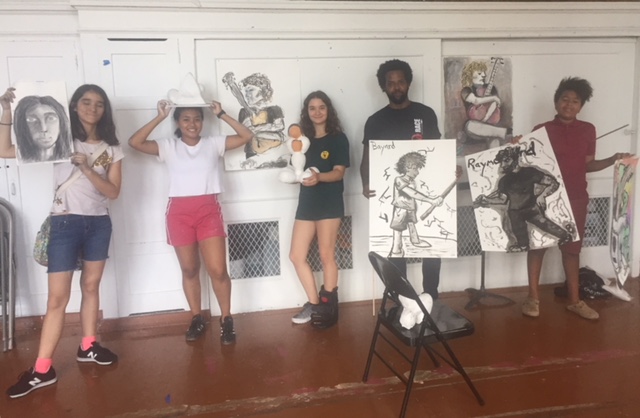
At the end of our experience we transformed our workspace into a mini gallery. We all came together to celebrate the great drawings, paintings, sculptures and music that was produced during the time we spent together.