
The Adventures of Tom Siegel by Narc Twain
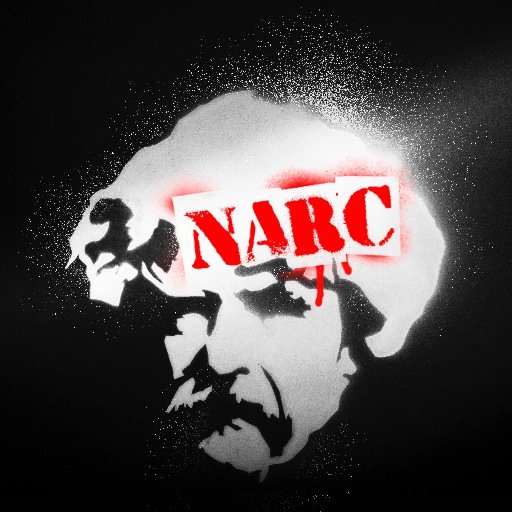 Tommy Siegel is best known as the guitarist of either piano band Jukebox the Ghost or noise rock group Drunken Sufis. The two bands exist on fairly opposite ends of the genre spectrum, with one brimming with gentle introspection and optimism while the other stopping its feet and howling against the government. Siegel has pooled elements of both projects, like the political-savvy of the Sufis and the humor of a younger Jukebox, to fuel his newest act: Narc Twain.
A dystopian punk band, the group was born from of all things a book of poetry. The symbiotic nature of Brooklyn is perhaps to thank for Siegel’s chance encounter with the book. He found Jeremy Schmall & Cult of Comfort by Jeremy Schmall in the recycling bin of his apartment building last year. The 99-page collection is brief, with fifty or so poems channeling anxiety, paranoia, pain, discomfort, understanding, introspection, hunger and hitting on a myriad of other emotions that the reader didn’t necessarily see coming. The poems twist and hairpin turn in a way that would make all MFA students smile and all passer-bys wonder what exactly did they pick up out of the recycling. The commentary on capitalism and cynicism struck a chord with Siegel. He wrote Schmall, whose email was hidden in plain sight in a poem in Cult of Comfort, eventually sending him music. And thus Schmall inspired what would eventually become the six song EP that is Narc Twain.
 The band released the debut EP last week, playing a show in celebration at Brooklyn’s Knitting Factory. With Philadelphia’s Lithuania and locals Norwegian Arms opening, Siegel along with drummer John Thayer, guitarist Aaron Leeder, keyboardist/vocalist Dave Cohen and bassist Brett Niederman brought the disenfranchised and discontented EP to life. With posters with “better luck in the next life” and the author of “The Great American Novel” spray-painted across them propped against their amps, the band looked punk enough. They sounded more the part.
With dystopian, paranoid and anxious lyrics set to sharp guitar riffs and synths, Narc Twain’s songs are a similar sort of ride when compared to Cult of Comfort. They’re dark and dappled with humor. Siegel’s versions of the future include a different sort of life aquatic in which “most of Manhattan was underwater…an aquarium lined with hedge funds and coffee chains” in “Downhill” and a post-apocalyptic darkness in which “the sun [is] gone for seven months and 27 days” in “And Today, Nothing.” These outcomes, inspired in part by the book and in part by his own imaginings, are equal parts ridiculous and right on. You have to hand it to Siegel, if Manhattan flooded in some sort of end-of-the-world scenario that is exactly what it would look like.
 These nightmarish visions are accompanied by complaints and observations that sounds less like Siegel is just trying to get attention (as the somewhat jarring imagery might suggest) and more like he’s actually paying attention. In “No Connection”, he outlines the bizarre and sudden death of journalist Michael Hastings. While listings off some the characteristics of the crash, he asks, “Don’t you think it’s peculiar? Don’t you think it’s strange?” From the sounds of it, it seems like Siegel thinks it’s more of a cover-up than just a conspiracy theory, but either way it makes for an intriguing song.
This, the intelligence of Narc Twain is what makes it successful. Throughout the EP, Siegel name drops phrases like “agent orange” and with each song hedges into increasingly political territory. As he brings each topic to the table, Siegel presents it without pretension. He doesn’t try to wow listeners with unnecessary, attention-grabbing SAT words. Rather he lets the sentiments speak for themselves using the issue’s own rhetoric (eg, “it’s their god given right”) to make his point, albeit sarcastically.
As a results, Siegel comes across as very well-informed, proving that just because he writes punk songs, not NYTimes articles doesn’t mean that he can’t tackle something bigger than just general dissatisfaction. However, Siegel doesn’t take this role too seriously. Instead of calling his band “Alvin Toffler and the Futurists,” Siegel made a bad pun and wrote “Future Shock.”
Siegel sounds very natural and comfortable in this tone, which in turn makes Narc Twain sound like a very genuine pet project. With so much of music ghostwritten, it’s refreshing to hear the somewhat nerd-y Narc Twain EP. It wasn’t written to compete with TSwift or fuel the pop engine. It was written because a guitarist from Brooklyn who has probably read more Wikipedia articles than the average person was so into a book of poetry that he wrote songs based on it. Whether, as a listener, you want to take it as serious social commentary or if you just wandered over from Team Jukebox, it’s a great listen and a promising start from an already well-defined band.
-Zoe Marquedant