- 8 years ago
-
It was the industrial revolution that first attempted to record sound “as a medium for preservation,” activating the phenomena of noise as an integral source when documenting history. Thomas Edison received notoriety for the phonograph in 1877, but it was really Edouard-Lèon Scott de Martinsville who invented the phonautograph in 1857, the first recording device. The device was specifically created to study frequency found in sounds, an intention much different from the phonograph invented by Edison which was to play and “reproduce the recorded sound… originally recorded onto a tinfoil”. As per historical reference ( author unknown ), “The phonograph revolutionized the art of music. Performances were recorded and people could listen to them at their leisure. It also made music and communication more public. The invention signaled the birth of a new form of entertainment and an entirely new field of business that fed the demand for the new invention, the music industry”- hence both inventions put an end to the masses’ naiveté to the sense of hearing, and introduced the start of audio’s sensational future possibilities.
When we fast forward through the history of music and sound, we could say that the underground rave music scene (which famously erupted somewhere in between Chicago and the UK during the late 80’s), had a lot of thanking to give the founding fathers of sound, more so Edison’s phonograph. It was the phonograph that gathered groups of people before a speaker, and provided the tinfoil turn-table surface that would later provide all DJ’s their toy to scratch and play. Meanwhile visual artists and sound composers like Christian Marclay (Guitar Drag, 2000), push the limits of the process by recording the unplanned ( similar to Martinsville’s sterile approach to document sound), as a way to preserve a moment in history, as a form of art.
Although the fundamental of each invention resided in sound, both were distinct in nature and require different modes to the final release of sound. For one, in the rave scene, the DJ uses the turntables to create sounds, which eventually become into hypnotic, riveting, 8 count dance-able sentences, or compositions, while artists like Marclay play with sound from an archival and fortuitous place: lacking the 8 count structure, not-worthy of Martinsville experimental approach to document sound.
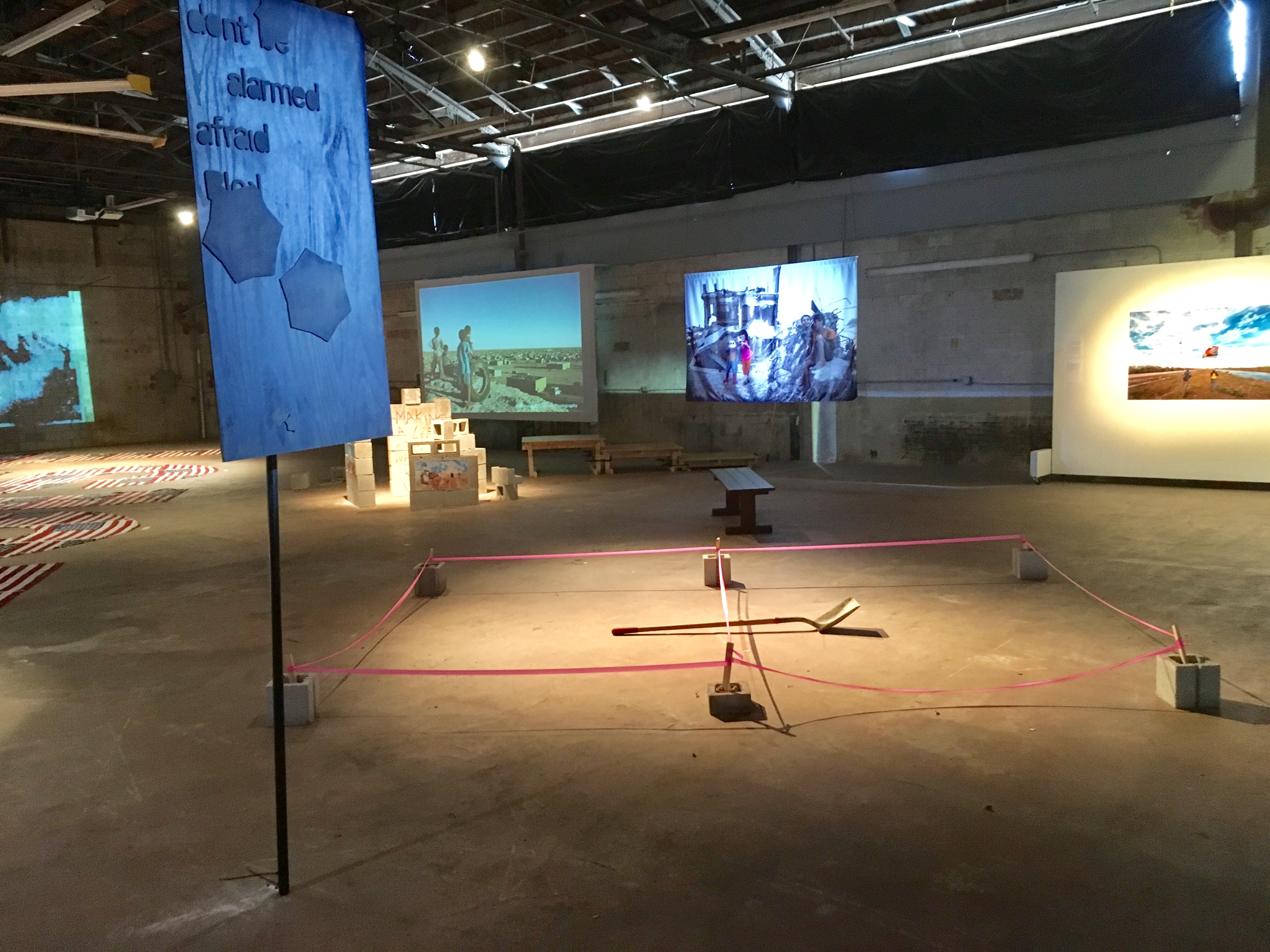
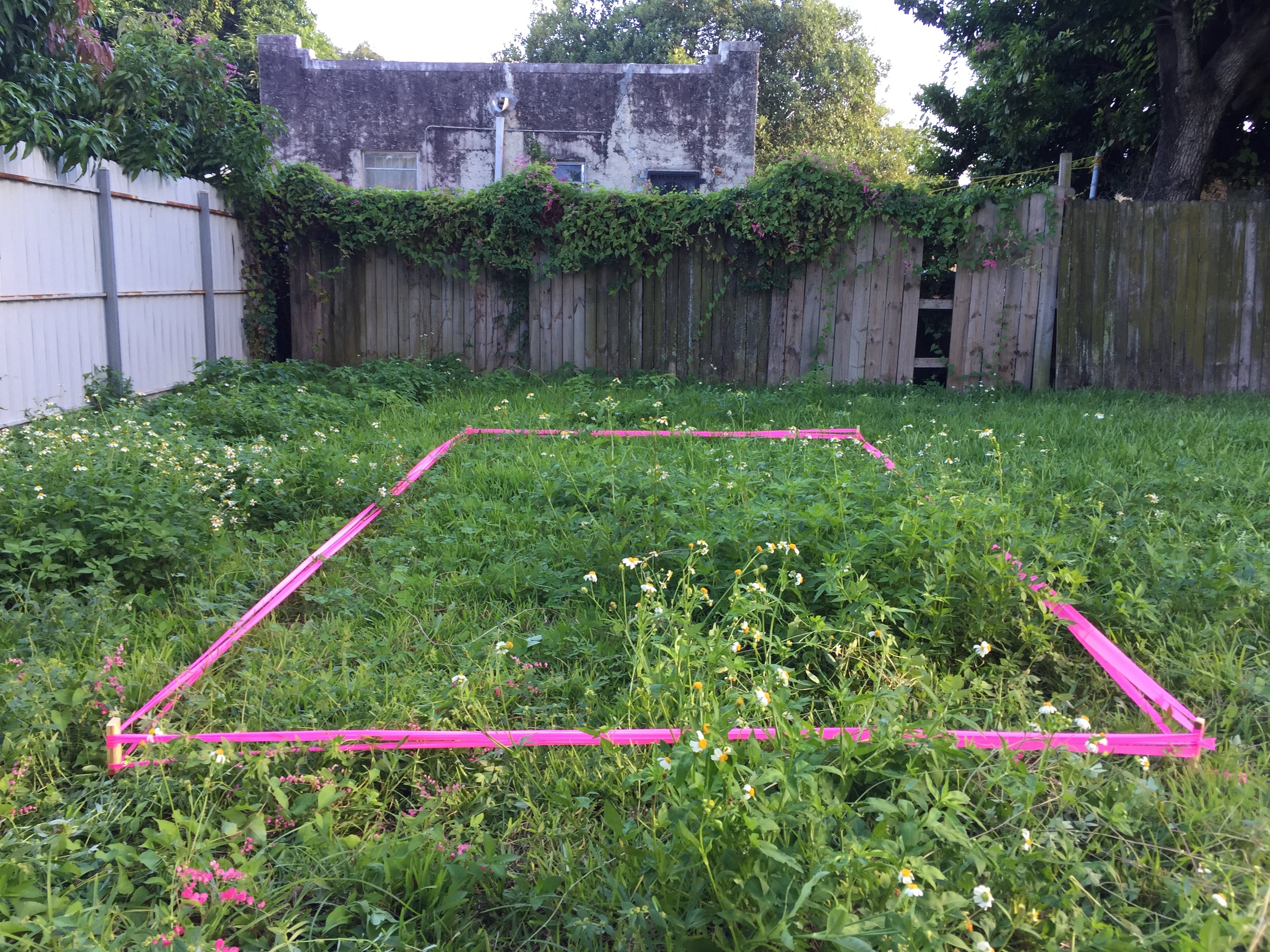
In 2012, Emile Milgrim and Thom Wheeler Castillo, two artists residing in Florida embarked on a project that would lead to the sound collective, Archival Feedback. Their work falls somewhere in between Martinsville and Edison’s inventions, and/or intentions. During a recent group exhibition at FATVillage Projects, I curated In Close Proximity, and asked AF to present Delimiting Site 1b, (2016-ongoing). The work was an examination of a location and its history ( a strong tie to the theme of the exhibition: a person’s identity and possible evidence embedded in a terrain that could solidify the security of people in political emancipation). The piece entailed of a gouged 10 ft x 10 ft rectangle shape on a plot of land the artists had worked on for about 3-4 hours. Hot pink wooden stakes were placed at each corner to mark its view to the visitors and microphones were placed next to the piece to record the sounds of the clanging shovels. Pictured off-center; Archival Feedback, Delimiting site 1b, 2017/18, during In Close Proximity, 2018, group exhibition at FATVillage Projects, Fort Lauderdale, Fla.
Questions & Answers:
When did you first dabble in sound?
AF: In the womb, duh.
BB: Oh..yeah, presumably so. I knew that.
Was your exploration intended as a work of art or as sound play for the public?
AF: EXPLORATION
How is sound relevant in Contemporary art?AF: Sound media has improved as the tech has developed and now is very streamlined, allowing access to various platforms that can easily transmit to global audiences in seconds for playback and feedback. Sound is immediate, physical sensation, directly transmitting rich, physical details of the material world that flow through our bodies, primarily, but not exclusively, through our ears.
Waves physically moves through the eardrum and perceived by the brain simultaneously, directly employing language, records, noise, movement. I find it equally if not more intriguing than the visual. That directness as a medium also enhances the ideas driving the work, the gesture of listening, enhanced listening of the landscape by using the brain and the body to listen to the world around. Is this relevant in Contemporary art? I would hope that spaces that actively employ art are places that encourage listening as much as rhetoric.
What are you saying… or trying to say to the audience in Delimiting Site 1b? What will the audience understand when they listen to your work?
AF: In Delimiting Site 1b, a sound replays with fidelity a gesture enacted in fieldwork, the sound of a shovel digging. To delimit is to measure and form boundaries, to create my space, your space. But the audience is presented with a record of breaking down a site. The fieldwork explores the site, breaks it down, handles it. It uncovers details of the site. What is the site made of, what has been forgotten? What seems inconsequential reveals something about place and the experience of that place over time, that is, its history. When we dig through layers of bio-facts, handling of the stratum as information that is measured, mediated through technology, that sifting from bio-facts into artifact, the gathered stratum becomes a record. History can happen in the same place over and over again but is usually forgotten. In the act of the digging, through the stratum, we can reclaim that history, we can confront what it reveals. The recorded gesture becomes a way to experience that record through its playback, looping, re-framing that act of. How are you selling your work?
AF: This work is not for sale.BB: So I can’t buy it? Okay then… If you could turn your sound into an image, what would that image look like?
AF: It’d be interesting to portray through a moving image, an animation made from drawings that describe the sound and gesture.Are you conversing with each other (AF) when you create, or with the public?
AF: We see the work as a constant dialogue between ourselves and the environment. We’re glad others choose to listen.
What are you working on aside from In Close Proximity?
AF: We’re scoring a soundtrack to a film about the Everglades.
– Beláxis BuilFor more on Archival Feedback, visit: Other-electricities.bandcamp.com
Sources:
*DJtechtools.com, History of the Rave Scene: How Djs Built Modern Dance Music, Sara Simms, December, 2013
*ihatetodance.com, Hear the beat, feel the…, James Joseph, 2014, Internet*glasstire.com, Notes on Christian Marclay’s “ Guitar Drag”, Christina Rees, June, 2015, Internet
*www.reference.com, How did the Phonograph change society?
*therivardreport.com, ‘ Guitar Drag’ Reverberates Dark History at ArtPace, Wendy Weil Atwell, May, 2015
*wikipedia.com, Rave, Page issues
*wikipedia.com, History of Sound recording, Page issues
Latest News
- 8 years ago
-

Courtesy of Greenwich Entertainment
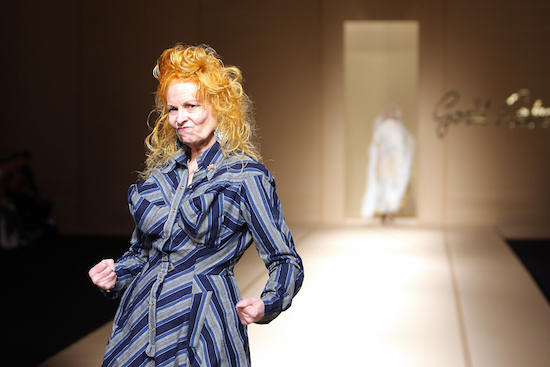
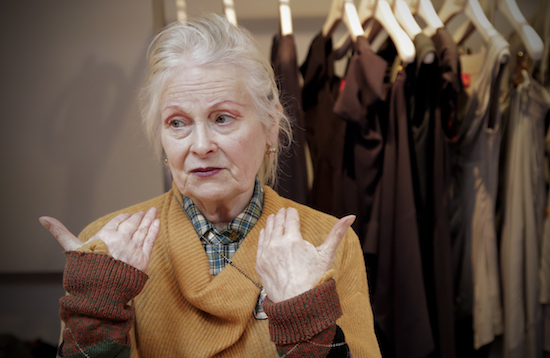
Westwood: Punk, Icon, Activist, Lorna Tucker’s documentary on iconoclastic British designer Vivienne Westwood, has a trim runtime of 80 minutes. Maybe that’s why it feels like there’s a lot missing. How do you encompass the life and work of someone who 1) is half responsible for inventing British punk, 2) has evolved from an anti-establishment outsider into a revered fashion designer and beloved British subject, and 3) has had a fascinating personal life as well? This could have been a documentary series.
With the short shrift given various aspects of Westwood’s life and work, this nonlinear, nonchronological film yields more questions than answers. (Thank goodness for Wikipedia.) So it’s probably best to experience the interviews, archival photos, video clips and stock footage representing Westwood’s 77 years on earth as an impressionistic wash of information and fantastical visuals. In some ways, it’s a fitting framework for a wildly unconventional artist who has never done anything neatly or predictably.
The film begins with current-day Westwood looking overwhelmed as she asks crankily, “Do we have to cover every bit of it? So boring…” She’s reassuringly punk from the get-go.
Tucker largely lets her subject narrate her own story, with input from husband, sons, employees and various others who have known her. We learn that she began making clothes at 11 or 12, around the same time that a painting of the crucifixion instilled the desire to save people and “prevent bad things from happening.” This motivation still drives her work: “You’ve got to cut a figure, be prepared for action and engagement.”

Courtesy of Greenwich Entertainment
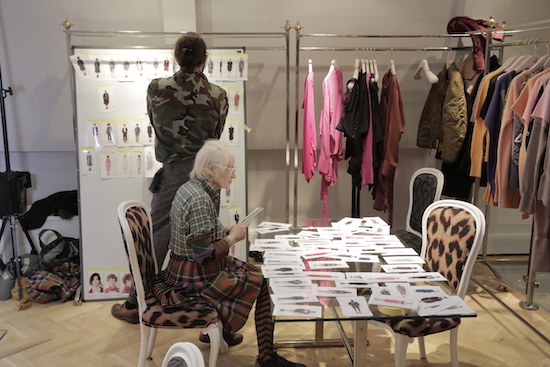
Shown preparing a recent show for London Fashion Week, she’s clearly unhappy with the collection. Dramatically outspoken, she curses and browbeats employees before declaring, “Let’s close the company.” One senses that this is nothing new.
The film delves into Westwood’s working class background, as she recalls leaving art school for teacher training in order to make a living. She marries Derek Westwood just as the ’60s and rock n’ roll make their impact, but they split up soon after son Ben is born.
The intriguing-looking Ben, an erotic photographer turned designer, talks about the disruptive arrival of Malcolm McLaren, whose worldly background and big ideas prove irresistible to Westwood. She recounts their infamous collaboration, which began with selling records in the back of a shop on King’s Road. Eventually the couple would take over the space, selling their provocative handmade clothes. McLaren eventually recruited a few customers to become a band.
At this point in the film Westwood practically rolls her eyes, “Really, if I have to talk about the Sex Pistols…”
Instead, we see curators at London’s Victoria & Albert Museum carefully handling her classic Destroy t-shirt, worn by Johnny Rotten in the late ’70s. It’s a funny juxtaposition, considering how outrageously subversive it was at the time. (In 2004, the V&A mounted the first complete Westwood retrospective.)
Courtesy of Greenwich Entertainment
Eventually Westwood does talk briefly about the Sex Pistols. “We invented punk,” she says, not exaggerating. She notes that punk affected fashion so much that it soon became a marketing ploy; as a rebuke, she began designing colorful costumes with historical references and decided to enter the real fashion world. According to her, McLaren’s jealousy led to an ugly split. (“I outran him…got intellectually bored.”) Later, Westwood CEO Carlo D’Amario tells of an important contract that was scuttled by a vindictive McLaren. Unfortunately, the latter, who died in 2010, is not around to tell his side of the story.
Almost as fascinating as Westwood herself is her current husband and business partner Andreas Kronthaler, who seems almost mystified by his wife, admitting at one point, “I’m so in love with her.” They met when she took a teaching a job in Austria and he was one of her students. As Kronthaler gradually took over her business, many were suspicious, though it certainly seems to have worked out well for them both.
As the narration zigzags in time, we’re not always sure what year or collection we’re looking at, especially given the timelessness of Westwood’s styles (and of the woman herself). Of course, the clothes are stunning, from provocative fetish-wear to whimsical tartan suits to achingly beautiful gowns, shown in clips from various runway shows (themselves incendiary events). Westwood has covered a lot of fashion ground, not all of it appreciated. One early clip features an incredulous TV talk show audience laughing uproariously at each outfit presented by the designer. Says Joe Corré, Westwood’s son with McLaren: “She got that reaction a lot, but in the end you couldn’t ignore her.”

Courtesy of Greenwich Entertainment
When she finally wins British Designer of the Year in the early 1990s, it’s a hard-won recognition. She is also recognized at Buckingham Palace with an OBE (an event she attended sans underwear, much to the delight of photographers), later upgraded to a DBE.
With the brand’s success has come explosive expansion with myriad licensing deals and stores opening in cities around the world. Westwood worries repeatedly about losing control over her company, one of the few independent fashion houses left.
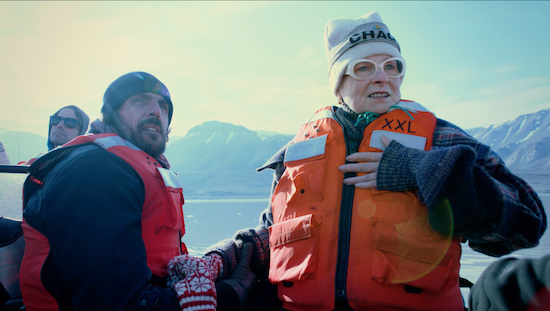
The film dwells briefly on her increasing involvement with climate change, among other causes. (Interestingly, there isn’t any mention of her own clothes being sustainably manufactured.) As she spends more time at rallies and other events, Andreas is shown taking on the brunt of running the business, another source of tension. Clearly, it’s all a tricky balancing act.
Reportedly, the designer has distanced herself from Westwood: Punk, Icon, Activist, claiming that Tucker didn’t show enough of the “Activist.” True as that may be, the remarkable personality, history and fashion are what most people want to see in a film about Vivienne Westwood. Though somewhat shambolic and unfocused, Westwood does deliver the goods, as messy and captivating as its subject.
Westwood: Punk, Icon, Activist opens at the IFC Center on Friday, June 8.
—Marina Zogbi
- 8 years ago
-
Courtesy of Oscilloscope
In Summer 1993, the lovely and evocative feature film debut by Catalan filmmaker Carla Simón, a six-year-old girl slowly comes to terms with grief and a new way of life. The film’s straightforward observational style conveys complex emotions without veering into sentimentality, while the orphaned Frida (played with gravity and charisma by Laia Artigas) is not portrayed as pathetic, but realistically moody, alternating between mischievous and melancholy.
The autobiographical story (Simón lost her own parents when she was a child) begins with a busy scene of adults packing boxes around the small, watchful figure of Frida, who is being sent from her grandparents’ Barcelona home to live with her aunt and uncle in the countryside.
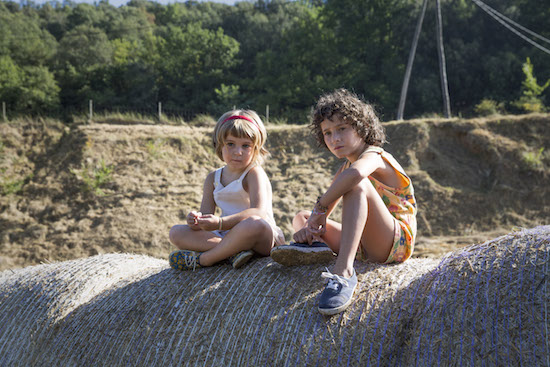
We discover this rustic new home along with Frida, as the camera trails her explorations around the sprawling property where crowing roosters, aggressive hens and farm life in general all seem very foreign. Esteve (David Verdaguer), the brother of Frida’s recently deceased mother, and his wife Marga (Bruna Cusi) are young and fairly laid-back, but also kind and attentive. Frida immediately befriends their daughter Anna (Paula Robles), introducing her little cousin to various toys with the standard, older-kid “hands off” proviso.
Courtesy of Oscilloscope
The film’s overall tone is low-key and intimate, with many close-ups of Frida’s small, pensive face. She expresses her sense of displacement in small acts of rebellion and leads the ever-willing Anna through various games, including an amusing session of dress-up. Both girls, especially the big-eyed Anna, are endearing but never saccharine; Simón allows her young actors to act and play naturalistically. Though the movie has no soundtrack, Esteve’s jazz is often playing in the background, a cool counterpart to the sunny, bucolic setting.
Marga brings Frida to the doctor for medical tests, and there are allusions to the girl’s “background.” Later as she makes friends in a playground and cuts her knee playing tag, one mother’s frantic warning hints at the nature of Frida’s mother’s illness. (It’s reminder that 1993 was, in some ways, truly a different era.)
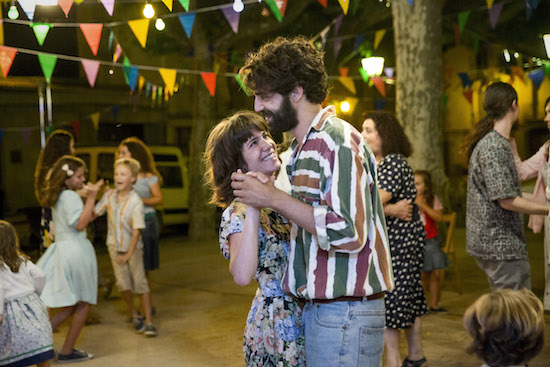
When the girl’s grandparents visit from Barcelona, they coddle her, and naturally she basks in their attention. This frustrates Marga, who has started to believe that Frida is a bad influence on her daughter. Aside from the fact that Anna has begun talking back to her mother, Frida’s recklessness has put her cousin in dangerous situations. These tense scenarios are balanced by playful scenes of affection between Frida and her aunt and uncle; there is also a joyful visit to a local festival, which includes dancing and costumed figures with large papier-maché heads.
Courtesy of Oscilloscope
Summer 1993 is full of small touching moments, such as Frida’s repeated visits to a secluded grotto of the Virgin Mary in the woods, where she tries to communicate with her mother. It’s really only during these times that she seems able to express her grief.
As the days pass, Frida’s adjustment to her new surroundings doesn’t necessarily get easier and at one point she attempts to run away. Eventually, though, she feels safe enough to ask the questions that finally allow her to release her emotions.
Simón has made a finely-wrought film of great depth and compassion. With its unforced pace and wistful air, Summer 1993 weaves a potent spell that lingers some time after it ends.
Summer 1993 opens on Friday at the Film Society of Lincoln Center’s Elinor Bunin Munroe Film Center.
—Marina Zogbi

- 8 years ago
-
It never ceases to amaze me. The abundance of extraordinary talent in the NYC music scene is obvious to anyone who seeks to experience it. Yet, so many people talk as if the scene is terrible and how difficult it is to find quality music at the venues in NYC. I will admit, the Bleeker Street music clubs do leave much to be desired, but one venue, le possion rouge, is certainly doing it the right way. LPR has made a name by bringing in experimental, eclectic and alternative artists over the past 10 years, and this past Saturday night was no exception.
Yonatan Gat performed in support of his new album, “Universalists“ which was recently released on Joyful Noise Recordings. He played three different sets, and we were fortunate to catch the last two which were truly epic. The long transplanted New Yorker showed off his masterful guitar skills, (The Village Voice named him “Best Guitarist in New York, 2013.”) shredding through an eclectic mix of ethnic sounds with merely a vocal, but it didn’t discourage fans in attendance as they marveled at his guitar playing skills. I was also impressed with his band as they were on point throughout the set, and as the sound changed, their energy was consistent and at a high level throughout. Gat’s sound is clearly focused on guitar, but I couldn’t help but watch his drummer relentlessly pounding on the skins and his evident passion for the music. This brings to mind the most anticipated part of the evening for me and apparently many others who were in attendance. The third set of the evening with the Eastern Medicine Singers.
Yonatan and some of his band mates walked off the front of the stage as the lights focused on the middle of the floor, where the Eastern Medicine Singers sat down around this huge drum. As we heard the first hymn, chant and the pounding of the drum, a new energy overtook the room- blissful, happy, appreciative for this experience. Rather than trying to explain this further, just watch this short video:
- 8 years ago
-
Dear Artem, welcome to Art For Progress. You are a New York City based artist. Please tell us about your work.
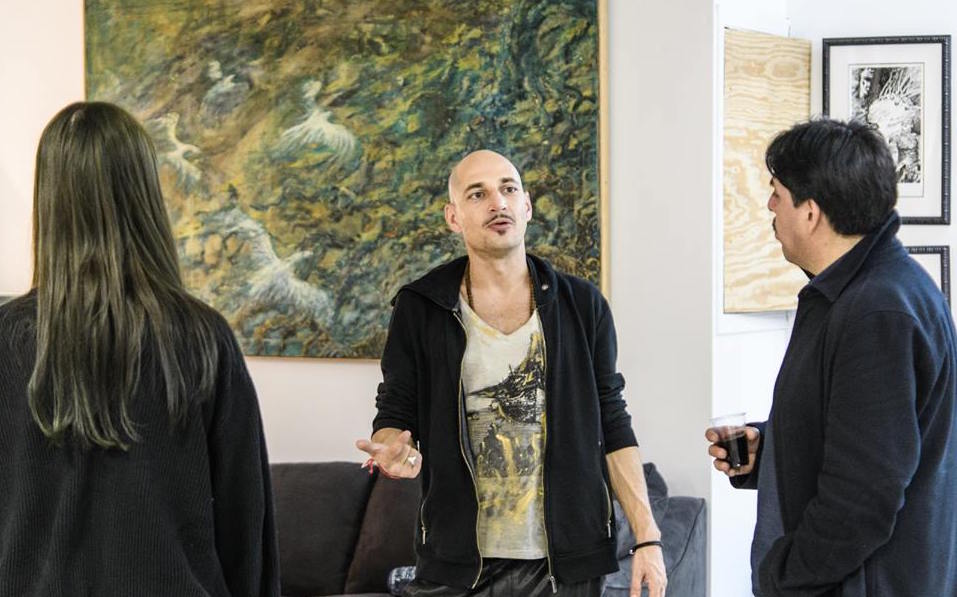
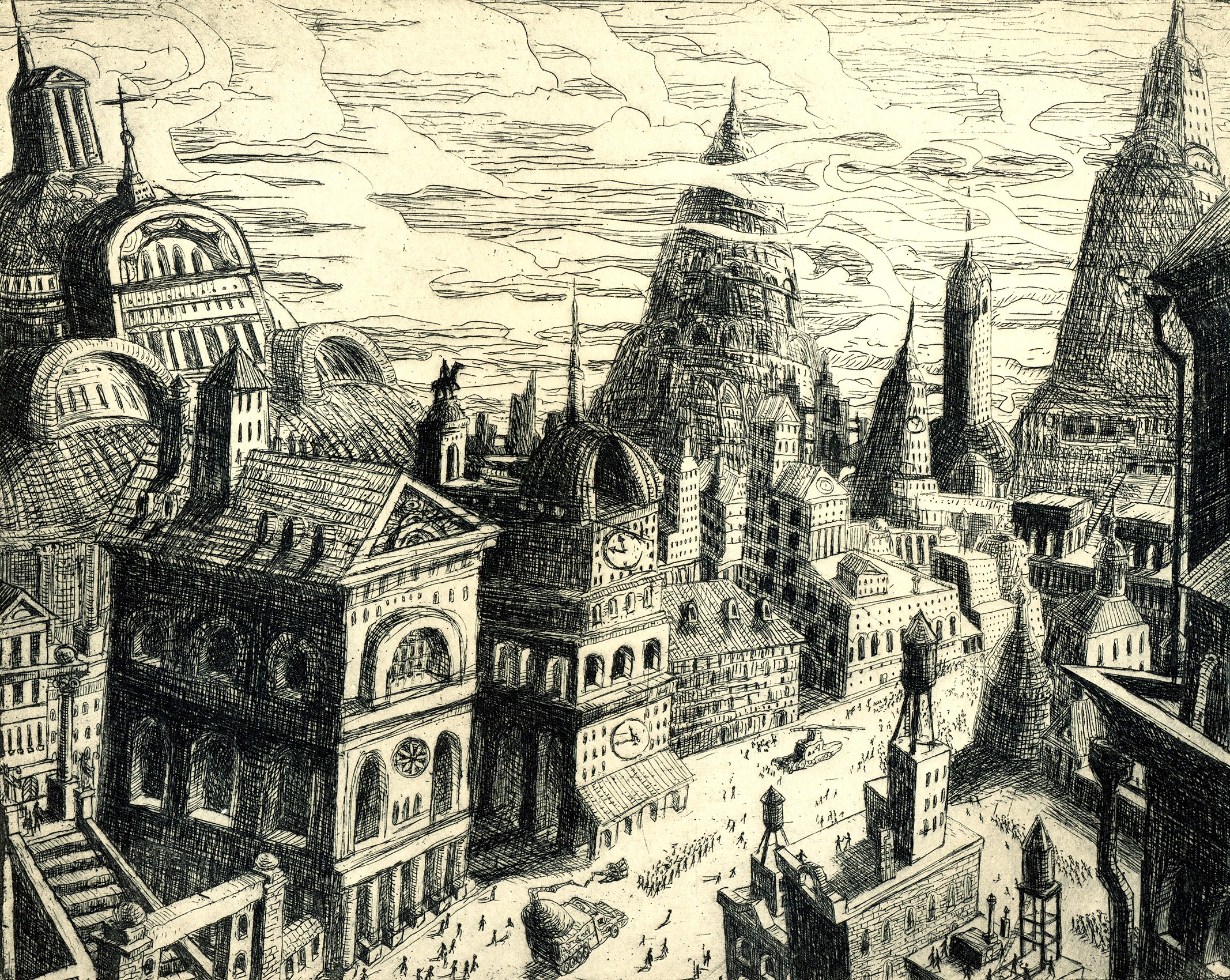
Hi Nerea, yes as you describe, I am a New York based artist, curator and entrepreneur. My imagination allows me to create a new world within each frame while drawing connections with different cultures and to my own heritage. History and mythology play a large role in influencing my work, often igniting the creative process. I am fascinated about mythology, and I am a space time voyager at heart. Traveling is also one of my biggest catalysts for art. I have traveled extensively, experiencing diverse culture, spirit, architecture and ways of life, which helped me to shape my perception and artistic vision of the world. A sketchbook always accompanies me on my journeys. When words alone cannot describe what I envisions in my mind, I just draw…

What inspires you to create such awesome paintings and landscapes?
I absorb everything around myself and filter it through my “art filter.” Books, music, architecture, friends, strangers, other artists, travel, relationships, etc inspires me to create my own world of landscapes and adventures.

I love depictions of ancient civilizations, philosophy, present society, and the exploration of ” the nature of man.”
As I have mentioned, I draw a lot of inspiration from my readings. History and mythology play a large role in influencing my work, often igniting the creative process. I am fascinated by how the two intertwine and sometimes even replace one another.
I have recently heard that you are starting an art project in NYC with some partners. Could you please describe it?
Yes! It’s a small group of six partners, mostly creative individuals. We signed a lease for a 5000 sq foot commercial loft space on Broadway and 32nd street, Manhattan. It’s mostly used for commercial purposes, such as photo and video shoot rentals as well as private events, such as gallery openings, dance performance etc. We are just starting out and need to raise some capital to keep the place going, but hope to have many interesting cultural happenings there. We are so excited about it!
You travel the world doing exhibitions, where is your work showcased?
USA, mostly in NYC, Miami, Boston, Washington, San Francisco, LA. Europe: London, Zurich, Paris, Rome, Barcelona, Riga, Moscow, etc.
My work has been exhibited in museums, galleries, novels, theaters and art fairs around the world, including: New Museum, The Armory Show, Kolodzei Art Foundation, Rothchild Collection, Art Basel Miami and Natasha Pierre & the Great Comet of 1812 on Broadway, etc.
I know that you are involved in other cultural projects. You are the manager of art pavilions around the world. Can you tell us about this?
I curated ten Russian Pavilion exhibitions in the USA and Europe between 2013- 2016, including Armory Arts Week, NYC and Miami Art Basel Week. I’m currently involved in ArtCosmos project that brings together artists and scientist for cross pollination of ideas. We did two exhibits so far, first in Barcelona in 2016, with Espronceda and Quo Artists as our European partners and a show in NYC at Salomon Arts Gallery. Both events where very successful with very interesting scientists and artists participating in the show and panel discussions. More info is available on line or upon request.
Recently, a cool short documentary was made about your life. How did that come about?
Yes, there is a documentary being made about me by Teirra Kamolvattanavith, who’s an aspiring documentary movie maker from Bangkok, Thailand. She moved to NYC and we met shortly after. According to her, she was getting disillusioned and was very surprised and happy to meet someone like me who pursued his dreams no matter what. The documentary will come out soon, and you can see the teaser here. Stay tuned!
I know that you have been presenting some projects this month, including a book presentation. Tell us what is coming next!
Yeah, I am involved in lot of ongoing projects this month. I am working on a fantastic project- a book in which is a call for action to authors to create a short story or poem inspired by art work. Authors can choose up to three images from 60 pre-selected art works and write a literary piece that relates to it. The best piece will be chosen by a jury to be published in the art book featuring various contemporary writings inspired by my art work.
The book open call was announced on April 12th (International Day of Aviation and Cosmonautics) and the design will be finalized and ready to print by September 30th.
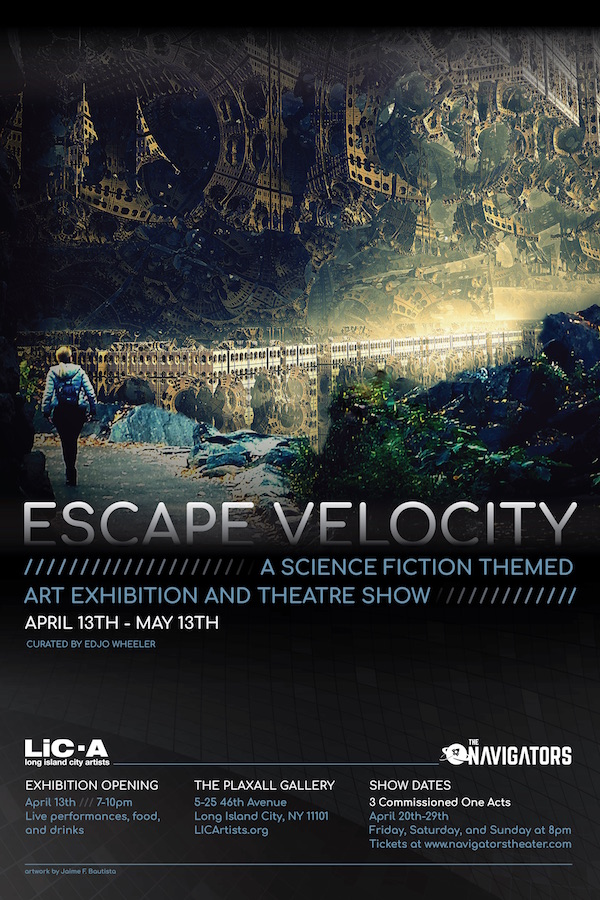
I am also participating in a group show that opened on 13th April at Plaxal Gallery in Long Island City, New York – all science fiction art and theatre performance, including a few important artist who did some cool art for Star Wars etc.

On April 20th, I hosted a reggae concert in my studio- three different bands plus fresh art I painted in the last few month. Artem Art Studio, Queens, New York. – An art exhibit and live reggae concert
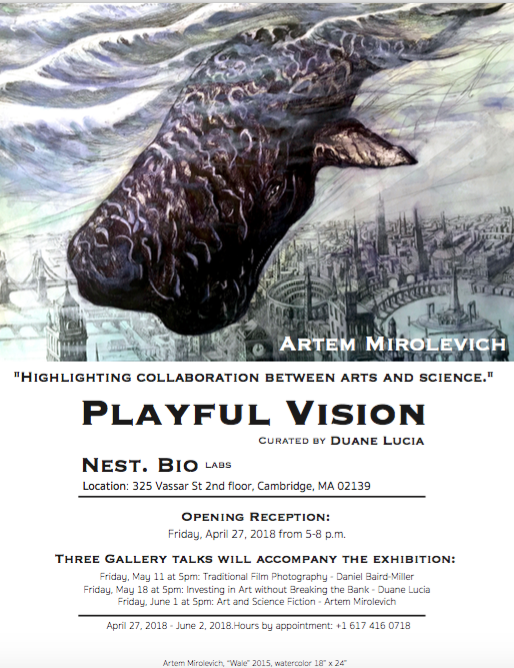
On April 27th, I have a big show opening in Boston- related to art and science curated by Duane Lucia at NestBio Lab in Cambridge, MA.

I can see you are busy! It’s great! Congratulations on your work and success Artem, and thank you very much for this fantastic interview.
You are welcome. Thanks for inviting me to AFP, it is a great project to support and help emerging artists for social change. Together the change will finally happen.
Nerea T. Ruiz