
- 8 years ago
-
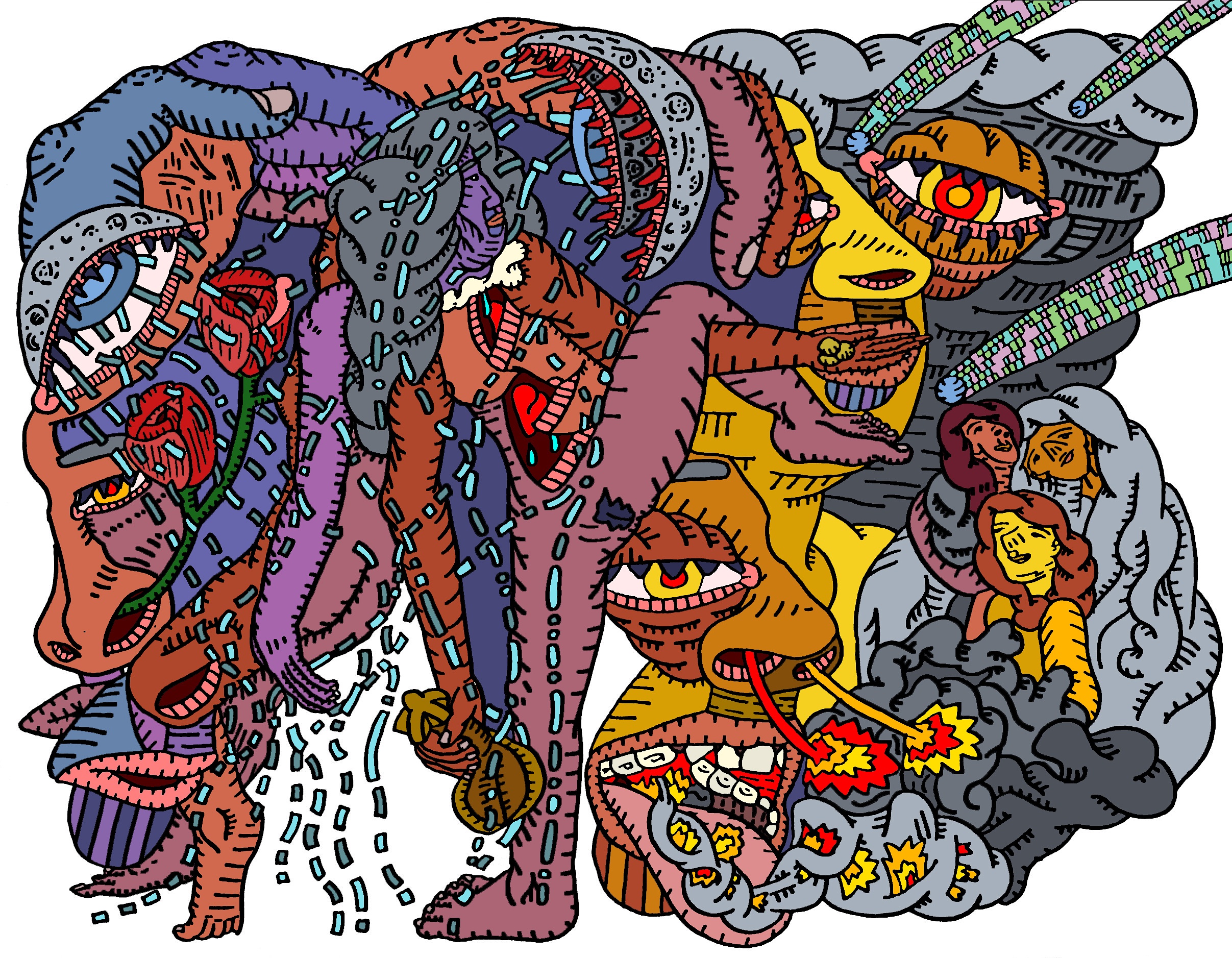
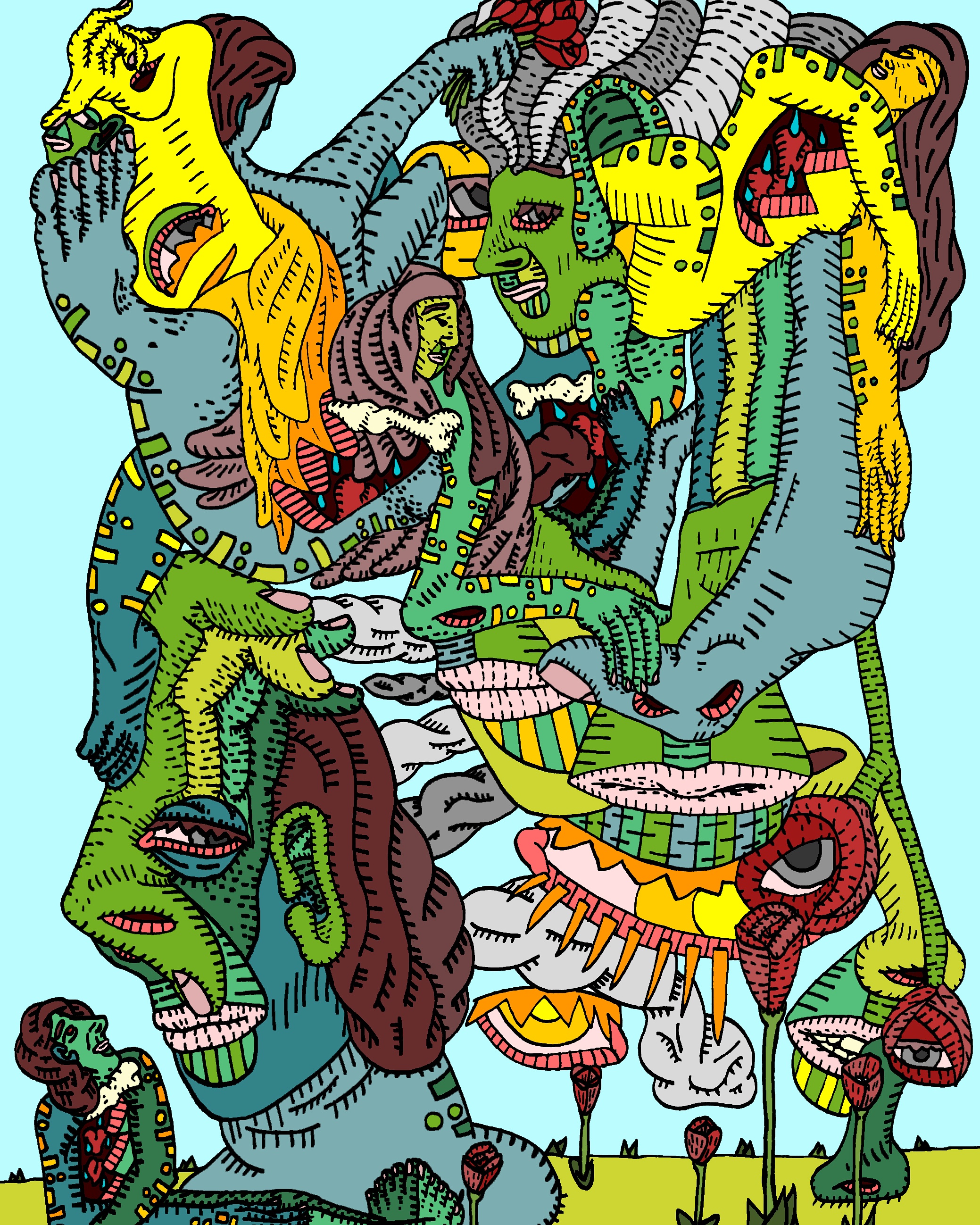
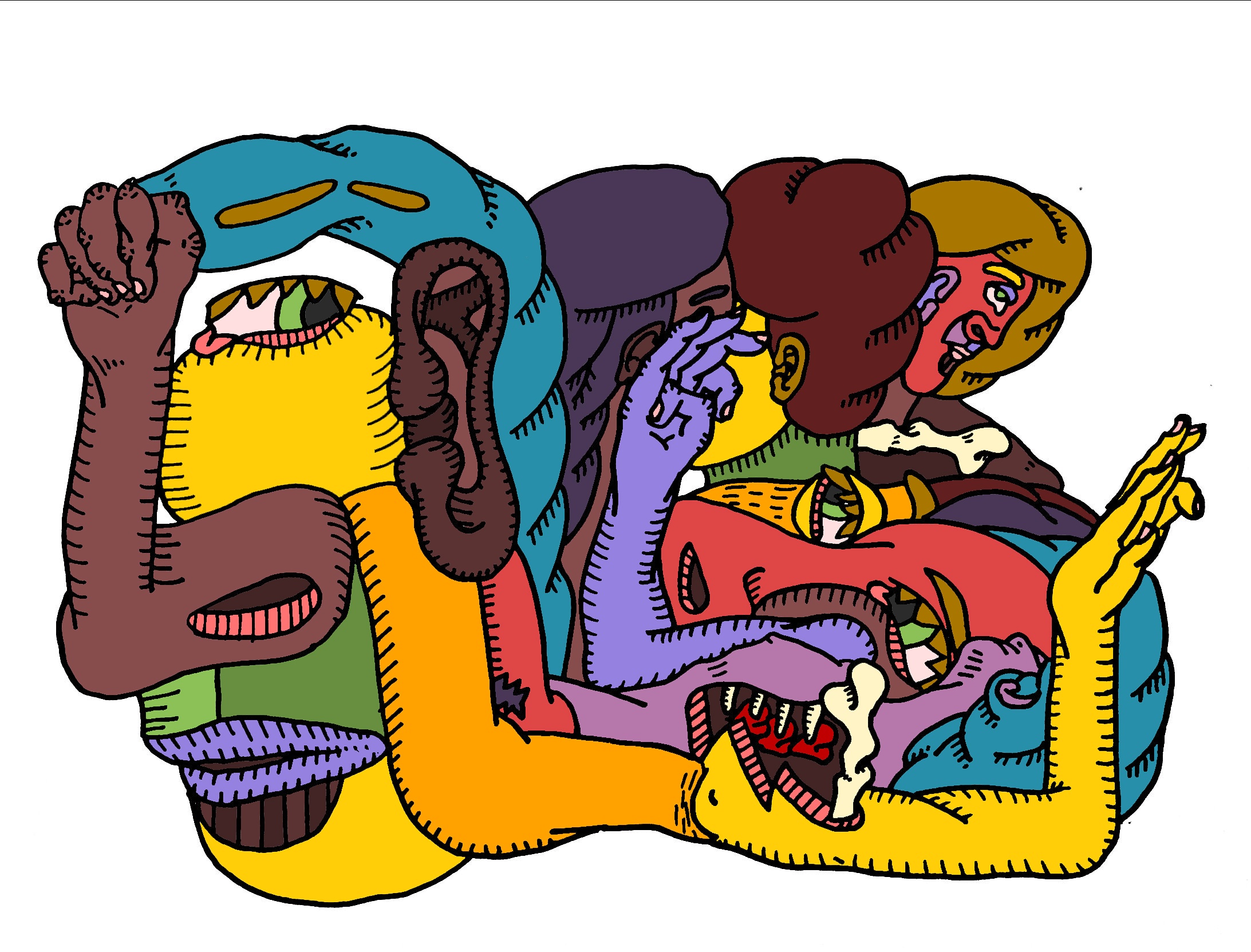
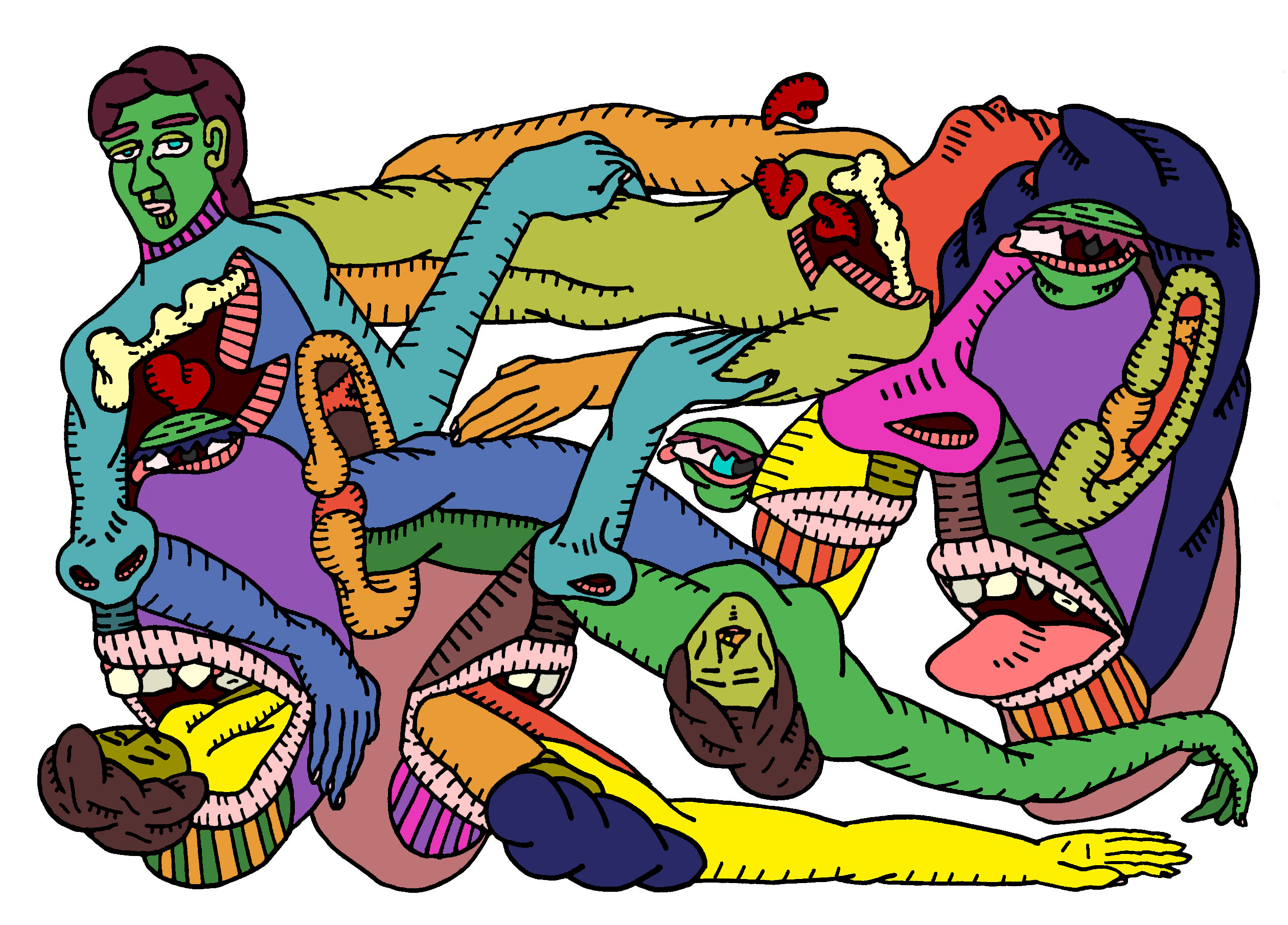
Alex is a continuing student of philosophy and emerging artist. He seeks to address contemporary social issues and philosophical questions through symbolism in dynamic visual works.
Philosophical underpinnings are tied to Phenomenology, Existentialism, Post-, and Anti-Post-Modern thinkers. Alex has also begun to explore mythical symbolisms.
The evolution of Alex’s work follows from an early introduction to Art History, Art Historical references in the works are found in the clavicle, harkening back to Gothic representations of the skull, connected to our understanding of human mortality. Hearts, from Keith Herring, representing an emotional and communal offering. The underside of feet, turned into the over the shoulder view of figures, referencing the irreverence of the Impressionists. Among other more personal stories.
Although much of the work illustrates concepts in the abstract, there are also layers of meaning that are at once personal and then again more thematic, sometimes not signifying the same story in any given image, and sometimes coinciding with those general themes.
Another philosophical feature of Alex’s work is found in the geometries of the icosahedron or hypercube, each instantiation or general form representing another view of our social and physical realities.
Alex seeks to continue exploring these themes, while also remaining politically prescient. For a fuller explanation of the philosophical tones of his work, feel free to inquire for a full Artist’s Statement.
If you’re interested in contacting Alex, his e-mail address is unger.alex@gmail.com.
-

- Alex Unger Illustrations
-
- Alex Unger Illustrations
-
- Alex Unger Illustrations
-
- Alex Unger Illustrations
-
Latest News
- 8 years ago
-

Courtesy of Paladin
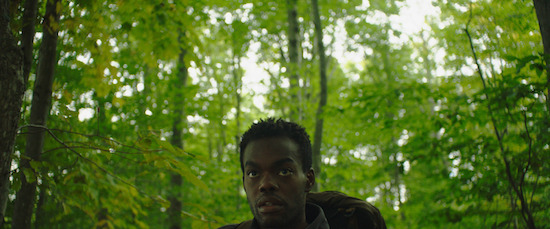
They Remain, Philip Gelatt’s adaptation of Laird Barron’s short story “–3–,” is a mysterious, slow-building thriller, as disquieting as it is visually striking. With an unsettling electronic score to match Sean Kirby’s stark, atmospheric cinematography, the film is haunting and hallucinogenic, with no straightforward answers and a somewhat open-ended resolution. Anyone looking for a tidy narrative or classic horror story won’t find it here.
The story concerns two young scientists, Keith and Jessica (William Jackson Harper and Rebecca Henderson, both very good), who have been sent to investigate a secluded wooded area to find an explanation for inexplicable changes in animal behavior. They are both aware that the area was once the site of a massacre by a Manson-like cult; in Jessica’s case, the subject is an admitted obsession. Aside from being told that the mission “could make you famous,” they’re not altogether clear on the motives of their shadowy corporate employer. As the days go on and they experience increasingly disturbing phenomena, their relationship becomes fraught, veering from wary professionalism to paranoia and worse.
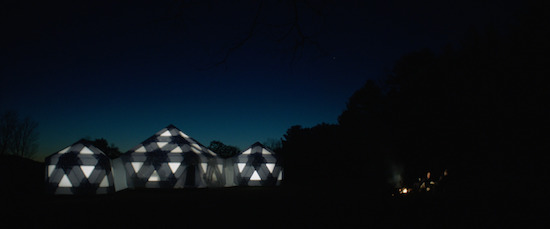
Camped out in a triad of high-tech geodesic domes housing a lab and sleeping quarters, Keith and Jessica at first banter philosophically about the mission and the area’s history, as they get to know each other. During the day, he goes out exploring and sets up several cameras in the woods; Jessica runs tests on specimens he brings back, but the results are frustratingly inconclusive.
Courtesy of Paladin
Soon she becomes suspicious, accusing him of knocking on the hatch at night to scare her. She ventures outside and reports bizarre insect activity as well as strange voices. Initially, Keith is the voice of reason, attributing her experiences to various natural causes.
Meanwhile we glimpse flashbacks of young people — ostensibly cult members — frolicking in the woods, as Keith wakes up from a series of intense nightmares. The often-malfunctioning cameras begin picking up increasingly violent images, unless these too are nightmares. Nothing is clear, adding to the general feeling of disorientation.
After Keith and Jessica find a buried cache of human bones, a guy from the corporation helicopters to take the specimens back for testing. Suspiciously casual, he laughingly tells of the terrible plight of a CSI team that previously investigated the site. Not a good sign.
Courtesy of Paladin
Things really get weird after Jessica finds a strange artifact in a cave. She and Keith have fevered sex and his dreams/hallucinations increase. One night he hears loud knocking on their hatch and loud whispering outside, but the cameras catch nothing. Now he becomes the freaked-out one, accusing Jessica of lying about her activities during the day. He requests an immediate evacuation, to no avail.
As Keith’s paranoia mounts, so does the film’s tension. An inevitable violent confrontation leads to a final scene that leaves us wondering what exactly has happened here. The film is obviously meant to be loose and impressionistic and it certainly does succeed at setting a beautifully rendered ambience, but it might have benefited from a slightly tighter narrative.
For those, however, who prefer an artfully impressionistic creep-out to a classic scary movie, They Remain should more than do the trick.
They Remain opens on Friday, March 2, at Village East Cinema.
—Marina Zogbi

- 8 years ago
-

On February 3rd and 4th, 2018, The Rolex Arts Weekend in Berlin presented the work of the protégés and the mentors of the 2016 – 2017, Rolex Mentor and Protégé Arts Initiative.
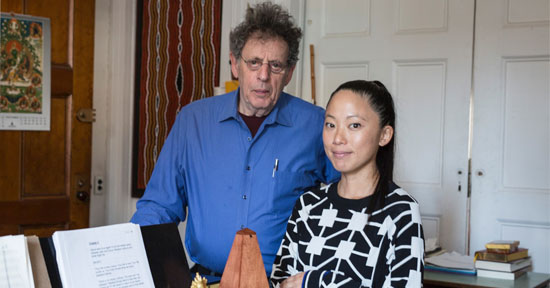
Rolex aim is to pair young artists from all over the world with artistic masters, like the Peruvian artist Pauchi Sasaki and Philip Glass.

This program is focused in seven disciplines: architecture, dance, film, music, theater, literature and visual arts. The artists spend a minimum of six weeks together with the mentor, working one-to-one and showcase the results at the end of the program.
Rolex mentor Philip Glass introduced his protégée on the stage at the Deutsches Theater. They presented an extract of her electro-acoustic project GAMA, as well as the suite OMAGUA, a compilation inspired by Peruvian traditional music.
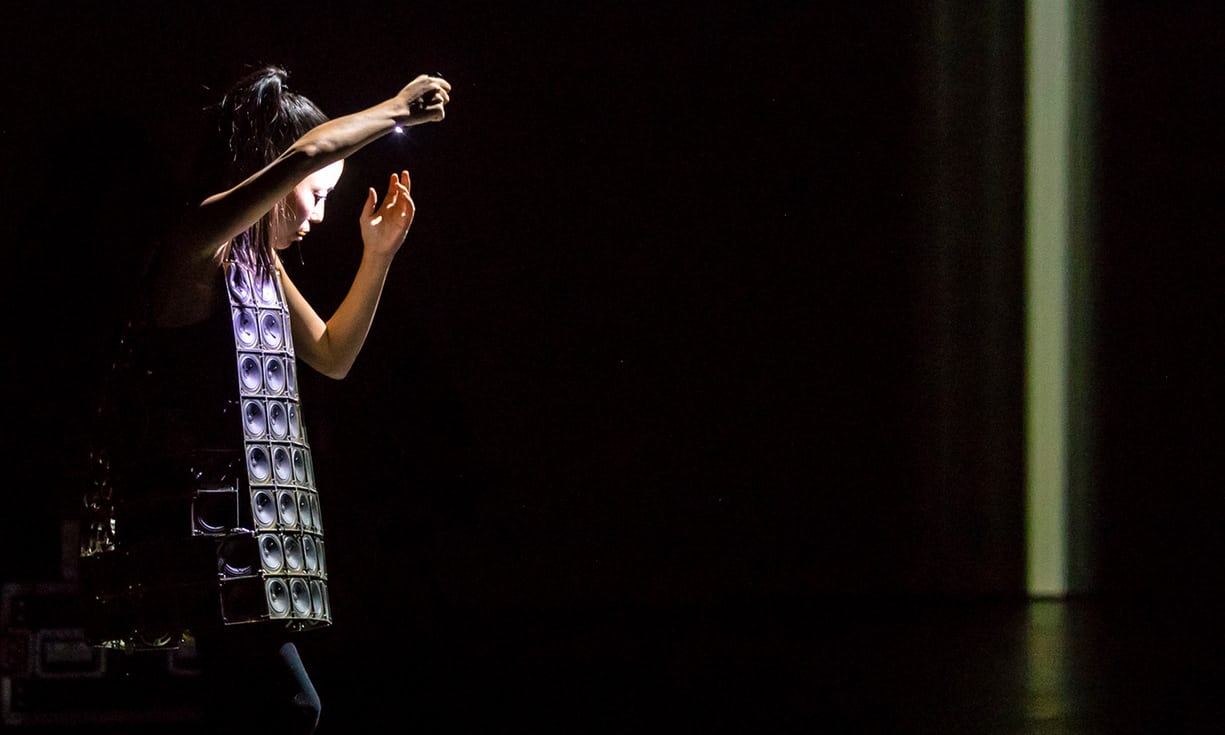
Pauchi wore a dress made of black speakers on stage while she played a processed violin in this World Premiere show.
- 8 years ago
-

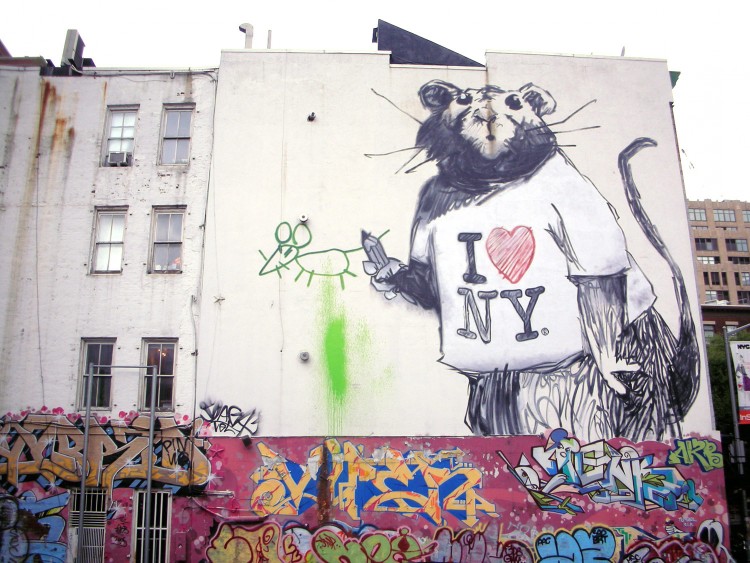
Street artists are becoming more and more popular each year as graffiti is one of the most accessible forms of visual art for the masses. This genre of art has even become so popular that many superstar street artists work can now be found in some of the finest galleries across the globe! Graffiti involves a great level of skill and creativity and many also like to convey different social and political messages through their work. Below are some of the most influential street artists of our time and where you can view their work.
Banksy
Banksy is arguably the most influential street artists on our list and there are few people who have not heard of him. What makes Banksy so intriguing is that no one actually knows his identity! Much if his artwork features social and political undertones to it and people love the dark sense of humour which he injects into his work. His most notable work can be found in London and other areas of the UK, but you can also find his work in many different parts of the world including America and Israel. He does sometimes auction off his work but you’ll pay a pretty penny for it!
David Choe
While Banksy chooses to operate in secret, David Choe chooses to do the complete opposite! This graffiti artist, graphic designer and muralist is a flamboyant Los Angeles resident. He is famous for his wide range of work which varies from working on film sets to album covers. What’s more, he even painted a portrait of Barack Obama while he was running for president! You can find his work scattered across Los Angeles and also further afield in France, England and Japan.
Blek Le Rat
Blek Le Rat is a legendary Parisian graffiti artist who is held in very high regard by his peers. He is well-known for his stencil-based graffiti work which is thought to be the inspiration for many other artists, including Banksy. Blek Le Rat is often featured in galleries and museums around the world and has published many books with his famous artwork. You can view his work around the streets of Paris, New York, London and Berlin.
Eduardo Kobra
Eduardo Kobra is a Brazilian muralist who has made a name for himself creating huge, colourful and realistic murals. You can find his work over buildings and walls in Sao Paulo and his work is instantly recognisable by the colour patterns that he uses. One of his most famous pieces of work is a huge portrait of the Brazilian born architect Oscar Niemeyer. While you won’t be able to get your hands on his artwork, you can inject this vibrancy and colour into your home on a budget with art posters! There are plenty of cool visual designs to choose from and can add some life to a room.
This is just a few of the world’s most iconic street artists, but next time you are strolling around your city or travelling, be sure to look out for the gorgeous graffiti displayed.
- 8 years ago
-

“A professional studio starts at around $50,000 and up” according to Rick Camp, who has produced the music of Dr. Dre, Beyonce and the likes. However, he also asserts that “a home studio, or a project studio, can cost anywhere from $300-400 dollars.” With such a wide range of music production equipment out there, creating your own home studio has never been easier, cheaper and more accessible. Expensive equipment isn’t always necessary to produce top quality work, as many low to mid range products on the market are actually competing with some of the top brands. Here are the top 3 tips on how to start producing your music without spending too much or sacrificing the quality of your sound.
- Research the best equipment in your price range
When you begin any new practice, research is always key. And with an art form as technical as music production, it’s almost essential to look into what audio interfaces you need and how to use them. If you go in blind, then you risk overspending on unnecessary, fancy equipment. In order to feel at ease with what you’re doing, don’t let yourself feel out of your depths:
- Break down what you need: the interface, a mic/instruments and sound outputs
- Research what both the amateurs and pros use
- Compare the equipment based on quality and price
- Take advantage of free recording software
Whilst ‘freemium’ software may not always have the advanced functions that paid software does, it’s still useful when you’re starting to learn the ropes. Free recording software’s tend to have all the basic, necessary functions to lay down a track anyway, and provide a good way of learning the technical side of music production. It’s always worth comparing different ones, and choosing the best suited program for your music. You can also try out free trials of better softwares such as Logic and FL Studios, just to learn the ropes. From then on, if you are eventually able to purchase them, you’ll already have some experience with their more complicated tech.
- Get feedback on your first attempts
Once you’ve got your first tracks recorded, then the only thing left to do is share it with the world. With the advents of the internet, it’s never been easier to get your music out there; and when you’re just starting out, feedback is essential for improvement. Sharing websites such as SoundCloud and Bandcamp are free to make accounts on, and offer a way to share your music with friends, or even helpful strangers who can provide some valuable advice.
We’re lucky in a sense that, with the internet, music production has never been easier. Building a home studio only takes a computer, some free software and a few bits of hardware to suit your musical needs; after that, it’s all you and your creative process.
-Cassie Steele