- 7 years ago
-
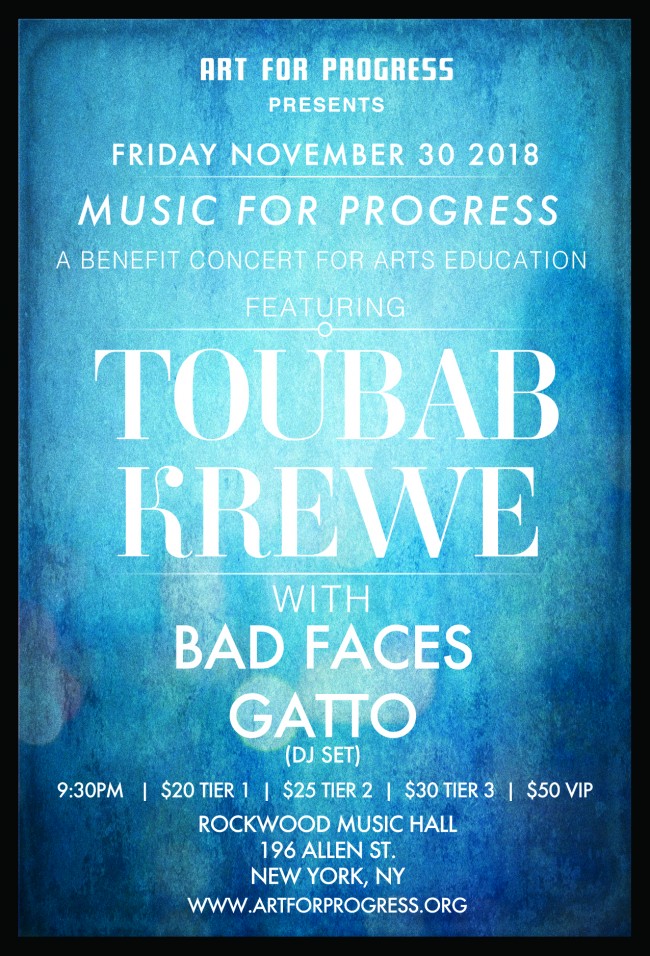
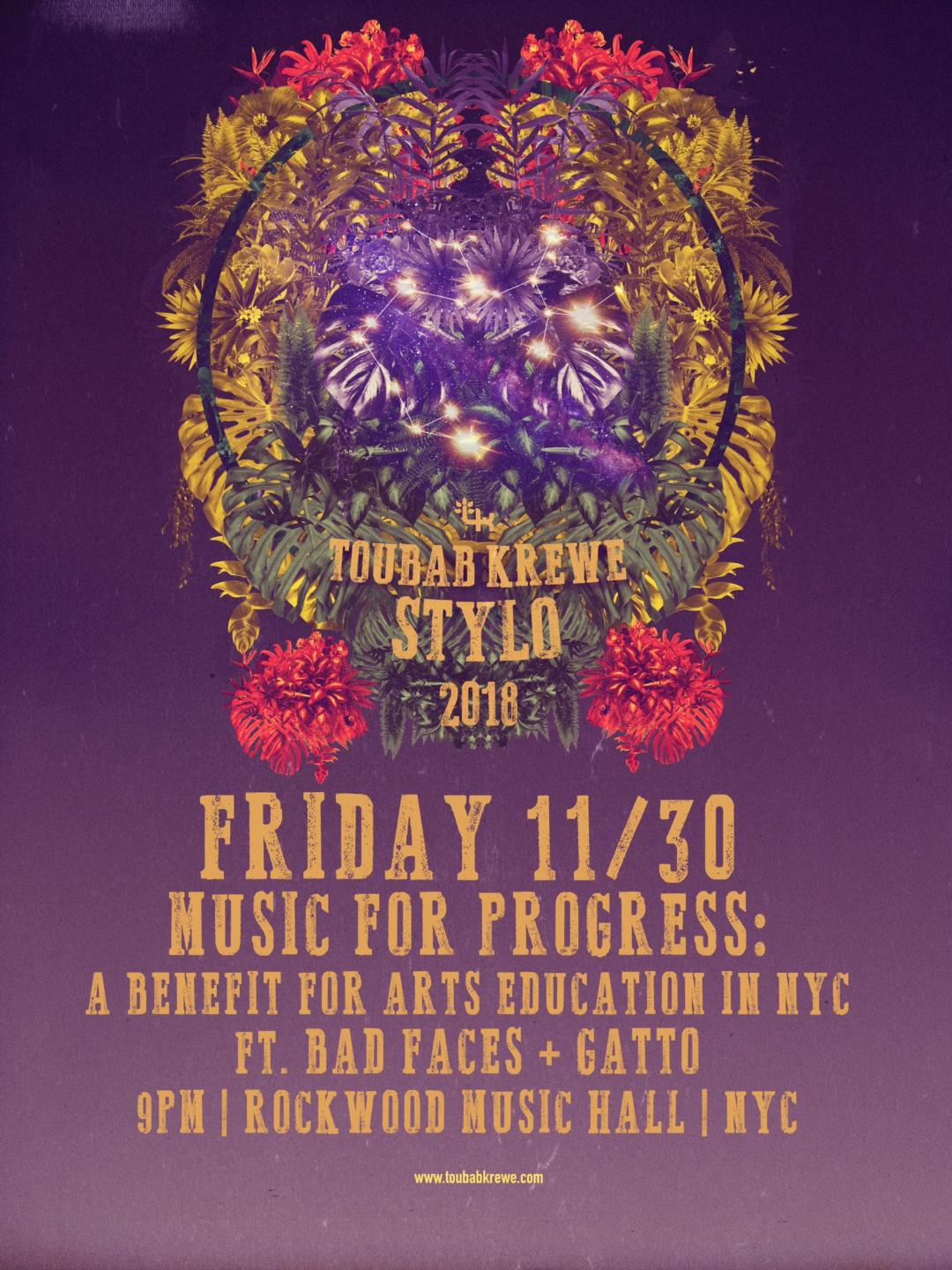
Hot off a national tour and an acclaimed performance at Hulaween, Toubab Krewe will perform a special, intimate engagement Friday, November 30th to benefit arts education in New York City. The concert, Music For Progress, will take place at NYC’s famed Rockwood Music Hall and proceeds will go to Art For Progress, a local 501(c)3 non-profit arts organization committed to bringing arts education to NYC’s public schools in underserved communities. In a city that boasts world-class music and art programming every hour of every day, many public schools throughout the five boroughs lack the budget, funding and personnel for robust programs to empower young artists and musicians. Through the work of Art for Progress, even the most disenfranchised have an opportunity to learn and engage with music!
With a strong track record in partnering with mission-based cultural organizations, Toubab Krewe is thrilled to be working with AFP to share a message of global community and empowerment.
Special VIP donor tickets with be offered, which will include a private viewing platform, a signed vinyl copy of the band’s recent album ‘Stylo,’ as well as a box of fruit and vegetable seeds which the band released in conjunction with the album to promote sustainability, and other surprise merch gifts!
Support will be provided by Bad Faces, a local power quintet as deeply rooted in traditional roots music as they are reaching for stratospheric heights in their improvisational explorations. The group has amassed a strong local following on the heels of successful shows at Brooklyn Bowl, Brooklyn Night Bazaar and more. The band is excited to unveil a new group lineup, and to perform a triumphant return concert following a hiatus earlier this year.
Hitting the decks to close the night is DJ / producer Gatto, who has been an integral character in NYC’s underground house music scene for nearly 20 years. You can find Gatto spinning at fashion shows, top night clubs, and beyond, while his eclectic music productions are dropping on European and U.S. record labels.
Music For Progress will take place Friday, November 30th at Rockwood Music Hall, Stage 2 at 196 Allen St. in Manhattan’s Lower East Side. Tickets are available now.

Latest News
- 7 years ago
-

Walking on Water
Now in its 9th edition, DOC NYC—America’s largest documentary film festival—runs from November 8 through 15. More than 300 films and events are included in a variety of categories, including American Perspectives, Behind the Scenes, Fight the Power, International Perspectives, Portraits, Jock Docs, Modern Family, Science Nonfiction, Sonic Cinema, and True Love. In most cases, filmmakers (and often their subjects) will be on hand to answer questions, post-screening. Awards will be given in several sections, including an overall Audience Award.
The gamut of films this year includes epic portrait Beyond the Bolex, Alyssa Bolsey’s doc about her great-grandfather, the groundbreaking movie camera inventor Jacques Bolsey; Afterward, in which Jerusalem-born director and trauma expert Ofra Bloch visits victims and victimizers in Germany, Israel and Palestine; Lindsey Cordero & Armando Croda’s timely I’m Leaving Now, about an undocumented worker in Brooklyn facing a difficult crossroads; and We Are Not Done Yet, a short directed by Sareen Hairabedian and produced by actor Jeffrey Wright, about U.S. veterans combating their traumatic military histories through art, poetry and performance.
A few more highlights:
Dennis and Lois
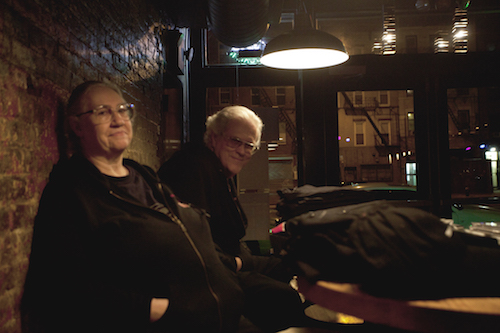
A doc by Chris Cassidy that will resonate with music fans, Dennis and Lois is a portrait of a 60-something couple who have been music superfans for over 40 years. The Brooklyn-based duo, together since 1975, live in a house stuffed with band memorabilia and collectibles. Fixtures at NYC rock clubs, they still go to gigs, sometimes traveling long distances, though Lois’s health problems make it increasingly difficult. Musicians of various ages and stages, including members of Black Rebel Motorcycle Club, Mekons, Doves, The Hold Steady, Vaccines and many others, testify to the duo’s steadfast devotion.
For years, starting with the Ramones, Dennis and Lois sold t-shirts and other merchandise at live shows; they also housed musicians who came through town, earning the moniker “Sofa to the Stars.” They formed especially close bonds with bands from Manchester, England, including Stone Roses, Joy Division/New Order and especially Happy Mondays, who immortalized the couple in a song. These days, Lois notes, “The bands support us more than we support them.” The film is an affectionate look at a couple who never saw reason to give up the thing that brings them the most joy.
Screening: Wed, Nov. 14, at 3 pm (IFC Center, 323 6th Ave.); Thu., Nov. 15 at 9:45 pm (SVA Theatre, 333 W. 23rd St.). In person: director and film subjects.
Behind the Curve
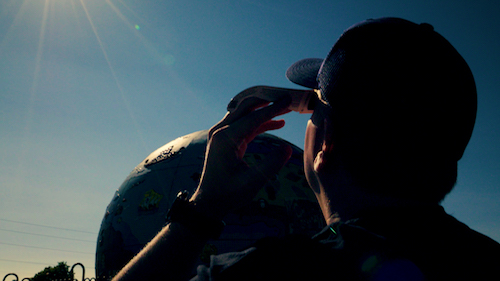
An impressively, sometimes maddeningly, non-judgmental doc about the growing cult of people who believe the earth is flat, Daniel J. Clark’s Behind the Curve is utterly fascinating. It’s also deeply unsettling, as several of the film’s subjects—including flat earth movement leaders and would-be couple Mark Sargent and Patricia Steere—are articulate and relatively normal-seeming, making their claims all the more astounding. Though a few dogged individuals are shown attempting to prove the earth’s flatness through scientific experiments, most believers seem fine with disparate, provocative “clues” on YouTube that are like catnip to paranoid types.
This should all be amusing—and a little sad—but the movement’s hostility and condescension toward the scientific community smacks of the attitude so popular the days among some on the far right, whether it be denial of evolution, climate change or actual news events. To believe in a flat earth is to also believe that NASA is an evil mastermind and our entire educational system co-conspirators, exciting stuff for conspiracy theorists. (Unsurprisingly, there are rifts within the movement, resulting in conspiracy theories about the conspiracists.) Behind the Curve features a psychologist and a few pained-looking astrophysicists who come to the conclusion that it’s probably better to engage these people in conversation rather than dismiss them outright. They may have a point, but I’d guess that most of these folks would rather stick to their insane world views than face facts.
Screening: Sat, Nov. 10 at 8 pm (Cinépolis Chelsea, 260 W. 23rd St.). In person: Daniel J. Clark
Walking on Water
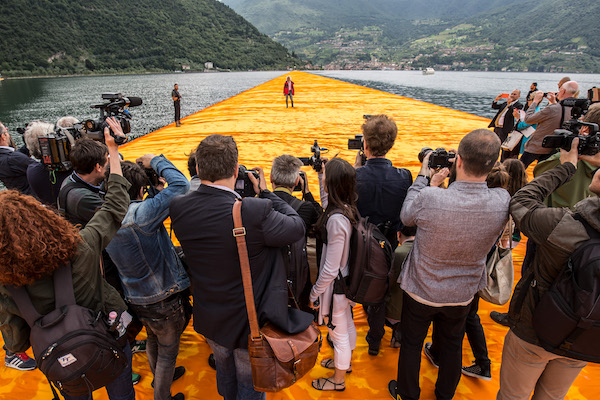
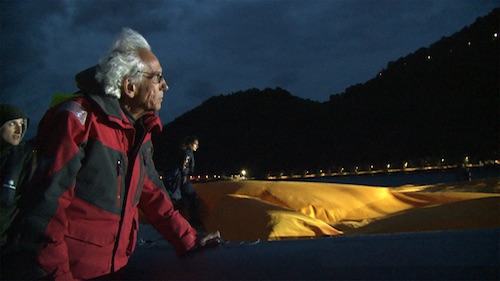
Andrey Paounov’s doc about environmental artist Christo and his 2016 installation in northern Italy, The Floating Piers, has no narration or interviews. Rather, it follows Christo—a mercurial and charismatic individual—from initial drawings in his studio through execution and close of the project, the entire thing fraught with the inevitable setbacks bedeviling a work of such monumental proportions. The 16-day, site-specific installation, designed by Christo and his late wife and collaborator Jeanne-Claude, consisted of 70,000 square meters of yellow fabric covering a modular floating dock of polyethylene cubes that created a walkable surface on Lake Iseo between Sulzano, Monte Isola and the island of San Paolo.Paounov’s remarkable access to Christo and his close associates (especially his nephew and Operations Director Vladimir Yavachev), both alone and in meetings with Italian planners and officials, captures the frustration, perseverance and joy in pulling off such a feat. Aside from the challenges of building the work according to Christo’s precise specifications, bad weather and bureaucratic wrinkles add suspense to the opening day build-up. And the film doesn’t stop there; Christo and his crew must then contend with the overwhelming results of the project’s massive popularity.
Screening: Sat., Nov. 10 at 1:15 pm (SVA Theatre, 333 W. 23rd St.). In person: Andrey Paounov and Christo.
For complete festival screening and event information: www.docnyc.net
—Marina Zogbi
- 7 years ago
-
Federico Guzmán (AKA Fiko) has become an iconic figure in Western Sahara, utilizing the platform art offers as a vehicle to promote peace and social change to the Saharawi people. Guzmán treads between a soldier of solidarity and curator of cultures emphasizing on gatherings, art, and experiences that will induce an exchange of ideas and collaborations between artists and wherever his projects realize, and the local community.
For twelve years Guzmán has co-organized ARTifariti The Arts and Human Rights Encounters of Western Sahara in the African desert “as a way to explain the circumstances of the Saharawi people ” creating a “weapon of visibility” to a story not globally known by many nor should be hidden from the public eye: and with projects such as ARTifariti one sees the opportunity to include foreign narratives and artists distanced by unfavorable political circumstances into the art world”.
The selected artists demonstrate couth in human rights and its relevance within the arts, but more importantly “are confronted a reality” that is life-changing from personal to professional, receiving a surreal cultural exchange with fresh perspectives and resilient power from the Sahawari people (especially from the matriarch figure whose role is to lead the community).

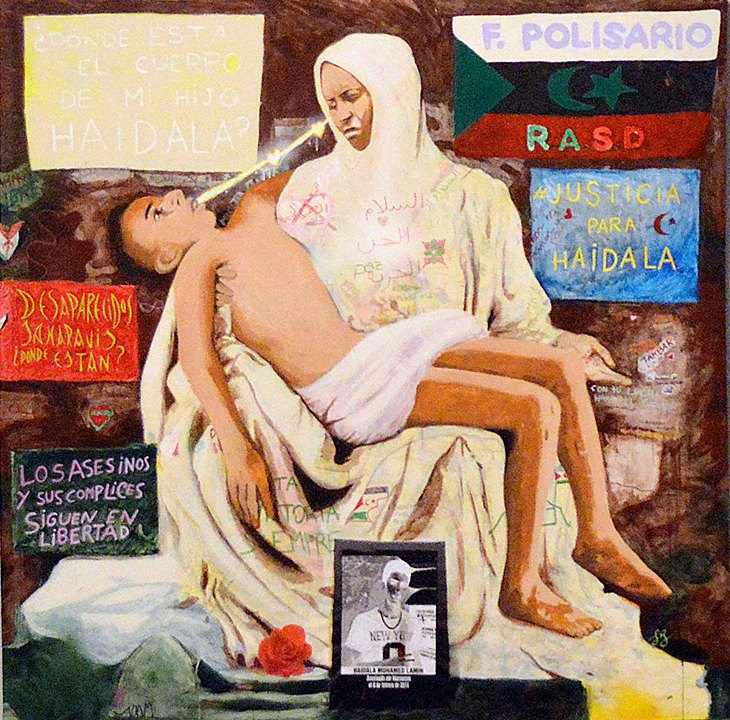
La Piedad Saharaui. Takbar Hadi y su hijo Haidala Mohamed Lamin (The Sahrawi Madonna. Takbar Hadi and her Son Haidala Mohamed Lamin). 2016. Mixed media / canvas. 200 x 200 cm. Fiko 2017.
During 2018’s visitation in the Sahara, the artists delve into intense creative processes of art-making, finally exhibiting and documenting the work(s). Collaborations are accessible on the list of actions to accomplish plus participating in workshops, lectures, talks, and classes that take place in the refugee camps and in the Liberated Zone.
This year Una Poesia Hecha por Todos (A Poem Made By All) marks a special edition of ARTifariti, making it the first for the artist to reside in the homes of nomadic families.
I asked Guzmán a few questions on his artistic endeavors, interest in the Western Sahara region and predictions on a change in the future.

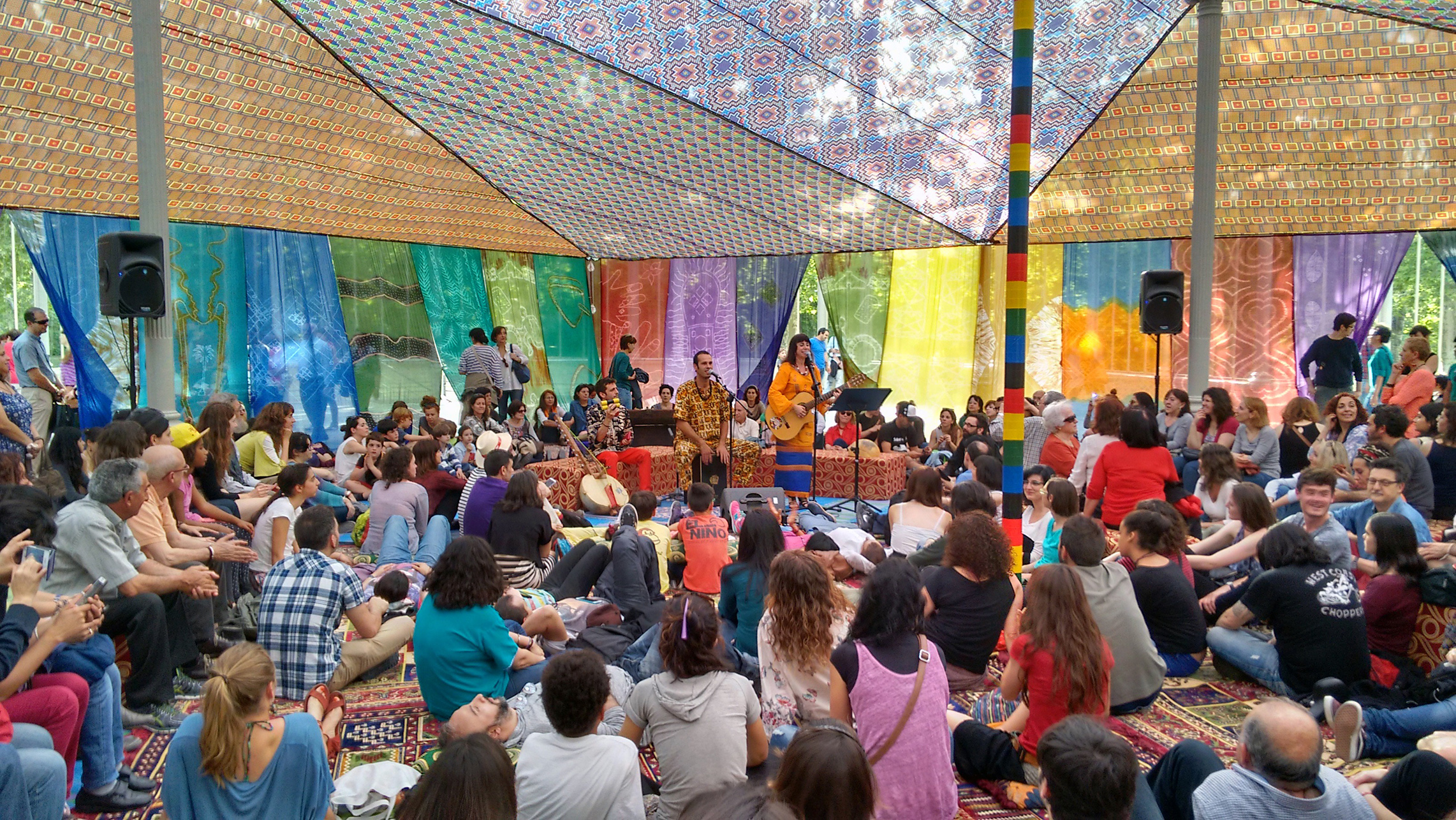
Concert by Pililli Narbona and Ballena Gurumbé at Tuiza, The Cultures of the Bedouine Tent. Crystal Palace of the Retiro Park, Madrid. MNCARS. Fiko 2015.
BB: Hello Fiko, how’s it going?
F: Salam Aailekum Beláxis (may peace be with you). I am doing great, and specially excited with this year’s edition of the Arts and Human Rights Festival, because we are coming back to Tifariti, in the deep Saharan desert, where the Festival was born twelve years ago. Since then, ARTifariti has become a collective action against the Moroccan “Wall of Shame”, a 2,800 Km. armed berm that fractures Western Sahara in two, separating Saharawi families between occupation and exile. These encounters are a tool to reclaim the rights of individuals and peoples to their land, their culture, their roots and their freedom. ARTifariti is an international meeting of artists, activists and social scientists that opens up a space of struggle for the realization of human rights through artistic practices.
BB: What was the source of inspiration to this year’s edition Una Poesia Hecha por Todos? Were you reading any classic novels or another manuscript that may have influenced the direction or title?
F: First of all, poetry –together with music– is the main art form of this nomadic people. As an oral tradition that does not depend on artifacts to carry its message, poetry has had a strong stream of expression that is followed today by The Generation of Friendship: Saharawi poets in the diaspora, writing in Hasaniya and Spanish, who “intend to convey the suffering of their people, united by stories of shepherds who got lost chasing their dreams behind a cloud”. Some of them are Sukeina Aali-Taleb, Alí Salem Iselmu, Limam Boisha, Mohamed Alí Alí- Salem, Bahia Mahmud Awah and Zahara Hasnaui. “Some times desires / are as inmense / as the throbs / of this empty specter”, the poem “How to Atract the Rain” by Limam Boisha. On the other hand, A Poem Made By All refers to the innate collaborative nature of the Encounters. In the short days that international artists share their experience with the Saharawi people there is a strong commitment to solidaritiy and collective co-creation. This attitude is inspired by the traditional concept of the “Tuiza” in the bedouin society. In Hassaniya Tuiza means solidarity collective work: coming together, participating and building something jointly. Therefore, Tuiza is the essence of this project as a space for hospitality and conversation between cultures, workshops and other collective activities that take place during the Festival period.
We should be aware that since ancient times, Sahrawi women have enjoyed great recognition in the tribes. It was based on the social awareness that their work is very heavy and necessary for the life of the community. The education of girls meant a great emphasis on tasks that involve specialization: different types of fabric weaving, building long strips of camel wool for the manufacture of jaimas and food preparation. Women were also responsible for transporting water and gathering firewood; they also took care of the goats and milk the camels. Women get together in a Tuiza and it is a moment of celebration, of sharing the news around the camps, and also the space where important political decisions for the community are taken. That is why this “collective work” is one of the pilars of the life in the desert.
Finally, A Poem Made By All will be the resulting document that compiles all the works and interventions of the participating artists in ARTifariti 2018, that will be delivered in hand to the Special Rapporteur on the Field of Cultural Rights of the United Nations in Geneva, Ms. Karima Bennoune. So she can have a firsthand account of a people that is struggling with the peaceful weapons of art, culture and education to bring about their right for self determination for Western Sahara, the only colony in Africa that never got its independence.
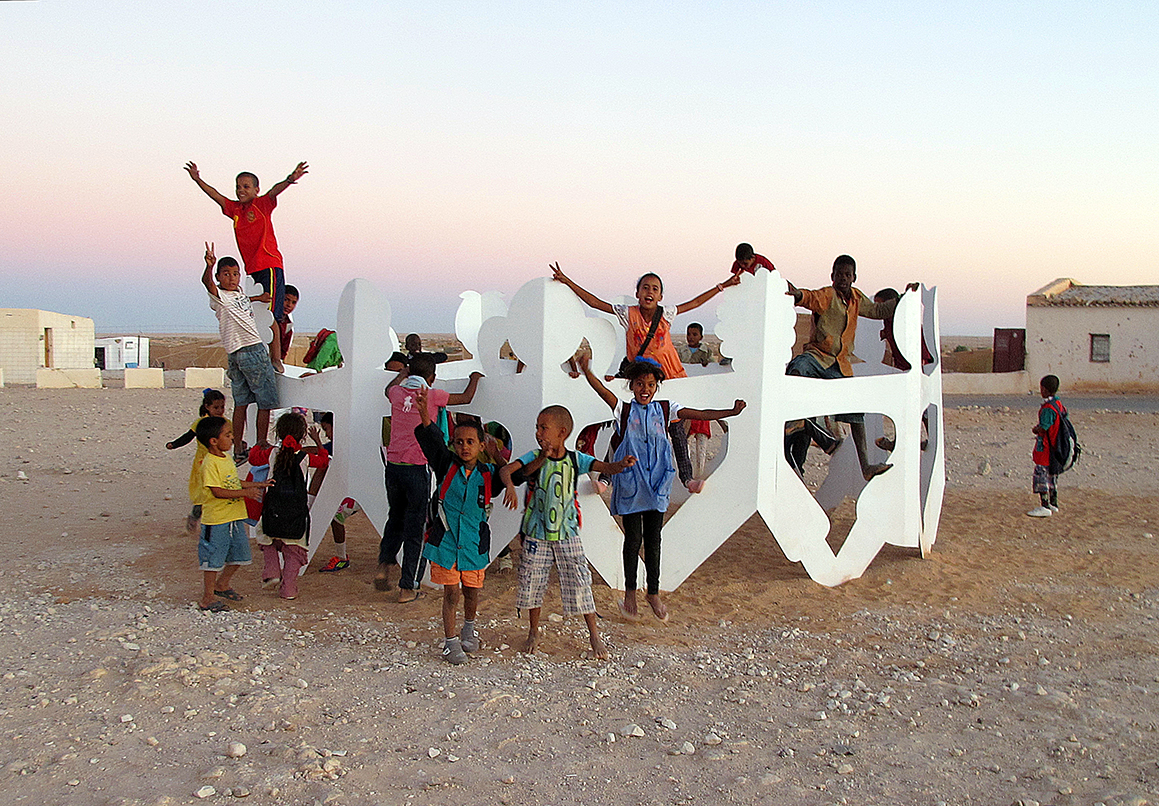
La tierra nuestra casa (Earth Our Home). Painted steel, 200 x 600 x 600 cm. Wilaya of Smara. Saharawi refugee camps near Tindouf, Algeria. Fiko 2011.
BB: When were you first exposed to the Sahawaris? Did you meet someone during an exhibition, or perhaps when you were traveling that informed you on the problematics, or is this a familiar narrative because the Spanish have had strong ties with the Sahawari people?
F: I vaguely remember being twelve years old and hearing on TV about the “Green March”, the Moroccan military invasion that annexed the Spanish ex-province. They were explaining that Spanish troops were giving over the territory to Morocco with an honorable withdrawal of the Spanish army. Obviously, a lie and an absolute atrocity. But I didn’t understand then the dimensions of this calamity. Since then, I never studied this regretful part of our colonial history in my Spanish school nor in universitiy. There is a planified shroud of media silence over this tragic conflict that stands as the most shameful and catastrophic disaster in recent Spanish history.
Many years later, I met Fernando Peraita, the president of the Asociation of Friendship With the Sahrawi People of Seville. Fernando is an extraordinary person. Engineer as a profession, visionary activist as his passion in life. He was a conscript doing his military service in Laayoune in the moment of the Spanish withdrawal from the territory. He witnessed the carnage inflicted on what he considered friends and compatriots. Back in Spain, he became the mastermind behind the creation of an arts festival in the desert. No one in the art world would be crazy enough to undertake such an improbable commitment. He always tells me with a wide smile: “we did it, because we didn’t know it was impossible”.
When I first arrived in the Saharawi refugee camps I learned that Western Sahara is the last remaining colony in Africa. After the withdrawal of Spain in 1975, neighboring Morocco illegally invaded the country, forcing its indigenous population, to live under occupation or face exile. Since then, the Saharawi people have been divided between two lands. Those living in the area bordering the Atlantic Ocean, which Polisario—the internationally recognized political representative of the Saharawi people in their struggle for independence— labels the “Occupied Zone,” endure an occupation violently imposed on them by the Moroccan government. There, Sahrawis live under constant threat of imprisonment and torture, with no UN Human Rights mandate in place. Meanwhile Morocco and its international allies plunder the land’s abundant natural resources of fish, phosphates, and oil.
BB: I am aware that many Spanish families (as well as from other countries such as Cuba, France, Algeria & Libya) have provided housing and support to the Sahawari people for educational advancements. Tell me how these interactions/exchanges have enriched the communities in Spain.
F: Yes, the exchange program Vacaciones en Paz has brought to Spain for more than thirty years thousands of young Saharawis between the ages of 8 and 12. The children learn Spanish, receive education, medical revisions and treatments, enjoy a nice weather and the comfort of hospitable Spanish families, away from the unbearable burning temperatures of the desert summer. On the other hand, it is the Spanish families and children who receive a lesson on human values –that in our societies have almost forgotten– from the young Saharwis. We could comfidently affirm that Vacaciones en Paz, with all the direct relation and communication between Spanish and Saharawi families has done much more for the transformation of the conflict that all the diplomatic negotiations held in the political sphere.
BB: How has your relationship to the Sahawaris and their culture affected your work? In 2015 Bedouin Tent was exhibited at Museo Nacional Centro de Arte Reina Sofía. The work was smaller- scale reflection of what takes place in the Sahara during ARTifariti, which is quite lovely. Do you think your love and support to the Sahwari’s evolved your work to a new height, like an epiphany? It’s apparent that your comprehension of space and dynamics is prevalent in your current manifestations. It’s smashing! Bedouin Tent traveled through time and space, granting the viewer to participate in a setting that otherwise would be lost in one’s mind because they don’t have the opportunity to visit the Sahrawi community and feel that place and time in the world.
F: Definetely it’s been much more than a personal, artistic and political transformation. I have had many conversations and learnt about what life is like. I have spoken with people who fought in the war, others who crossed the desert while napalm bombs dropped around them, and family members who had their loved ones disappeared by Moroccan security forces. The most disturbing stories, however, were told by the younger generation who know nothing other than a life lived as a refugee. While humbled by their fortitude, I am appalled that the international community allows children to be born into a life where, there is no sense of home or future, only a life spent in purgatory.
BB: The name ARTifariti birthed from Tifariti: the region that divides the Sahawari from the Moroccan wall, an area swarmed with land-mines. Just the thought of this stresses me out. I can’t fathom peace of mind knowing a person is a few kilometers away from an explosion. How safe are the Sahwari’s from this area? I am impressed by their resilience and bravery. Was the name ARTiFariti a way to commemorate the history of Tifariti?
F: Yes, you have to understand that, traditionally, Tifariti was a crossing point of the caravans that wandered the desert. On the day that the UN inforced a ceasefire between Morocco and the Polisario, Morocco intentionally and brutally bombed the area with napalm and white phosporous, destroying all infrastructure and leaving no stone standing in Tifariti. Since then, this place has become a sort of “Guernika” for the Saharawis: a memorial emblem of violence and also of the resistance and freedom of a people. It is considered as a sort of “capital” of the Free Territories. There were enough geopolitical and emotional reasons to choose this precise place to hold a festival for peace, and for global human rights.
BB: Now that it has been twelve years, what does it look like for the Sahawari people’s declaration of independence? Do you think ARTifariti is facilitating their quest and do you believe ARTifariti could exist as a traveling exhibition with the United Nations?
F: The message at the core of ARTifariti’s ethos is PEACE, HUMAN RIGHTS and SELF-DETERMINATION, believing that Art can be a tool in developing a people’s international presence and domestic well being just as much as those NGOs that provide material and infrastructural aid. As the 2012 open call for participants to the VI ARTifariti festival presented it: ARTifariti is a working context in which artistic practices play a provocative, reflective and transformative role. The focus is the Sahara conflict, but from here expands into other territories, questioning any situation where individual and collective human rights are violated. ARTifariti is an appointment with artistic practices as a tool to vindicate Human Rights; the right of the people to their land, their culture, their roots and their freedom. It is an annual encounter of public art to reflect on creation, politics and society, and a point of contact for artists interested in the capacity of art to question and transform reality. ARTifariti also aims to promote intercultural relations, fomenting the interchange of experiences and skills between local artists and artists from other parts of the world in order to contribute to the international widespread coverage of the Saharawi reality. It provides a reflection point from the world of Art and Culture through direct knowledge and promotes the development of the Saharawi people through their Cultural Heritage. The festival is also seen by Saharawis as an assertion of their sovereignty over their country: it is a means of re-appropriation, even if it is undertaken mainly by foreign artists, as a kind or re-appropriation by proxy. ARTifariti is also seen as reinforcing a Hispanic-Arab culture that undoubtedly makes Saharawis unique, and feel unique, within the Arab world. As the Commander of the SPLA in the Tifariti region put it: ARTifariti is a means of exercising sovereignty over our territory [and] the liberated territory, besides contributing to the preservation of our national identity and our Spanish-Arabic culture. It is the foundation stone of a road that can only lead to freedom.
BB: What’s next for us globally Fiko? How can we trickle the right social change in society? The one where people will take responsibility to have the discipline and commitment to change themselves, not the other. We have a significant burden on our shoulders, but it’s an excellent one.
F: You are right. We are in the Century of the Big Transformation. We have in our hands the enormous challenge and historic opportunity to change the dream of the planet. I have the hypothesis that our human species is unconsciously willing its own collapse to force a jump into a higher level of planetary consciousness. The Saharawi conflict is not a problem of “a few poor victims far away in a corner of Africa”. It is the extreme expression of the dysfunctional way in which the patriarchal colonial matrix forces life in our societies. I don’t think we will transform conflict from the same level of consciousness in which it was created. We have to transcend as a human family that is intrinsically part of the body of the loving super organism that is Mother Earth. A new world will have to be degrowing, self-managed, anti-patriarchal and internationalist. Or it won’t be.
Written by Beláxis Buil
Edited by Abel Folgar

- 7 years ago
-

Courtesy of Magnolia Pictures
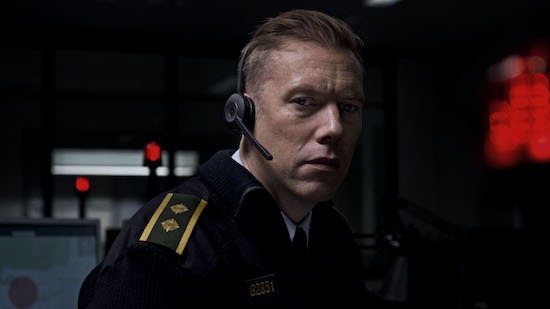
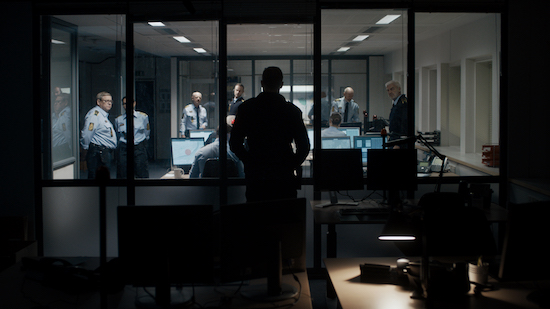
Denmark’s official entry for Best Foreign Language Film, The Guilty is as suspenseful as they come. Gustav Möller’s dark, spare thriller opens in an emergency dispatch center and never leaves the premises. Most of the action takes place on the phone as Asger Holm (Jakob Cedergren), a cop demoted to desk duty, tries desperately to save a life. It’s a testament to Möller’s abilities that this claustrophobic, no-frills film never loses steam, but continues to grip the viewer throughout its 85-minute runtime.
Right from the start, the focus is tight on Asger as he gruffly handles mundane, almost amusing, emergency calls—someone freaking out on drugs, a guy who was mugged by a prostitute. Just when the bored cop begins to space out, there’s a call from a woman in distress. As he quickly ascertains that she is being held in a moving car against her will, the film’s tension immediately ratchets up.
Courtesy of Magnolia Pictures
The woman pretends she’s speaking with her child as Asger asks a series of questions to figure out her location. His mind spinning with possibilities, he embarks on a series of frantic calls, which include sending a patrol car to a location indicated by her phone’s GPS. He also calls the woman’s home and speaks to her panicked six-year-old, promising the girl that he’ll protect her mother. Keeping his calm at first, Asger skillfully unravels the situation while constantly being told by various entities that it’s not his job. There’s talk about a big case coming up the next day, along with references to a psychiatrist; we wonder what he’s done.
As horrific details emerge, Asger moves into another room to continue working on the case, enlisting his partner, his commanding officer, whomever he can send to do something. Occasionally, he goes into a fugue-like state until the phone or a co-worker snaps him out of it. Then there’s a brutal twist that neither Asger nor the viewer sees coming. The film’s protagonist shifts into shocked despair, but he doesn’t stop trying, eventually coming clean with his own demons.
The Guilty is quite a thrill ride, all the more remarkable for its lack of onscreen action. At its center, Cedergren — filmed mostly in tight close-up — is solid and convincing as a compromised law enforcement professional determined to save the day.

Courtesy of Oscilloscope Laboratories
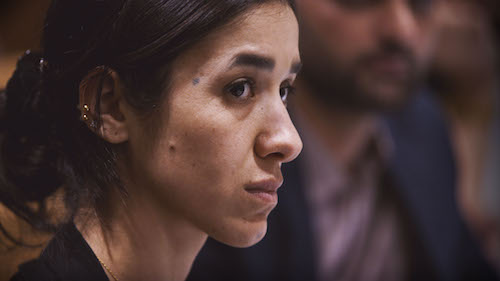
Alexandria Bombach’s documentary On Her Shoulders is a moving portrait of 2018 Nobel Peace Prize Winner Nadia Murad. A survivor of the ISIS-inflicted Yazidi genocide in northern Iraq, Murad is an intensely sympathetic young woman, but she’s far from pathetic. After escaping sexual slavery at the hands of ISIS when the terrorist group took over her village and killed most of her family, Nadia could not forget the women and girls still imprisoned. Bombach’s film follows her and the Yazda Organization’s executive director Murad Ismael as they travel to Canada, Greece, Germany and ultimately, the U.S., drumming up support for their cause: making the genocide a priority for the UN.
As Nadia gives speeches and interviews with journalists and public officials, she suffers in reliving the horrific details of her ordeal, but she keeps going, all the way to the UN General Assembly. A revered figure in the decimated Yazidi community, she’s clearly under tremendous pressure, but conducts herself with admirable grace, enduring inane comments and small talk by well-meaning supporters and politicians. Bombach’s film shows the loneliness, isolation and exhaustion of a reluctant activist whose overarching goal somehow enables her to deal with her memories and current strange reality.

Courtesy of Menemsha Films
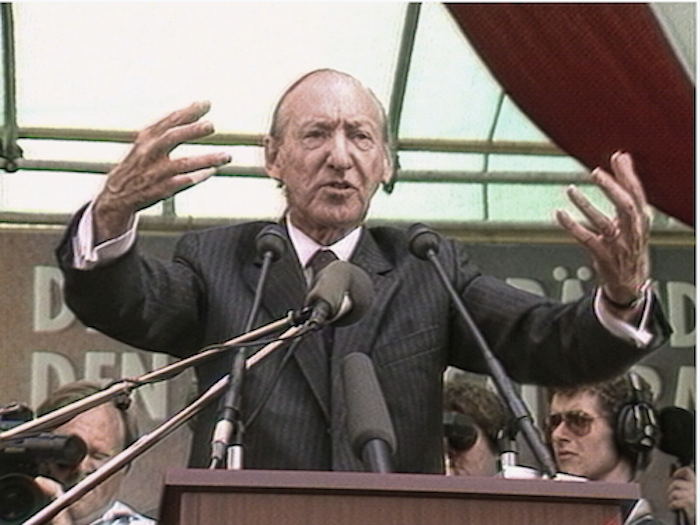
The UN is also present in Ruth Beckermann’s The Waldheim Waltz, a lively documentary about the rise to power of former UN Secretary General and Austrian President Kurt Waldheim, despite evidence of his Nazi past. Using recently discovered footage that she shot in the ’80s, along with news reports and other clips, Beckermann recreates the controversy leading up to the 1986 Austrian presidential election, when the World Jewish Congress led accusations that Waldheim was involved in the 1943 deportation of 60,000 Greek Jews. During his presidential campaign, Waldheim maintained that he was just following orders as “an honest soldier” in the German Army. Despite outward expressions of anti-Nazi sentiment, much of Austria chose to believe him or—as the film shows—just overlook this aspect of his career. The Waldheim Waltz reveals a fascinating and shameful time in the history of a world leader and his country.
The Guilty, On Her Shoulders and The Waldheim Waltz all open in NYC on Friday, October 19.
—Marina Zogbi
- 7 years ago
-
Art for Progress (AFP) is thrilled and honored to present a night of empowering original music, created for a special evening to benefit AFP’s art education programs. Music for Progress will take place on Friday November 30th at NYC’s quintessential listening room, Rockwood Music Hall (stage 2) and feature psychedelic world-jam group Toubab Krewe, Brooklyn power trio Bad Faces, and 3Bridge Records and Flemcy Music recording artist and DJ, Gatto. Get your tickets [HERE]
Blending American and West African influences into a sound all its own, Toubab Krewe has set “a new standard for fusions of rock ‘n’ roll and West African music” (Afro pop Worldwide). Since forming in 2005, the magnetic Asheville, NC based quintet has won a diverse and devoted following while performing everywhere from Bonnaroo to the Festival of the Desert in Essakane, Mali. Mixing American rock with the musical traditions the band fell in love with on their travels to Africa, their sound also nods to surf and zydeco. This fusion of sound is what the Village Voice describes as “a futuristic, psychedelic, neo-griot frenzy” and Honest Tune hails as “one of the most innovative voices in music today.”
Bad Faces are a Brooklyn power trio as deeply rooted in American traditional music as they are reaching for new stratospheric heights in their improvisational explorations. Led by singer/guitarist Barry Komitor, a fixture in New York’s vibrant folk and bluegrass scene, the group has amassed a strong local following on the heels of successful shows at Brooklyn Bowl, Brooklyn Night Bazaar, Elements Music and Arts Festival and more. Bad Faces’ rhythm section is powered by Brian Stollery, one of the best known figures in NY jam music on bass, and NY’s most exciting young jazz drummer, Ethan Kogan.
Hitting the decks to close out the night is DJ, producer, Gatto, who’s been part of NYC’s underground house music scene for nearly 20 years. You can find Gatto spinning at fashion shows, special events and top night clubs in NYC and beyond, while his eclectic music productions are dropping on record labels in Europe and in the U.S.
Rockwood Music Hall is located at 196 Allen St, NYC. VIP tickets are available, and will include a premium, private viewing platform, a signed copy of Toubab Krewe’s new album ‘Stylo,’ plus a special gift bag of merchandise and other surprises. Get your tickets [HERE]