- 7 years ago
-
South Florida has become a considerable pocket of art in the last 12 years. Maybe even longer. Being so close to the equator makes the southernmost region of the United States pretty hot, climatically so, but in respect to artists turning heads in the city and bringing attention to the area (particularly Miami), artists with distinct backgrounds and practices are turning up the heat, making it hotter than before by addressing pressing issues.
Discussions such as climate change, gentrification, South Florida’s wildlife in the Everglades, preservation of local cultures and historical sites, or identity-politics seem to be on the artist’s minds and leak well into the works.
Every blossoming artist has a unique perspective and aesthetic to offer the public. Competition between peers shouldn’t be a factor in success, but instead should be acknowledged and applauded. Miami’s sundry is key to the city’s progress in the arts. It can be pretty hard to keep up with the talent and “who is who,” but even more so trivial to find individuals who care enough to spread the spotlight onto the enormous mass of creatives.
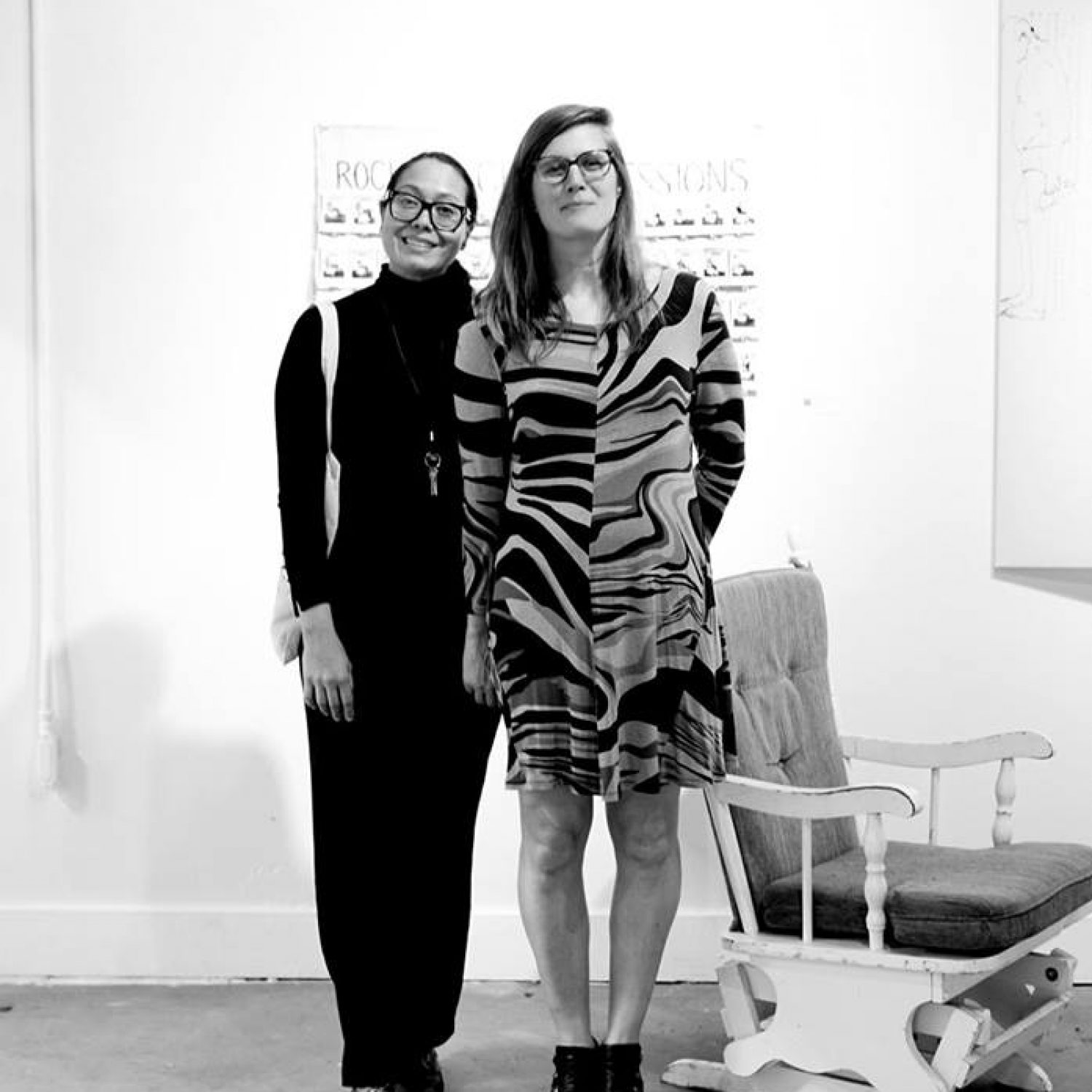
Amid the roaring sea of Miami artists, two women producers Elysa Batista, and Maria Theresa Barbist decided to pair up as a team. The result was the birth of Rocking Chair Sessions- spontaneous interviews with a list of preordained invitees from the arts community. The meeting’s format discloses both professional and personal information to the public, making it that much easier to connect the creative to a broader audience intimately.
Perhaps the interview is meant to document two endearing women getting to know someone better in their community or having a live “therapy session” that will enable their guest(s) to be more relatable to the audience rather than just a wildly imaginative, far-fetched, egocentric subject. Rocking Chair Sessions uniquely breaks the ice from one artist to the other. Once inside the charming studio, the guest sits with two smart and giggly ladies while enjoying a gentle sway on the ” magical” rocking chair at Bakehouse Complex in Wynwood, Miami.
After my curious session with Barbist and Batista, I decided to ask them a few questions too. After all, It’s quite fancy to reciprocate interest to two women who cordially extended southern hospitality to me and so many others in South Florida.

Elysa Batista and Maria Theresa Barbist, RCS Duo, Photo courtesy Elysa Batista ( Facebook snatch) Interview:
BB: When we last met, you (Barbist) asked me to make three wishes, which I had already asked the universe and am manifesting. I much appreciated it and wondered do you wish to ask this of the artist? Do you believe the power of collective energy hankers the tangible? In other words, if we all place a definite emphasis on the contentment of another, will all the energies add to the result of manifestation? Let me know if I am too esoteric or speaking by quantum physics.
BB: By the way, I can’t stop myself from thinking about the Care Bears. Do you remember when they used to huddle and activate the Care Bear Stare?
MB: It’s one of my favorite parts of the interview, to talk about the magical rocking chair and ask the artists for their wishes. I believe that thinking about one’s desires and speaking them out loud can set free energies in the person and the universe that can foster their fulfillment.
MB: Ever since I lived in San Francisco I started a personal spiritual practice with an oracle card desk called for dolphins and mermaids, very Bay Area. Here is an example of one of the questions in the cards. The card says: make a wish and enjoy its manifestation. Also, I do try to focus not just on the moment where a desire is happening but also every step along the way, mainly to open myself up for it to happen. You gotta have some magic in your life, right?
EB: Yes!!!! The Care Bears fully demonstrated what positive collective energy could manifest. Maria Theresa grew up in Austria and has sadly not experienced the Care Bears, but it’s funny how this podcast commenced as a Care Bear stare into the South Floridian pool and has overwhelmingly reflected and returned hundredfold in participation and support from the creative community.
BB: Barbist, how much of your background in psychology influence the interviews? I read on the RCS site that the meetings are “A hybrid between a therapy session and an artist interview.” Why is it so important to invite the artist to a session that drifts on a personal level? I am doing it right now with you. Can we both state that there is an innate humanistic yearning to understand someone who on so many levels has many things in common to yourself but has such a distinctive way of executing their knowledge that it could be influentially life-changing in our own lives?
MB: My training is psychotherapy was in a method called Psychodrama developed by the psychiatrist Jacob L. Moreno who was born in Romania, studied in Vienna and then emigrated to the US. Psychodrama is grounded in a humanistic view of the world with a focus on the human encounter. Moreno describes his idea in a poem like this:
- A meeting of two: eye to eye, face to face And when you are near I will tear your eyes out and place them instead of mine, and you will tear my eyes out and put them instead of yours then I will look at you with your eyes, and you will look at me with mine.
MB: Sometimes this happens in our Sessions, that after 50 minutes I have a deep understanding of the artist and his work. Also, I do believe that encounters like this can be therapeutic for the people involved, even if it’s not quite a therapy session.
BB: Batista what do you think about man/womankind’s thirst to return to humanity and the humane treatment of one another? Is this what brought you and Barbist to formalize RCS? I mean, do you think people have daily conversations such as this one with each other?
EB: I think that people can only handle so much toxicity. Either one separates themselves from that environment and becomes a loner, or chooses to surround themselves with positive, empathetic humans.
EB: Sharing kindness and respect is something that one craves to receive, but not everyone is willing to give. I do believe that the beginning of RCS was from an honest and pure-hearted place and continues to do so. We had a desire to engage and highlight the community we interact with and find to be inspiring, regardless of our non “big” city location. I do believe that people have meaningful and positive exchanges of conversation and energy, but can we use more of it? Certainly!
BB: How would the dynamics change in your interviews if a non-artist guest was invited to sit and participate in the discussion? Would that change RCS’s mission or could that be another layer and the start to another community project?
MB: We have interviewed non-artists before, most curators, gallerists or museum directors, so still people in the art world. I think the concept could be easily used for other professions as well, but since we are both artists, I guess those are the people we magnetize towards to, the local South Florida art community.
EB: I think that every sector has a language or insider knowledge that although we might not be privy to, we are still people asking individuals to take the time out of their life to share their story with us. So in a way, some dynamics would fluctuate if the people interviewed were not from the art community, but at the end of the day, RCS is about the human narrative and journey to the present.
BB: Would RCS visit other cities and artists? Why or why not?
MB: We have been considering doing residencies in other cities and than for example interview the other residents in that community, building new networks. For now, we are gonna stay in Miami, but who knows what the future brings. I definitely would also love to bring in the Bay Area art community that I was part of when I went to SFAI, and Elysa has a big network in New York from her days at Parsons.
EB: Bruja! This idea has come up. I have firmly come to learn never to say never but to concentrate on time and opportunity. As Maria stated, the groundwork has set for RCS here in Miami, but who ever really knows?
BB: Aside from Miami artists referring other individuals to be on the podcast, has there been any magical outcomes such as collaborations or new connections formed from being here?
MB: I don’t know what happened to all of the artists after the interview, but for sure Elysa and I had a lot of magical things happen to us. We are starting with so much support for our first RCS exhibit last year at the Bakehouse, where for example Kiki Valdes whom we were interviewing when the show up did this beautiful video of the exhibition for us or Monica McGivern who did the photography of the show. Now we are collaborating with Anthony Spinello and Oliver Sanchez, local gallery owners, on the next RCS exhibits. As Elysa would say, we’re blessed with all the support that we are getting for this project from day one.
EB: We have seen participants win Ellies, Grammy’s, and South Florida Consortiums, not by anyone’s doing but their hard work. It’s genuinely phenomenal to get to witness.
BB: Ladies, are there any fond memories you’d like to share with the readers? Also, what three wishes do each of you have to request the universe?
MB: Elysa loves to tell the story of when I messed up with the recording equipment… So there was this one time when I forgot to push record and found out 20 minutes later that we have not been recording anything. It was the only 70-minute session; you will never know what happened in the first 20 minutes. Then there was the time Sarah MK Moody who brought her brand new baby to the recording, and little Stella was perfectly happy (and quiet) in her lap for the whole session. However, so many of the few moments are special to us, when we learn things about other artists that you usually don’t talk about at gallery openings.
EB: Ha! That’s a funny one, and baby Stella was our youngest RCS interviewee before sitting down with two expecting artists. My favorite moments are those where a chord is touched, and a connection made. Every time we sit I find myself appreciating humanity more deeply. Each session has a unique memory or lesson learned or inspired. We separate and distance ourselves from each other sometimes, but when we listen and engage in conversation, wow, we’re equals.
EB: I have a few fond memories. Listening to our jingle for the first time, celebrating each recording milestone: 1, 5, 1O, etc., and most importantly, when an interviewee says YES to sitting down with us and follows through. RCS is for them.

Photo courtesy RCS ( Rocking Chair Sessions) Website Maria forgot her wishes. I wish for a healthy planet, a world devoid of abuse of power, and kindness/happiness/love for all.
Edited by Abel Folgar
Written by
- Beláxis Buil

Latest News

- 7 years ago
-

Courtesy of Greenwich Entertainment There have been many worthwhile films about the World World II Holocaust and its survivors. Though it seems as though every angle has been covered, The Invisibles, a riveting docudrama by German filmmaker Claus Ráfle, is an unusually compelling new addition to the genre.
Goebbels declared Berlin free of Jews in 1943 (the city originally numbered 160,000); however, out of the 7000 who resisted deportation and remained, 1500 were left by the war’s end. The Invisibles follows four young Berliners, as they individually defy the Nazi mandate to evacuate via deportation, choosing instead to wait out the war as veritable fugitives in their own city.
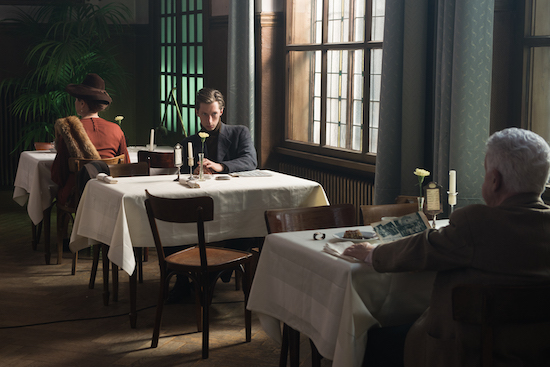
Cioma Schönhaus, Hanni Lévy, Ruth Arndt and Eugen Friede are skillfully portrayed by actors in their youth and appear as themselves discussing their experiences decades later. Ráfle smoothly weaves their individual stories together, creating a movie that plays like a spy thriller as the protagonists face mounting danger from Nazis and, ironically, Allied bombs and invasion, while finding help from various heroic resistors.
Though their plights are obviously similar, the four had different experiences marked by a shared characteristic: a sort of youthful fearlessness and resourcefulness, combined with a fierce will to survive.
Courtesy of Greenwich Entertainment In 1942 Schönhaus (Max Mauff), a somewhat cocky, 20-year-old art student, is separated from his parents at the deportation center when he declares that he works in a gun factory doing important work for the state, granting him exempt status. The same year, 20-year-old Arnt (Ruby O. Fee) and her close-knit family are helped by friends who agree to hide them “until the war is over,” thought to be imminent.
By early 1943, Jews were not allowed radios, bikes or pets. They needed permits to ride public transportation.
The youngest at 16, Friede (Aaron Altares) is hidden by his non-Jewish stepfather. We see him chastised on a bus for not wearing a star, then ordered to give up his seat by the conductor. Another passenger gives Eugen a pack of cigarettes, an example of the sympathy felt by some fellow Berliners.
An orphan, 17-year-old Hanni Levy (Alice Dwyer), went into hiding after the family raising her were deported. She dyes her hair blonde, later recalling, “I became someone else.” During the day, she goes out into the bustling Kurfürstendamm and tries to blend in, being careful to “act normal” though she compulsively scans her surroundings.
Courtesy of Greenwich EntertainmentInterspersed with the reenactments and interview snippets is black and white footage of 1940s Berlin, a dynamic city not unlike New York, where it was plausible to believe that one could disappear into the crowd.
The enterprising Cioma, skilled at forging passports, finds work with a resistance leader. Posing as a soldier called into service, he is able to procure a list of temporary lodgings. Eugen stays with sympathetic Communist friends of his father but is forced to move elsewhere when they fall under suspicion. For a while, his life is almost normal, unlike Ruth, who later talks about the constant exhaustion and hunger.
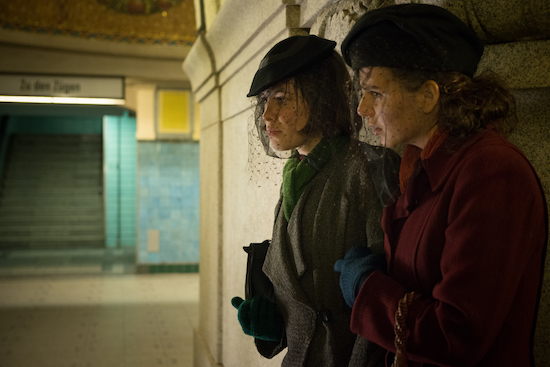
As the war progresses and the Nazis crack down, the four manage to cope with their terrible circumstances. Ruth and a friend pose as war widows in veils, finding escape at the cinema; Hanni also finds refuge at the movies, later befriending and moving in with a woman who works at the theater.
A striking aspect of the film is the number of non-Jewish resistors willing to endanger themselves and their families to help the four, including at one point, an SS officer who hires Ruth and her friend as maids.
There are appearances by the infamous informer Stella Goldschlag and notoriously intrepid resistor Werner Scharff, larger than life characters (for wildly different reasons) who add considerable color and tension to the film.
The arrival of U.S. bombers is cheered by the protagonists, though Berlin is decimated by the attacks. Similarly, they welcome the arrival of Russian troops, though the latter generally refuse to believe that anyone left in the city is Jewish. A scene featuring an emotional encounter with one disbelieving Russian soldier is one of the movie’s highlights.
That the four managed to stay alive and carry out their lives in various countries, including the U.S., seems miraculous. The Invisibles is a well-crafted tribute to the 1500 who survived and to those who helped make it possible.
The Invisibles opens on Friday, January 25, at Landmark 57 West and Quad Cinema.
—Marina Zogbi

- 7 years ago
-
Most Miami art week events are drawn to glitz and glam, vying to compete for a mention in the press or passed as gossip around town as the hottest soirée happening during its short life in Miami. The majority of art fairs push old and new artist names to the public while attempting to cash in revenues from lucrative collectors. They all play a part within the same hob-snob social games commonly celebrated in art communities across the board. It’s just more intensified during this time of year.
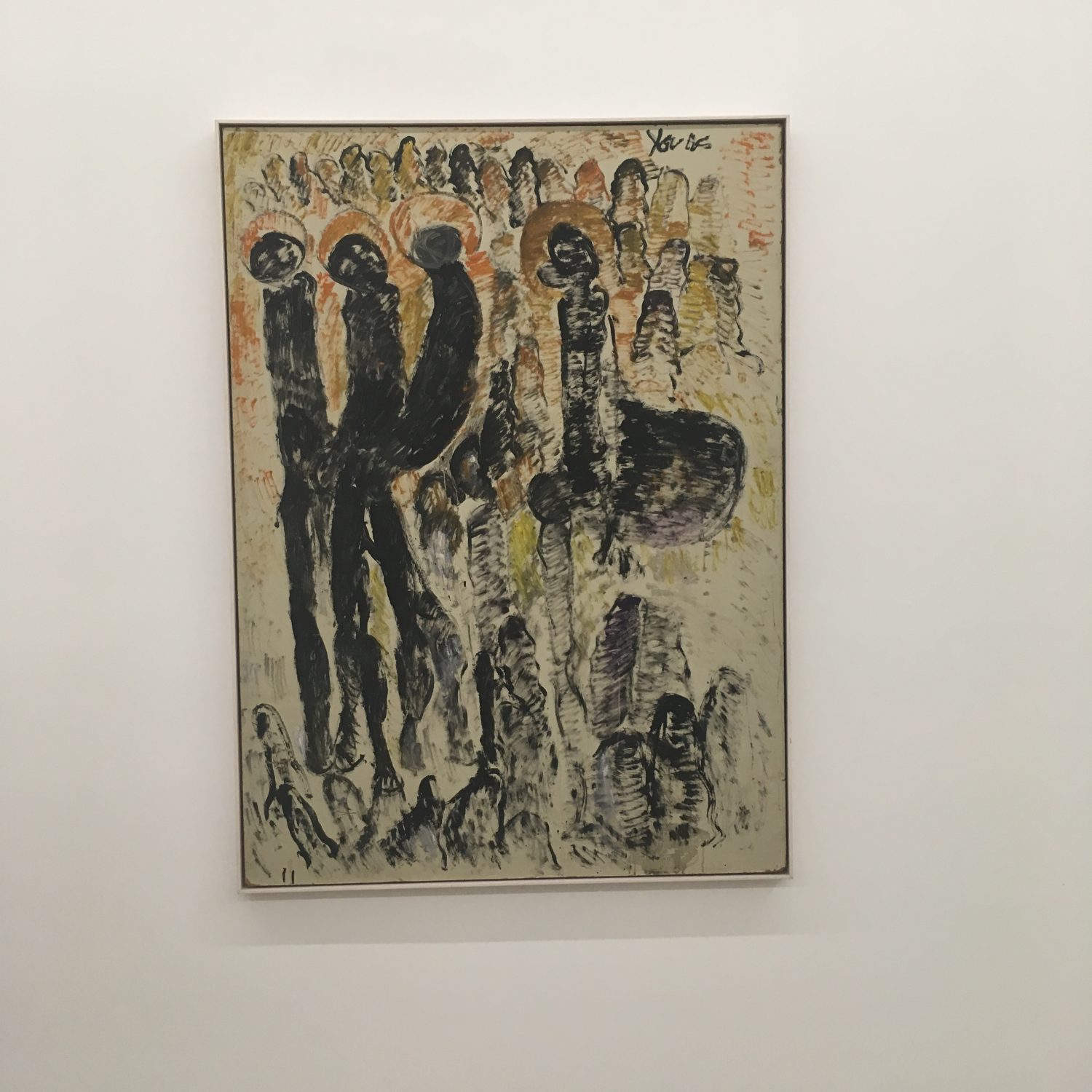
Luckily, the RFC ( Rubell Family Collection) opened it’s doors to the public with a refreshing solo exhibition of Purvis Young’s messy Zulu inspired, folk art and new acquisitions. Over one-hundred works were displayed, created over Young’s lifespan, shedding light on “universal themes.”
Although Young is a prominently dominating name in the art world and his personal affairs disclosed to the public, there is still a sense of privacy or even distance that exists between his work and the public. This space became more apparent to me as I walked through the exhibition. Because the RFC exhibition space is vast and fixed in white walls, Young’s smaller works became shushed from the viewer’s direct gaze, but it was precisely his genius overcast brushstrokes what gesticulated the viewer to step in and absorb the extended, languid arrangements. Similarly to his reflective persona, his gestures seem pensive, drenched in the desire to understand humanity’s fate, twisted by war, suffering, isolation, and enlightenment embedded in clouds of pale powdered hues and busy assortments of patterns. They became recognizable figures and symbols, once the viewer spatially acquainted themselves to the work(s).
There are moments I think Young craved validation and belonging in society, but his mission to record the flux of news into his body of work from the outskirts seems more important in the end.
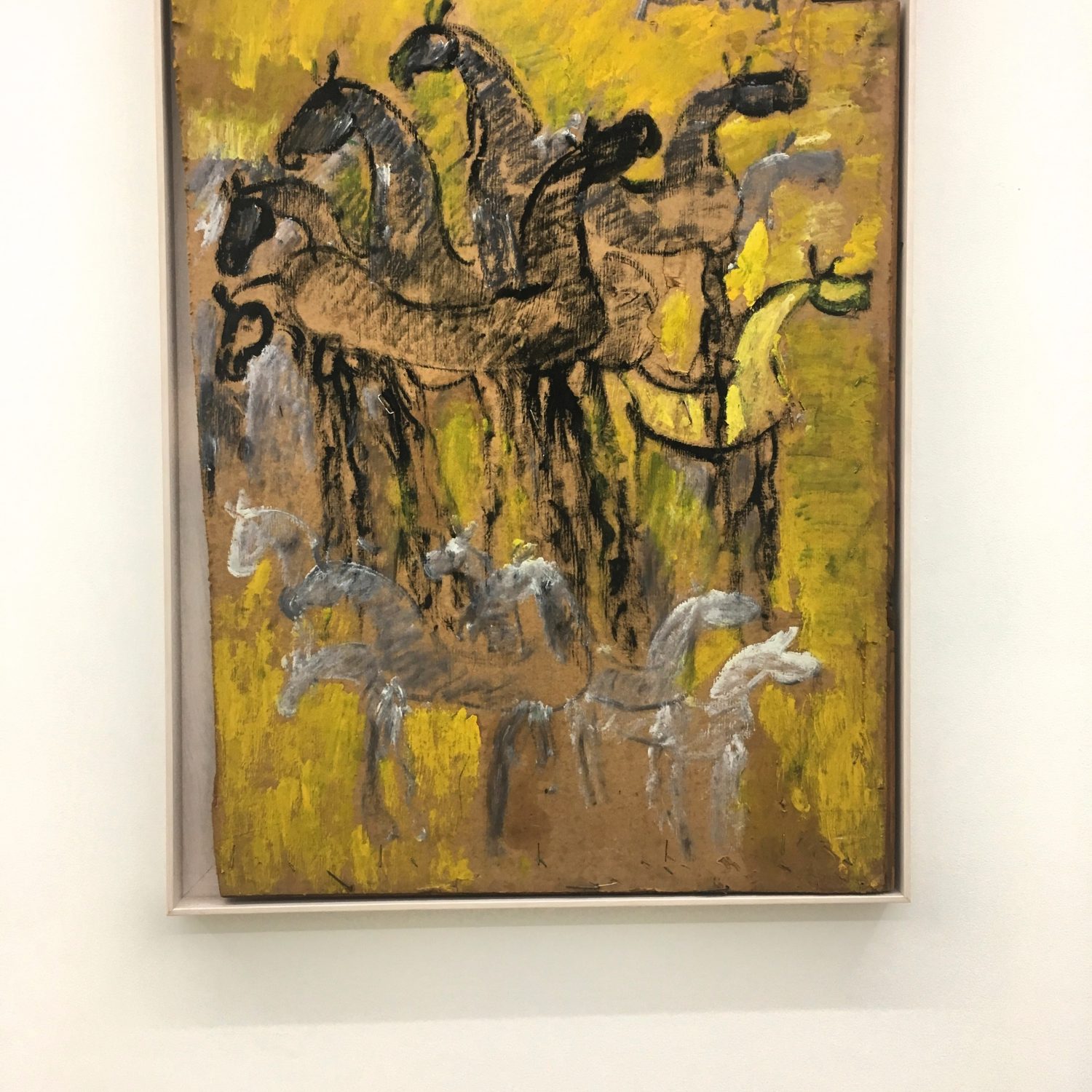
Sections of the lower gallery were indexed with recurring themes ( ex: horses, eyes, pregnant women ) in Young’s work to help navigate the way for the onlookers. Otherwise it could have been confusing with the busy crowd’s movement. One of the untitled horse paintings resonated with me. It was a lovely amber color, deepened with smudges of mustard, fore-fronted by a relaxed group of horses, with long necks and heads shifted at various angles, as though searching for food or perhaps seeking other horses like themselves.
I’d like to see Young’s work celebrated as innovative for his choice of materials and the way he marked the material’s surface with the stroke of his hand, rather than categorizing him as an outsider or self-taught artist. Institutions may not realize that this discredits an artist to a certain extent. An artist such as Young was born a creator, and didn’t necessarily have to train at art school nor learn techniques to qualify as a professional prodigy. The art world needs to eliminate divisive categories such as “outsider” to establish a sense of equality between artists, their works and abilities. The Rubells do a magnificent job of scouting artists based on talent, supporting their work, paving their way to financial success and most importantly pointing out indubitably that an artist such as Young was ahead of his time, and proved to be an artist to pivot the direction of painting in the 21st century.
Written by-

Edited by-

” I paint angels coming down to bless the peoples; guys carrying caskets sometimes; angel sitting on top of the caskets. Death to the people. Good people become angels. I just paint good people. I don’t know what happens to the bad ones.”
– Purvis Young
” I always liked to draw and paint horses, wild horses. I just use horses mostly for freedom. I love to paint wild horses, freedom horses, wild horses running free.”
– Purvis Young

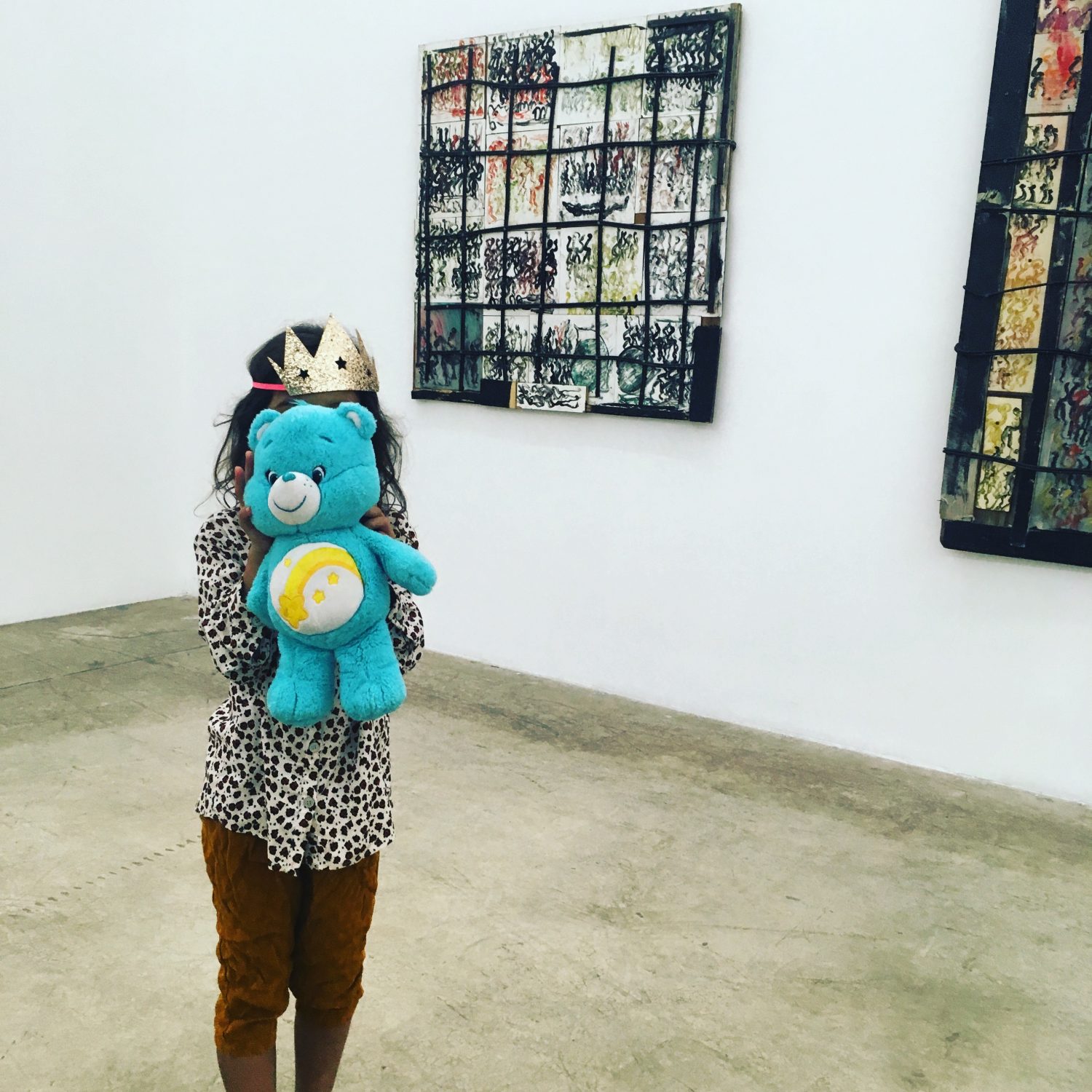
A young visitor standing in front of Purvis Young’s paintings during the RFC opening, Purvis Young and New Acquisitions, December 4th, 2018
( Miami Art week)
- 7 years ago
-
Since 1998, the Animation Show of Shows has selected the best animated shorts from around the world. According to founder and curator Ron Diamond, the 15 films chosen for the 20th annual edition “really illuminate human strengths and foibles, and the bonds that unite us across cultures and generations.” Though these films and their animators come from various backgrounds and countries, the themes represented are truly relatable across the board.
Ranging from 70 seconds to 15 minutes, the works range from darkly funny to deeply moving, representing an impressive array of visual styles and moods. Running a little over an hour and a half, the entire program is a treat from start to finish.
Some highlights include:
Grands Canons, from French multimedia artist Alain Biet, is a dizzying visual presentation of thousands of hand-dawn everyday objects, presented at various speeds and in myriad permutations, accompanied by jaunty, propulsive music. Clearly a labor of love, it ultimately becomes mesmerizing.

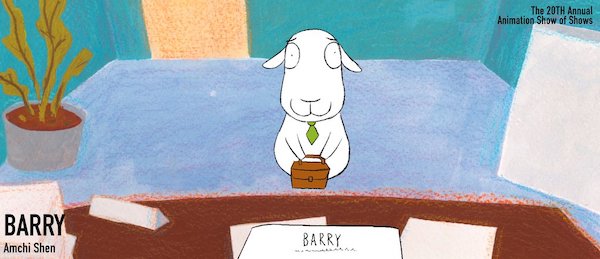
Barry, from filmmaker and Cal Arts animation student Anchi Shen, is a humorous, simply drawn story about a goat with a Harvard degree applying for an oncologist position at a hospital. He’s first relegated to custodial work until he saves the day in the OR. Though his fellow physicians cheer him on, he’s fired from the staff because “Goats are never doctors.” A clever take on stereotyping.
The visually intriguing Love Me, Fear Me from Romanian filmmaker Veronica Solomon (now living in Berlin) features an ever-morphing clay figure who performs various styles of choreography; first as a comic blue male, then a sultry red female, followed by an aggressive, blade-handed grey character and an ominous white robed figure, each accompanied by appropriate music. Finally a multi-colored, writhing mass of clay transforms into a simple human. The theme: Role-playing and the different personas some of us adapt in order to please others.
Shorter than two minutes, the fast-paced, absurdist satire Business Meeting, from Brazilian animator Guy Charnaux, features minimal, childlike black and white figures. The setting: “Wall Street, 4 pm.” As the boss asks each employee the same question, their answers — and the characters themselves — become more and more bizarre, until it all comes full circle: “Great! This meeting is over.” For anybody who’s ever suffered through a redundant, BS-filled work meeting, this is both hilarious and satisfying.
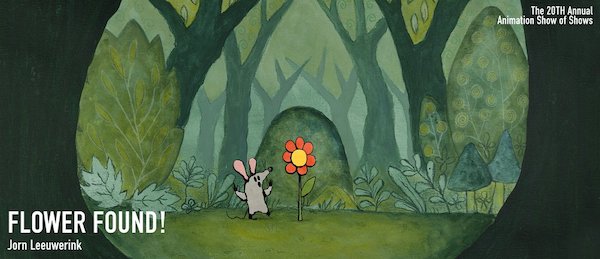
Flower Found! from Dutch animator Jorn Leeuwerink is a deceptively sweet looking animation about a mouse who finds and quickly loses a lovely flower in the woods. Various creatures join the disconsolate mouse to find the stolen bloom, finally settling on a chicken whose comb looks flowerlike. The gang does what they think is right, despite the mouse’s protestations. A disturbing visualization of blind righteousness and the danger of mob mentality.
A profound and moving work, Carlotta’s Face illustrates the first-person narration of a German woman who has prosopagnosia, the inability to recognize faces, including her own. Created by neuroscientist and filmmaker Valentin Riedl and animator Frédéric Schuld, the film is a beautifully-drawn depiction of a tragic story that ends quite wonderfully.
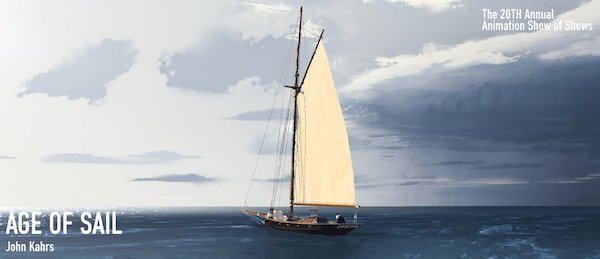
Age of Sail from American animator John Kahrs is a gorgeous, realistic-looking film about an old-school seafarer (voiced by Ian McShane) in a sailboat who rescues a young girl who’s fallen overboard a passing ocean liner. Dramatic and action-filled, Age of Sail is part of Google’s Spotlight Series, and also available in a VR version which must be amazing.
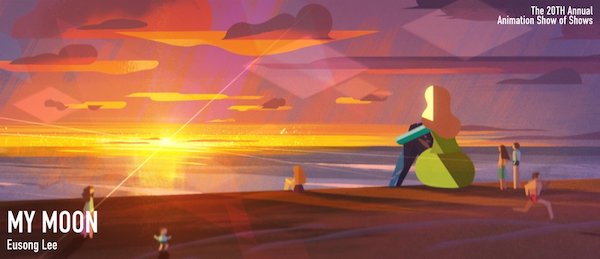
Eusong Lee’s My Moon is an eerily beautiful, poetic story of a female figure (Earth) who is in love with a darkly romantic male (Moon), but is swept off her feet (literally) by a glowing orb-headed alpha male (Sun). The love triangle, which is accompanied by what sounds like classic movie dialogue, eventually resolves itself.
Weekends by Canadian filmmaker (and Pixar story artist) Trevor Jimenez is a painterly, fantastically detailed depiction of a boy shuffled back and forth between his divorced parents in 1980s Toronto. His quiet life with mom in the suburbs contrasts sharply with dad’s bachelor pad in the city (the music veers from Satie to Dire Straits). Overwhelmed by his contrasting double-life, the boy has many graphic, unsettling nightmares. Gradually the seasons change and things settle down.
For more information on the full program, click here.
The 20th Annual Animation Show of Shows opens at the Quad Cinema in NYC on Friday, December 28.
— Marina Zogbi
- 7 years ago
-
It was social critic Edward W. Said who termed Orientalism as the post-colonial tendency to personify the “Arab and Eastern cultures as exotic, distorted, uncivilized and at times dangerous.” It is through this faulty lens that the Eastern and Arab cultures continue struggling to legitimize their position in social structures of acceptance and understandings from the West and Eurocentric cultures.
Regretfully, although one would like to assume the art world as tolerant of “others” in its reich; evidence proves otherwise, displaying very little or vague opportunities for artists residing in the East ( dominantly Arab ) to exhibit their work on US soils. This year, in 2018, marked the first-ever solo exhibition of a self-taught Algerian artist Baya Mahieddine (1931–1998), at New York University’s Grey Art Gallery.
Back in Algeria the struggle to be seen outside the Orientalist perspective continues with a swath of renegade artists and curators: searching for ways to break the stereotype artforms and infrastructures by conducting new alternative run spaces and bridging communications with foreigners. These quads not only present the art of local contemporary artists but rather invite international voices to coexist in a place that offers a compound exchange of ideas, open forum, and cultural exchange with Algerian artists working on the edge of their medium. One of those spaces, BOX24, now in its ten-year anniversary is lead by its founding visionary leader, Walid Aidoud.
Aidoud opened BOX24 as the first collective run space free of rigid structures or business-oriented mindsets like most galleries. BOX24 offers the artist(s) an ” independent art space in the country and a response to the Ministry of Culture’s monopoly on the art scene.” Just like many artists facing severe discrimination in the U.S., it seems bleaker to the Algerian artists, as the younger generation belts n frustration “there’s huge money in culture, but it’s not the artists who are getting it.”
Universally, it all sounds familiar but with Aidoud advocating the way for the new wave of Algerian artists, opportunities to participate at the Pan-African Festival, the Algerian Biennale and a few other lucrative exhibitions in surrounding countries surface. For the Algerian artists, it is a modern phenomenon to deconstruct the inappropriate depiction of Arab and Eastern culture, re-imagine the politics of identity, while presenting new modes and methods in their practice. Dispelling “Western scholarship” and “inextricable ties to imperialist societies” is at the foot of debate among the Algerian artist’s desire to thrive.
-

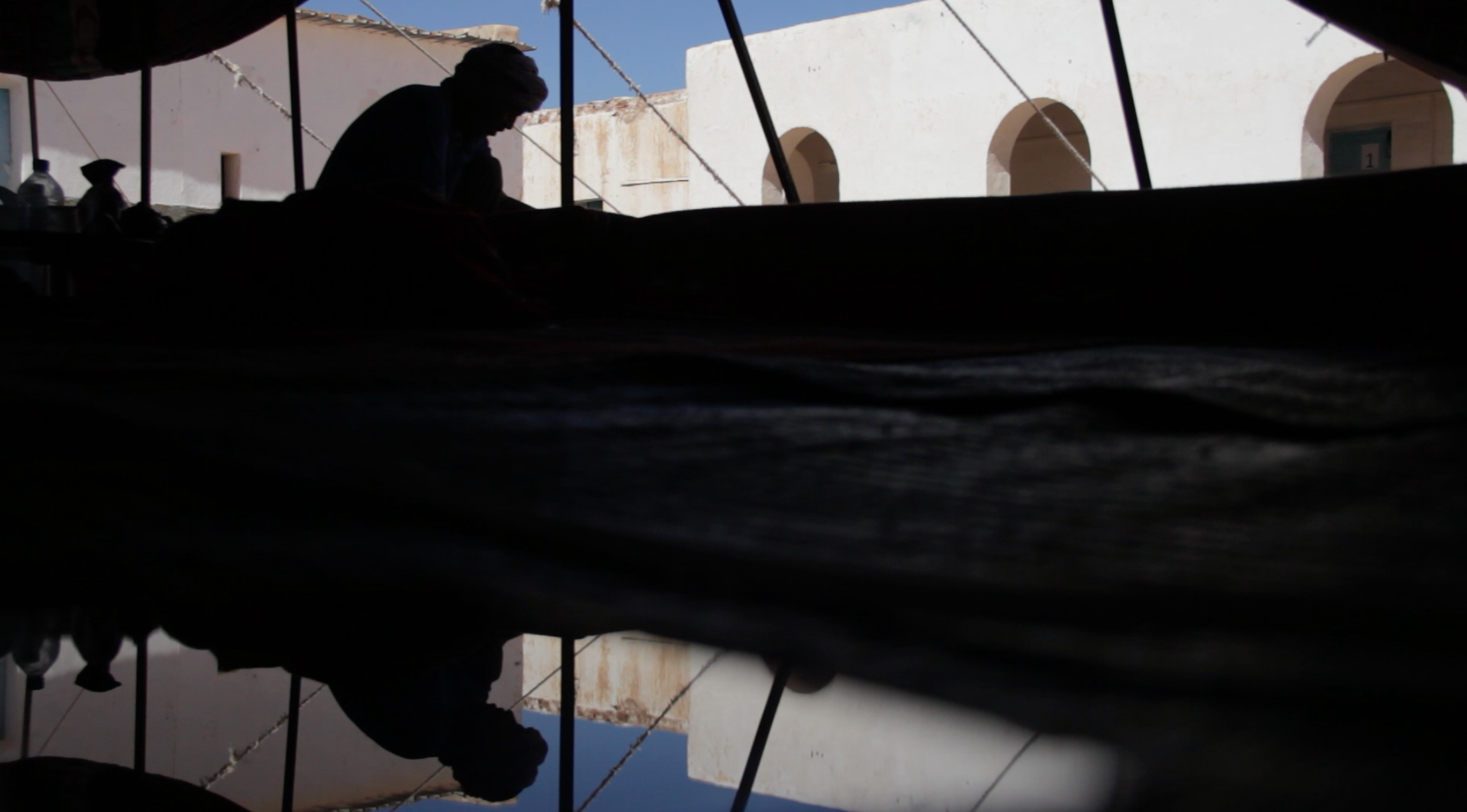
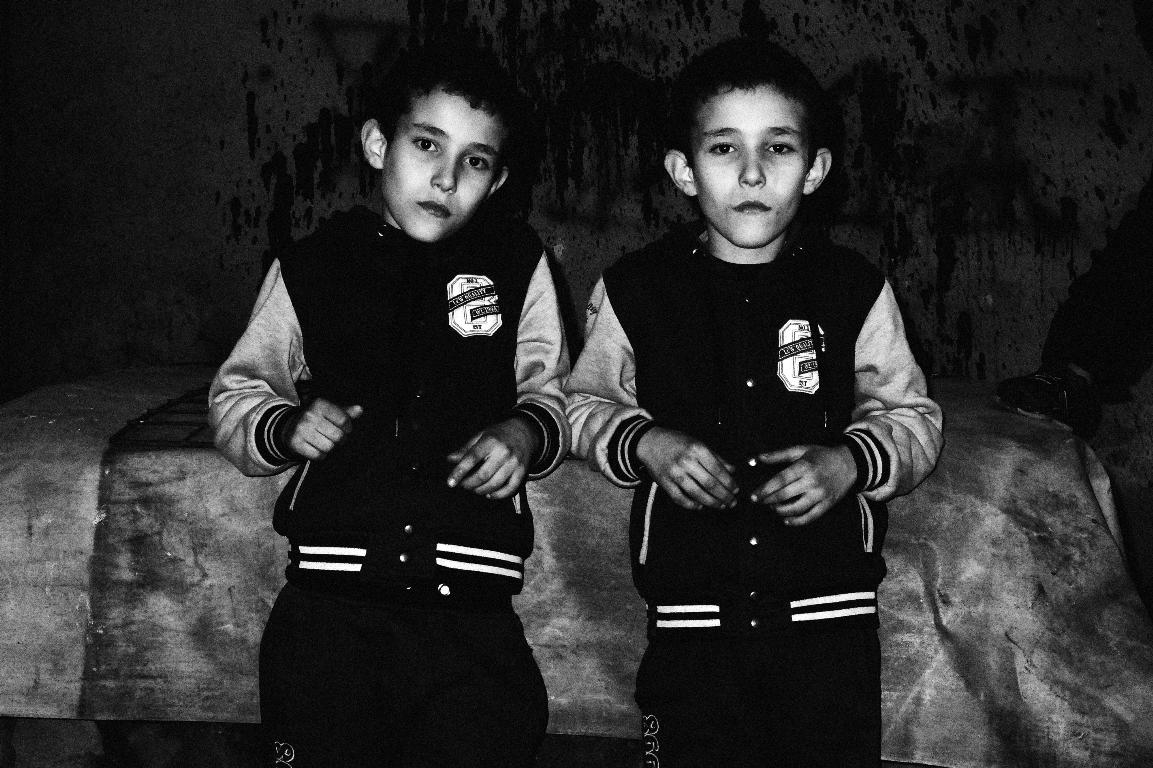
- Haythem Ameur, May god take off their fathers, 2018, Film still
-
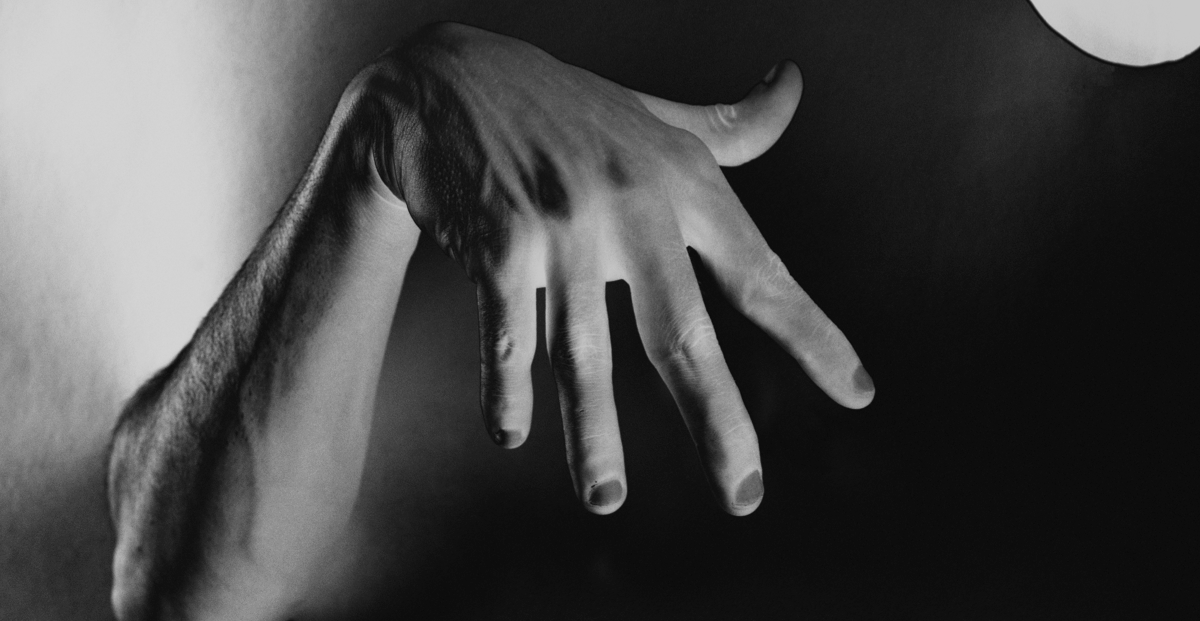
- Mehdi Hachid, DOXA- LA REALITE, 2018, Photography,
-
- Bouchama Mohammed Kame, In front of the wall, Boudjdour2018 ,Camera nikon d850
-
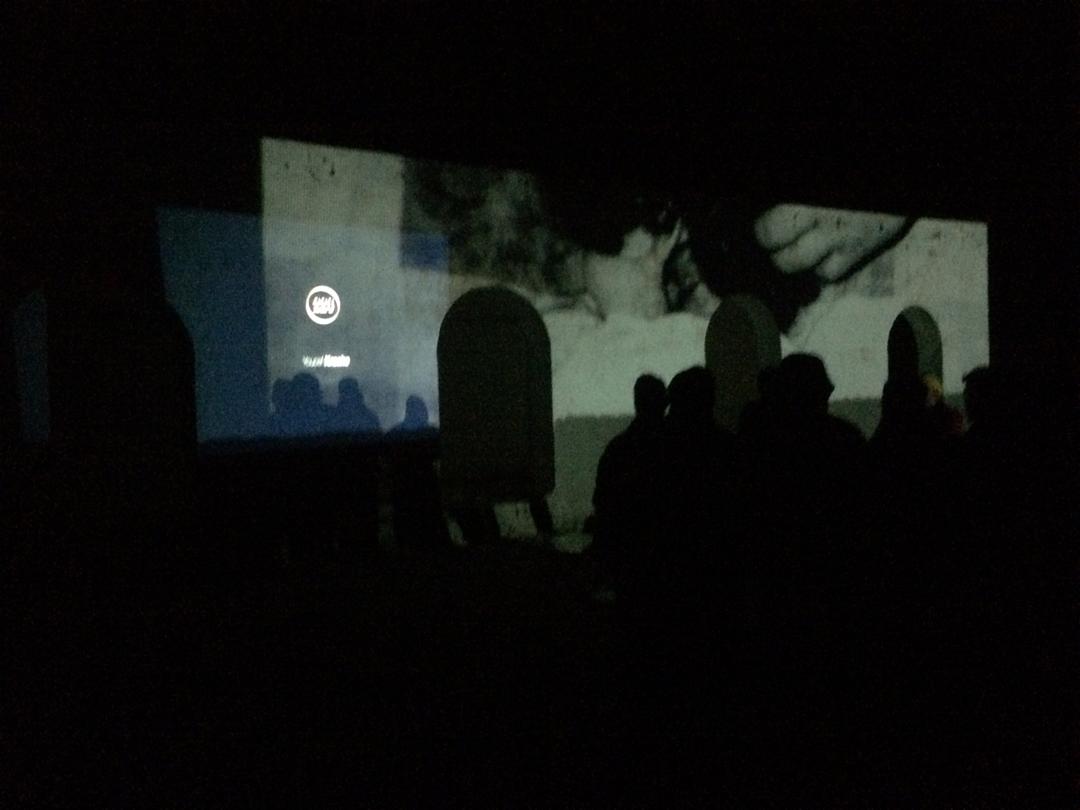
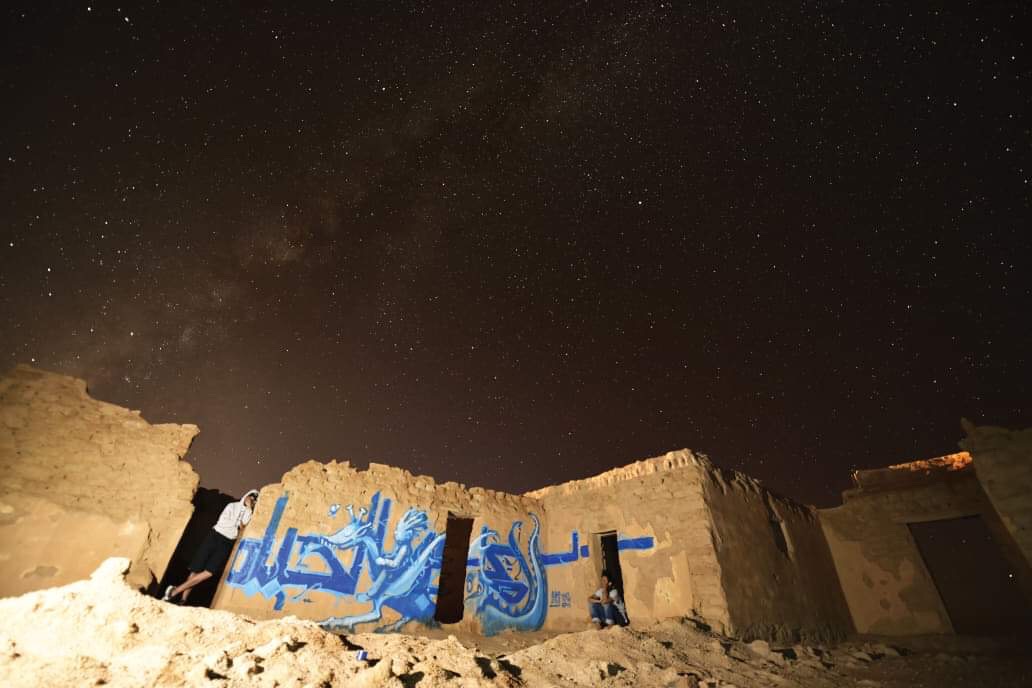
- Photography projection during Blanc night, 2018, Tifairiti, Africa, Photo courtesy the curator Walid Aidoud
-
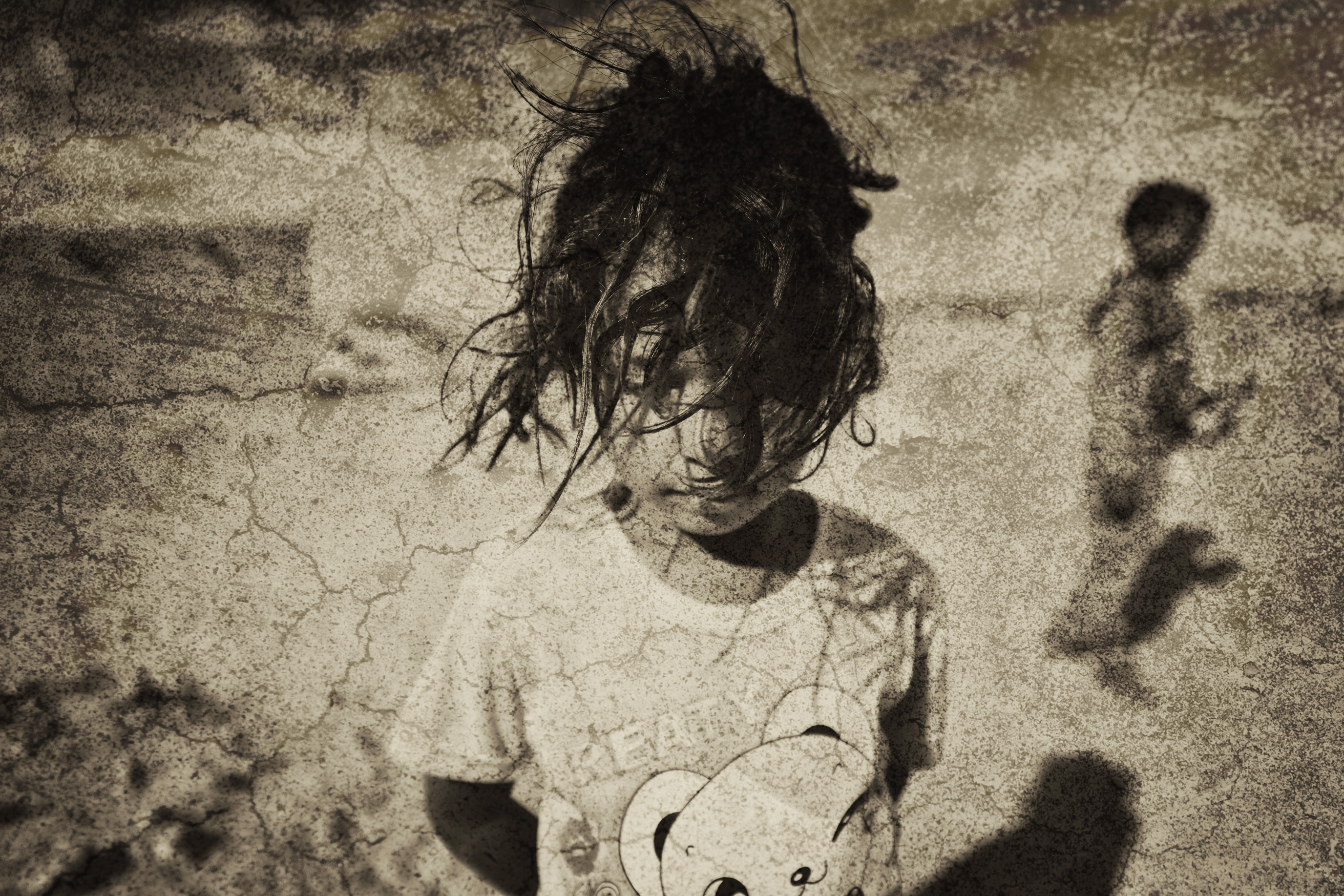
- Abdo Shannon, Diary: exile, 2014-16, Digital Photography
-
- Karbouai Lyes, Let the wall talk, 2018, Graffiti and Photography
In addition to Aidoud’s repertoire of work as a designer, curator, and artist at BOX24 (as well as his participation in exhibitions abroad), every year Algerian artists are selected by Aidoud to participate in the innovative, human rights action ARTiFairiti: in the town Tifariti in the disputed territory of Western Sahara, Africa. This year’s program invited a fresh crew of Algerian artists working in photography, film, music, and performance.
Aidoud curated a blanc night reception, celebrating the evening’s reaction based performances by inviting participants to illuminate columns via cellphones and flashlights. Projected images and videos embellished the Vernacular architecture with works by artists: Haythem Ameur, Arslane Bestaoui, Abdo Shannon, Bouchama Mohamed Kamel, Lyes Karbouai, while Myriam Niboucha and Hyat Rahmani performed a corporeal installation of poetics, theatrics and fire installation. Between the diversity of people, cultures, lights, wild colors, sounds, and dance, Aidoud orchestrated a mosaic assemblagé of identities and history at the intersection of time.
As BOX24 closes its existing location, to reopen in 2019, a favorable juncture of circumstances appears in the horizon for Aidoud, a direction far higher than expected for BOX24 and Algeria’s artists.
Written by
Beláxis Buil
Edited by Abel Folgar

-